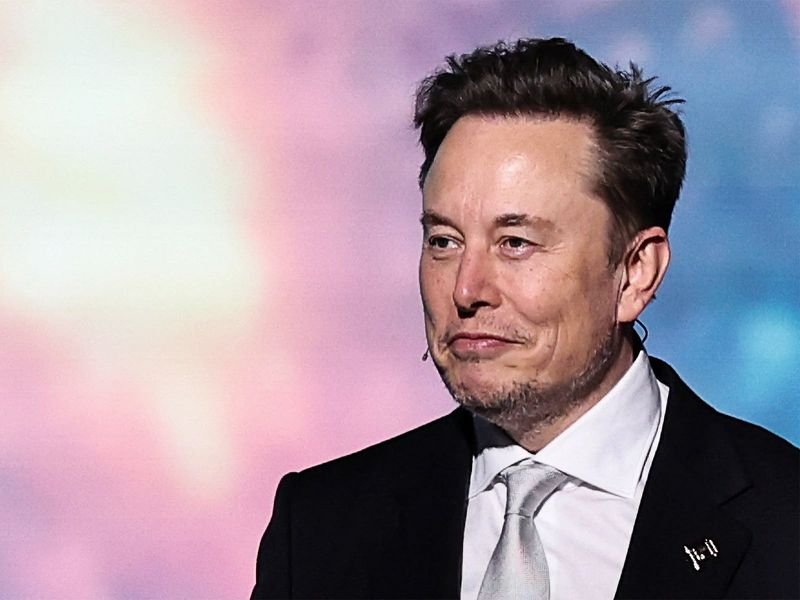

The government and Elon Musk engaged in a verbal spat on Thursday after the Telecom Department rejected allegations that Starlink’s satellite Internet services were being blocked by domestic business interests, prompting the tech trillionaire to ask if “Ambani is the real boss of India”.The government, earlier in the day, slammed the US business tycoon over his allegations that Starlink’s satcom services were being blocked, and made it clear that demonstrating compliance with security norms was an absolute must for every satcom licensee in the country.Within hours of the government’s rebuttal, Musk in an X post asked whether “Ambani is the real boss of India”.“Starlink is licensed in over 165 countries and has spent five years complying with every single law and requirement of the government of India, so why still no licence? Is Ambani the real boss of India?” Musk said in an X post.The assertion came within hours of the Telecom Ministry saying the country’s authorisation framework for telecom and satellite services was “fair and non-discriminatory” and that any suggestion that it was being applied selectively was “baseless and misconceived”.The clarification came after Tesla and SpaceX CEO Elon Musk accused unnamed “oligarchs” of blocking Starlink’s entry into India to protect their “monopolistic chokehold” over the Indian market.In a post on X, Musk alleged that Starlink was being prevented from launching its satellite Internet services in India and described the situation as “a crime against the people of India”.“Unfortunately, we are being blocked by certain oligarchs in order to maintain their monopolistic chokehold on the Indian people. You can guess who they are,” Musk said.Responding to the allegations, the government said social media posts were creating an impression that India’s regulatory framework for satellite communication services was being applied in a discriminatory manner. It maintained that the country had established a “fair and non-discriminatory” authorisation framework for all telecommunication services, including satellite communications.”Under this, telecom licences have been granted to three Global Mobile Personal Communication by Satellite services based on non-geosynchronous satellite orbit based satellite communications, as part of its commitment to enable provision of satellite communication services in India,” the government said in a statement.The government said “each licensee is required to demonstrate compliance with security conditions” before proceeding further in the regulatory process. The security assessment is intended to ensure that satellite-based services meet various requirements related to the safety and security of users and their data.“Security assessment as part of this process is currently under way in respect of all the three licensees,” the government said. It added that once the security assessment was completed for a licensed entity, it could proceed to the next stage of seeking spectrum assignment.Meanwhile, Musk continued to question the delay in Starlink’s commercial rollout in India, asking why the satellite internet service had yet to receive final regulatory clearances despite operating in more than 165 countries.“Starlink is licensed in over 165 countries and has spent five years complying with every single law and requirement of the government of India, so why still no license?” Musk said in another post on X.He also took a swipe at India’s business establishment, asking, “Is Ambani the real boss of India?”Stating that the service could help bridge connectivity gaps in underserved parts of the country, Musk said, “Starlink will help the least-served in India,” Musk said.He said while no country, including the United States, had perfect connectivity, Starlink could help fill coverage gaps, particularly for people who need reliable internet access the most.Musk further argued that those opposing Starlink were ultimately hurting underserved communities, saying that wealthy people and residents of major cities already have access to relatively good internet services and may not fully understand the connectivity challenges faced by people in poorly served areas.Starlink, a satellite internet service operated by SpaceX, is designed to provide high-speed, low-latency broadband connectivity, particularly to remote and underserved areas.Starlink Satellite Communications Pvt Ltd received a licence in June 2025 to provide satellite-based communication services in India. The government has said more than 10 satellite operators have entered the Indian market and that the sector permits up to 100 per cent foreign direct investment.The entry of private players into the space sector marks a significant step towards the Viksit Bharat 2047 vision and is expected to support the rollout of high-speed satellite broadband services across the country.