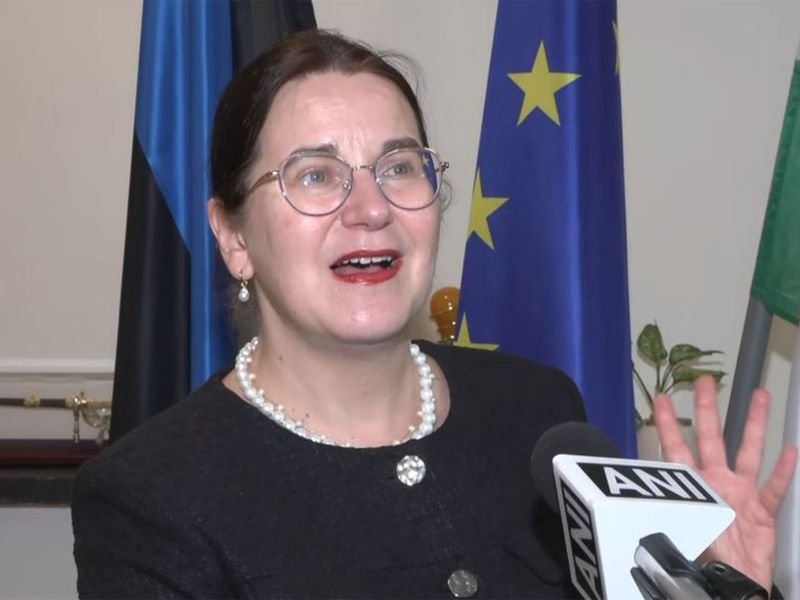

New Delhi [India], October 9 (ANI): Estonia has invited Indian IT professionals and companies to explore opportunities in Europe through its e-residency programme, with the country’s Minister of Justice and Digital Affairs, Liisa Pakosta, saying that Indian talent is “warmly welcome” in the country, amid the US government’s suspension of certain major technology and IT outsourcing firms from the Permanent Labor Certification (PERM) programme.In an interview with ANI on Friday, Pakosta highlighted Estonia’s e-residency programme, which allows entrepreneurs to establish and manage companies in the European Union digitally without physically relocating to Estonia.Asked about Indian IT and services companies’ challenges as the US suspends PERM applications involving several major firms, Pakosta said, “All the talent is warmly welcome to Estonia.”She said Estonia sees significant opportunities for Indian and Estonian companies to work together, invest in each other’s markets and scale up innovative products and services.“So we are interested from the Estonian side to scale our very successful products and services here, and we are very much interested in Indian talent, Indian companies to start their business within the European Union from Estonia,” she told ANI.The remarks come after US Labour Secretary Keith Sonderling on Thursday announced the suspension of several major IT outsourcing companies, including Cognizant, Infosys, Tata, Wipro, HCL and Capgemini, from the PERM programme, along with US technology companies Microsoft and Adobe.The US Department of Labor attributed the move to multiple active federal investigations and said it would neither accept new applications nor process pending permanent labour certification applications involving the companies.The PERM programme is a key step in the employment-based Green Card process, requiring employers to obtain labour certification before proceeding with certain permanent residency applications. The suspension does not, by itself, affect the validity of existing H-1B visas or the status of H-1B visa holders and their dependents, although it could affect the permanent-residency process of eligible employees at the companies concerned.Amid these developments, Pakosta underlined Estonia’s interest in attracting Indian entrepreneurs and businesses looking to expand their presence in the European market.Explaining the e-residency programme, Pakosta said, “The e-residency program allows you to not physically but only digitally start and run a company within the European Union.”She added that the India-EU Free Trade Agreement (FTA) could further strengthen opportunities for collaboration, particularly in digital services.“Estonia is a very strong supporter of free trade agreement between India and the European Union, and we see it extremely important, especially for the digital, because digital services are scalable,” she said.The Estonian minister also praised India’s technological capabilities and research and development ecosystem, saying her country was keen to work with Indian companies and professionals to develop innovative solutions.”Really, your country here in India, you have so much talent, and we very much appreciate the developments, but also the research that you are doing. This is excellent. So we would like to cooperate and co-create with this,” she said.She also identified cybersecurity and digital public infrastructure as important areas for future cooperation, particularly as AI-driven threats become more sophisticated.“The potential is huge. We touched cybersecurity. For example, cybersecurity is one area where we are very much interested in your innovative products, because, as I said, the attacks by the AI agents, organised by the AI agents, are something new. We have to react very quickly,” she said.Pakosta said Estonia was keen to draw on India’s research and development capabilities to respond to emerging cybersecurity challenges.She also pointed to Estonia’s secure digital architecture, known as X-Road, which facilitates interoperability and secure data exchange between digital services, as a model that could offer lessons for India’s digital transformation. (ANI)(This content is sourced from a syndicated feed and is published as received. The Tribune assumes no responsibility or liability for its accuracy, completeness, or content.)