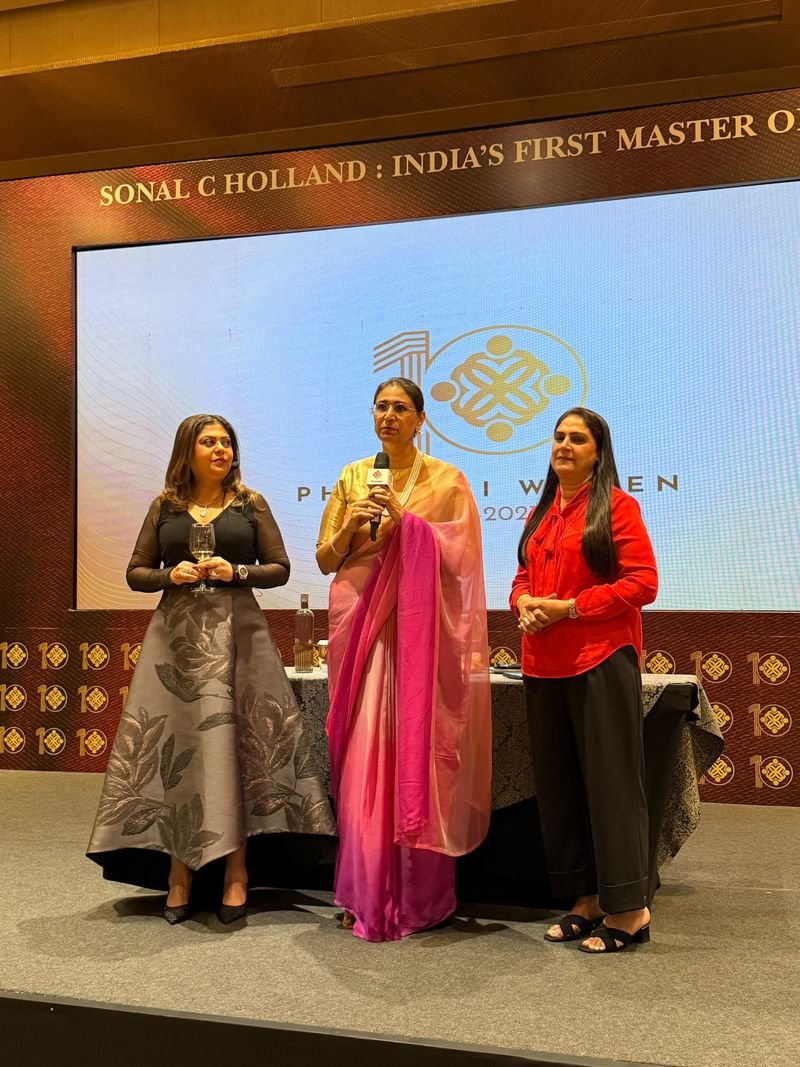

Sonal C Holland has earned one of the wine world’s rarest distinctions, but her larger mission is to make wine more accessible. In 2016, she became India’s first Master of Wine, a distinction that demands conviction, years of rigorous study, blind tasting and a deep passion for the subject. Yet, rather than preserve wine’s mystique, she wants to demystify it.In Amritsar for a wine-tasting event hosted by Phulkari-Women of Amritsar, Holland introduced around 200 women to the language of wine, making it less intimidating, one swirl and sip at a time.“I often say that being a Master of Wine is a distinction so rare that more people have travelled to space than earned the title. I started as someone who knew nothing about wine, which is why I was able to learn through sheer curiosity. The Institute of Masters of Wine lists 427 active Masters of Wine worldwide, across 31 countries. A total of 528 people have passed the examination since it began in 1953. This is why I often tell people that wine is as much about connection as it is about craftsmanship,” she said.Her memoir, One in a Billion: Becoming India’s First Master of Wine, takes its title from the rarity of her achievement.In 2007, Holland decided to leave her corporate career and venture into the world of wine. “It was a leap into an industry that was still finding its feet in India. Wine was largely associated with affluent consumers, formal dinners and a certain social exclusivity. The market had relatively few domestic producers, limited imported selections and little understanding of what distinguished one wine from another,” she said.For Holland, however, this was precisely what made the opportunity compelling. She was entering an industry with room to grow, audiences to educate and possibilities yet to be explored. Rather than seek an established role, she saw an opportunity to help shape the industry.Making wine less intimidatingFor all the technical precision her profession demands, Holland’s broader philosophy is refreshingly simple: wine is meant to be enjoyed.“It is a social lubricant, a conversation starter and a companion to food. Yet wine culture can sometimes be dominated by elaborate terminology and rigid conventions. In a diverse market such as India, tasting wine should not require an encyclopaedia. A bottle of wine should invite curiosity, not anxiety,” she said.That was the approach she brought to the Amritsar event. Her advice to beginners was practical: “Choose a bottle, taste it thoughtfully and, if possible, try something different the next time. Repeated exposure helps the palate recognise patterns, from fruit characteristics and acidity to tannins, sweetness and finish.”The ritual is straightforward: see, swirl, sniff, sip and savour.“Look at the wine, observe its appearance, swirl it to release its aromas, smell it carefully, take a sip and pay attention to how the flavours develop and linger. The larger lesson is to develop your own palate rather than relying entirely on labels, reputation or the opinions of self-appointed experts,” she advised.Wine meets Indian tableHolland firmly believes that wine belongs on every table, including the Indian one. Much traditional wine-pairing advice stems from European culinary conventions. But what happens when the menu features paneer tikka, dal makhani, biryani, a coconut-rich curry or dishes accompanied by chilli, spices and tangy chutneys?The answer, her philosophy suggests, is not to force Indian food into European rules.“Rosé is particularly versatile. Its freshness, fruit and acidity can make it an excellent partner for vegetarian dishes, grilled vegetables, paneer and a wide range of Indian preparations. A fruit-forward rosé can also work beautifully with dishes whose spices might overwhelm a more delicate wine,” Holland said.“For richer or more robust foods, a lighter-bodied red with restrained tannins may be a better choice than a heavily structured, highly tannic wine. Fruitier, slightly off-dry wines can complement spicy food, while high acidity can refresh the palate alongside rich or fatty dishes,” she added. And then there is cheese. “Most people believe that wine and cheese are a match made in culinary heaven. Creamy cheeses such as burrata and richer, harder cheeses such as Parmesan offer different textures and flavour profiles to explore alongside different wines. Ultimately, there is no single formula,” Holland said.For Holland, the point is not to memorise rules or master an elaborate vocabulary. It is to approach wine with curiosity, discover personal preferences and enjoy the experience without being intimidated by convention.