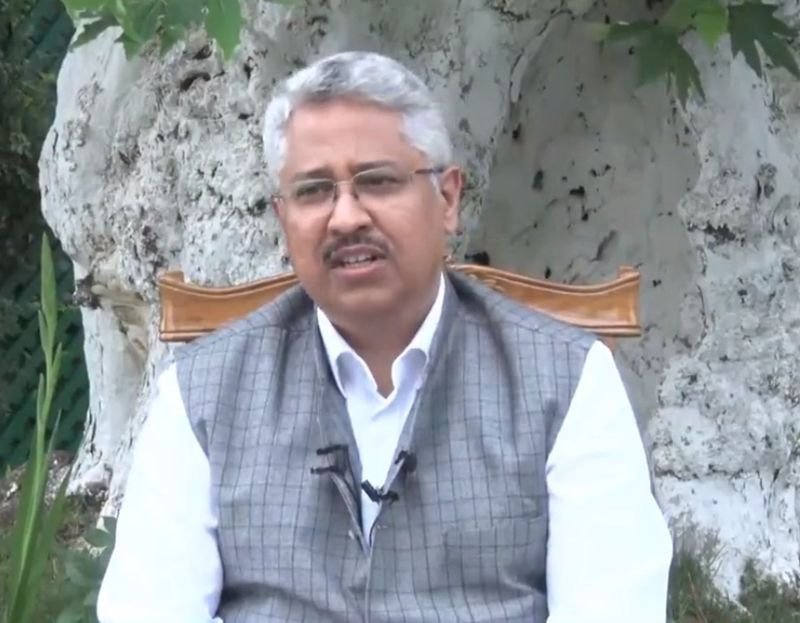

India’s High Commissioner to Canada Dinesh K Patnaik, has asserted that the Khalistan issue is a problem in Canada, not India, urging Ottawa to distinguish between peaceful political advocacy and extremist activities involving violence, extortion and organised crime.In an interview with Canadian public broadcaster CPAC, Patnaik said there was no political issue over Khalistan in India and that Canada needed to address activities by a small group of Canada-based extremists without equating them with the Sikh community.”Canada must understand that activities around the separatist movement were taking place on its own soil.”Patnaik said that Sikhs had every right to peacefully advocate for a separate homeland, but India opposed the glorification of violence, assassination and terrorism.Canadians, Sikhs, Indians, all of them have the right to peacefully advocate for whatever they believe in, he said, adding that India had no problem with peaceful political advocacy.The envoy cited a concert by Punjabi singer Diljit Dosanjh in Toronto to underline the distinction between the wider Sikh community and separatist extremists. While around 45,000 people attended the show, he said, a group of about 15 Khalistan extremists protested outside the venue and tried to enter it.”If you start equating these 15 with the 45,000, then there is no way that we can move forward,” he said.Patnaik argued that the conflation of the Sikh community with extremist elements had also contributed to negative perceptions and anti-Sikh sentiment in Canada. He said political advocacy should not be conflated with activities such as drug smuggling, gun-running, human trafficking and extortion.He also pointed to what he described as increased cooperation between Indian and Canadian authorities against organised criminal networks, saying action was being taken against individuals linked to such activities.The remarks come as New Delhi and Ottawa are rebuilding ties following a major diplomatic rupture in 2023, when then Canadian Prime Minister Justin Trudeau alleged a potential link between Indian government agents and the killing of Khalistan separatist Hardeep Singh Nijjar in British Columbia. India rejected the allegations.Patnaik said India had consistently denied involvement and wanted Canadian authorities to share evidence that could implicate anyone in India.”If you have evidence which implicates anybody in India on this issue, we are willing to take action. We are ready to take action. Show us the evidence,” he said. He declined to comment on the ongoing court proceedings in Canada, but maintained that allegations should not be treated as proof.The envoy also defended India against allegations of foreign interference, referring to Canadian intelligence assessments that have identified India as a source of foreign interference and espionage. He argued that Canada’s own assessments had highlighted Canada-based Khalistan extremists as a security concern for both countries.Patnaik described the recent improvement in bilateral ties as the result of renewed political engagement and sustained dialogue, while acknowledging that trust had been damaged on both sides.Trust is something which is very difficult to build up, very easy to break once its broken, he said, adding that the two governments had made significant progress in restoring communication over the past year.The reset has also opened the way for negotiations on a comprehensive economic partnership agreement, with both countries aiming to conclude a deal by the end of the year. The proposed agreement is intended to ease trade barriers and expand cooperation in sectors including energy, agriculture, pharmaceuticals, defence, artificial intelligence and technology.Patnaik said the pace of negotiations reflected improving confidence between the two governments, arguing that the depth of economic, educational and people-to-people ties made closer cooperation necessary.He said the two countries should not allow a small group of extremist elements to undermine a relationship built over decades.Such a deep relationship needs to be nurtured. Cannot allow for fringe single elements to destroy a relationship which is so integrated at its base, he said.