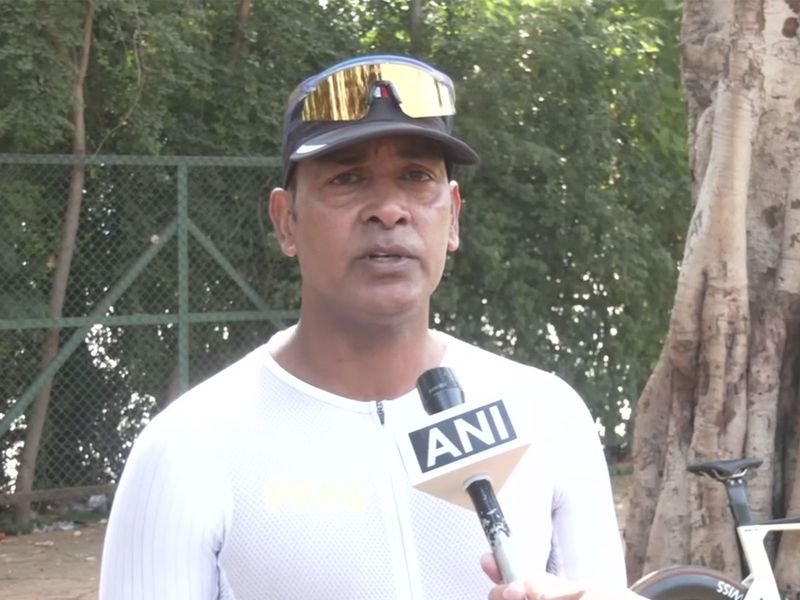

Hyderabad (Telangana) [India], October 12 (ANI): Endurance athlete and triathlon coach Suresh Kumar Goriparthy has come a long way from sprinting at LB Stadium in 1995 and winning a national medal in 1997 to competing in demanding long-distance endurance events.Since running his first marathon in Athens in 2010, he has completed one Full Ironman, five Half Ironmans, all seven World Marathon Majors and marathons across five continents, including challenging races in Oman and Estonia.Detailing the immense physical and mental demands of swimming, cycling, and running, Suresh emphasised that success relies heavily on meticulous planning, strict discipline, and patience rather than just raw fitness.Reflecting on the toughest moments, while speaking to ANI, he said, “I reminded myself why I started the journey in the first place. Instead of thinking about the entire distance, I focused on one step at a time. Discipline, positive thinking, and trusting my training helped me overcome difficult moments.”By balancing a demanding routine with proper recovery and staying anchored to his dedication, he turned gruelling sacrifices into an unforgettable triumph, describing crossing the finish line as “not just about completing a race; it was proof of what dedication and consistency can achieve.”Today, he channels these experiences into coaching others and preparing for his next Full Ironman in San Francisco, offering a grounded message for aspiring athletes: “Start small and stay consistent. You don’t need to run a marathon or become a triathlete on day one. The most important thing is to take that first step.”Goriparthy’s sporting journey began at LB Stadium in 1995, followed by a national medal in the 400 metres in 1997 and a stint with Indian Railways until 2007. He transitioned to long-distance running after completing his first marathon in Athens in 2010. Since then, he has completed one Full Ironman, five Half Ironmans, all seven World Marathon Majors and marathons across five continents. He said his experiences have taught him discipline, patience and mental strength, which he now uses to guide aspiring athletes as a coach.“My sporting journey began at LB Stadium in 1995, where I was trained in the 400 metres and hurdles. 1997 was a special year for me; I won a national medal in the 400 metres and joined Indian Railways, where I served until 2007. Over time, my passion evolved from sprinting to long-distance running. In the year 2010, my first marathon in Athens opened the door to an exciting world of endurance sports. Since then, I have completed one Full Ironman, five Half Ironmans, all seven World Marathon Majors, and marathons across five continents. Every race has taught me valuable lessons about discipline, patience, mental strength, and never giving up. Today, as a triathlon coach, I use these experiences to help others build confidence, overcome challenges, and achieve goals they once thought were impossible. And my journey is far from over,” he said.“I am now preparing for another Full Ironman in San Francisco, with new goals to pursue and new limits to push. Looking back, I see the young athlete running 400 metres at LB Stadium. Looking ahead, I see the same passion and determination; only now, the finish lines are much farther away,” he added.An Ironman event involves swimming 3.8 kilometres, cycling 180 kilometres, and running a full marathon of 42.2 kilometres, all in one event. It requires a lot of physical fitness, mental strength, discipline, and consistent training.Suresh said his passion for sports and desire to push his limits led him from track events to long-distance endurance challenges, with Ironman offering a test of his physical stamina, discipline and mental strength.“My passion for sports and my desire to push my limits inspired me. I started my sporting journey on the track, and over time, I wanted to challenge myself with longer distances. Ironman allowed me to test my endurance, discipline, and mental strength,” he said.Speaking about his training, he said balancing sports, coaching, work and personal life requires planning, discipline and a structured routine, with equal emphasis on consistent training, recovery, nutrition and rest. He added that preparing for an Ironman demands patience, sacrifice and commitment, even on physically challenging days.“It all comes down to planning and discipline. I try to balance my training, coaching, work, and personal life by following a structured routine. Early mornings are usually important for training, and I make sure to give equal importance to recovery, nutrition, and rest. The toughest part was maintaining consistency over a long period. Training for an Ironman is not just about physical fitness; it also requires patience and sacrifice. There are days when your body feels tired, but you have to stay committed to your goal,” he said.Suresh said endurance races require advance course study, preparation and adapting strategies to weather, terrain and other conditions. Recalling challenging races in Oman and Estonia, he highlighted the importance of proper pacing, mental strength and perseverance. He added that planning travel, equipment, nutrition and recovery is essential, advising beginners to start small, set realistic goals and remain consistent.“Every race venue has its own challenges. Weather conditions, water temperature, road surfaces, elevation, and wind can all affect performance. The key is to prepare well, study the course in advance, and adapt your race strategy to the conditions on the day. Two of my most challenging races were the Half Ironman in Oman and the full Ironman in Estonia. In Oman, the elevation and tough climbs tested my endurance, while in Estonia, strong winds and steep slopes made the race even more demanding. I overcame these challenges through proper pacing, mental strength, and staying focused on my goal. These experiences taught me that endurance racing is not just about physical fitness, but also about adapting to conditions, staying patient, and never giving up,” he said.“Preparation starts well before the race. I plan my travel, equipment, nutrition, accommodation, and race schedule in advance. I also try to arrive early enough to recover from travel and adjust to the local conditions. After the race, proper hydration, nutrition, sleep, and light recovery activities help me get back to normal. My advice is to start small and stay consistent. You don’t need to run a marathon or become a triathlete on day one. Start with walking, running, swimming, or cycling, and gradually improve your fitness. Set realistic goals, listen to your body, and enjoy the process. The most important thing is to take that first step,” he said further. (ANI)(This content is sourced from a syndicated feed and is published as received. The Tribune assumes no responsibility or liability for its accuracy, completeness, or content.)