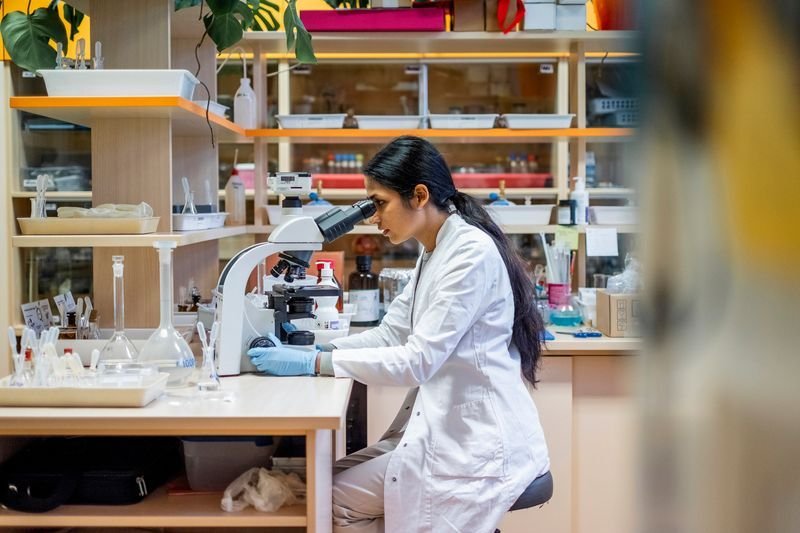

Punjab Agriculture and Farmers Welfare Minister Gurmeet Singh Khudian on Tuesday inaugurated a state-of-the-art bio-fertiliser testing laboratory at Kalkat Bhawan, Mohali, completing the state’s three-lab quality assurance network set up at a cost of Rs 4.50 crore to ensure supply of certified, spurious-free bio-inputs to farmers. The other two laboratories have already been established at Gurdaspur and Bathinda.Speaking after the inauguration, Khudian said, “These laboratories will ensure that farmers get certified and effective products, protect them from spurious inputs and help reduce dependence on chemical fertilisers.” He added that the labs will also help enforce the Fertiliser Control Order, monitor manufacturers and dealers, and generate data for improving bio-fertiliser strains suited to Punjab’s agro-climatic conditions.Punjab is a major agrarian state, contributing over 30 per cent to the nation’s wheat and rice production, Khudian said, adding that organic farming is an alternative system aimed at sustainable production while conserving precious natural resources. It is a holistic approach focused on achieving quality agricultural production and improving soil health.The Agriculture Minister said India has a rich tradition of organic agriculture, but it was overshadowed by the rapid growth of input-intensive modern farming. With rising awareness about food safety, environmental health and evidence of comparable productivity, organic farming has re-emerged as a viable system. As of 2025-26, Punjab has approximately 30,000 acres under certified organic cultivation.The annual consumption of bio-fertilisers in Punjab is around 15,000-16,000 MT/KL and is steadily increasing. With the rapid growth of organic farming, ensuring quality has become critical. The three new labs at Bathinda, Gurdaspur and SAS Nagar (Mohali) will ensure that only certified products reach farmers, safeguard them from spurious inputs, enforce regulatory compliance, promote organic farming, reduce dependence on chemical fertilisers and support long-term soil health and environmental sustainability, he added.