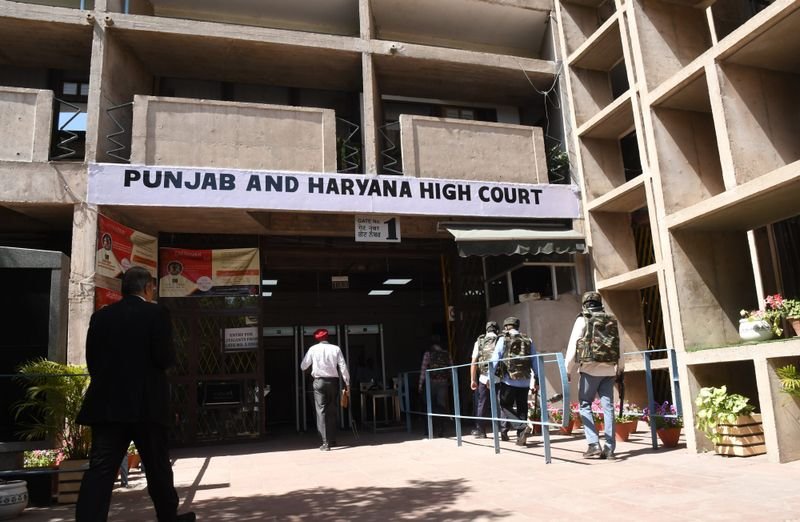

After a prolonged period of largely stagnant pendency, the Punjab and Haryana High Court has reduced its overall case backlog by 9,283 cases in just over three months, registering the steepest decline in the recallable past.The total pendency fell from 4,13,500 cases on July 1 to 4,04,217 on October 12 — a reduction of approximately 2.25 per cent.For nearly six months, the High Court’s overall pendency had remained almost unchanged, with only marginal reductions. The latest fall marks a clear departure from that trend.The turnaround has coincided with a more decisive emphasis on disposal under Chief Justice Ashwani Kumar Mishra, who assumed charge as Acting Chief Justice on June 1 before being sworn in as Chief Justice in September.Shorter hearing intervals, advance responses from opposing parties, prioritisation of older cases and efforts to avoid unnecessary adjournments are among the measures which have contributed to a more disposal-focused approach.The momentum’s clearest indication is the case clearance rate (CCR), which measures disposals against fresh institution. A rate above 100 per cent means that the Court is deciding more cases than are being instituted, thereby reducing the accumulated backlog.The High Court’s CCR for the current year has reached 109 per cent, against 103 per cent last year, indicating that disposals are outpacing fresh filings.In September alone, the Court disposed of 21,644 cases against 17,871 instituted, recording a CCR of approximately 121 per cent. The Court disposed of 3,773 more cases than were instituted, bringing down the backlog despite the continued filing of fresh cases.From listing cases to moving them towards decisionsA significant feature of the emerging approach is the emphasis on expeditious adjudication, shorter intervals between successive hearings and avoidance of unnecessary adjournments.Matters earlier listed about three times a year are now being taken up more than three times a month, facilitating timely responses from opposite parties, hearing of arguments and — where a matter is ripe for adjudication — final decisions within as little as two months.The focus is also on substantive adjudication. Instead of merely directing authorities to decide representations, leaving the underlying controversy unresolved and potentially triggering another round of litigation, the High Court is now deciding the substantive issues wherever the pleadings are complete, and the matter is ready for determination.Frequent hearings are helping in maintaining continuity and moving cases towards final resolution without avoidable delay.Older cases and vulnerable litigants get priorityThe Court’s listing priorities also reflect an effort to address cases pending for years.The Court is listing approximately 6,000 matters daily. Cases up to the year 2000 and matters involving senior citizens, crimes against women, persons with disabilities, juveniles, marginalised sections, Prevention of Corruption Act matters, proceedings stayed before lower courts and remand matters received from the Supreme Court are among those identified for priority consideration.Cases up to 1995 are being listed in the urgent motion cause list, ensuring a hearing. The roster also provides for cases involving senior citizens aged 86 years or above to be placed in the urgent motion cause list.The prioritisation recognises that delay does not affect all litigants equally. For an elderly litigant, a person awaiting the outcome of a long-pending service dispute or someone whose proceedings before a lower court have been stayed, the passage of time can substantially diminish the value of an eventual judicial remedy.Virtual hearings have added another practical avenue for maintaining continuity. The facility allows counsel to appear remotely, potentially avoiding adjournments arising solely from their inability to attend the courtroom in person.A heavy workload despite judicial vacanciesThe reduction has come despite the High Court functioning below its sanctioned judicial strength. Even after nine additional judges were appointed in August, the Court has a working strength of 64 against a sanctioned strength of 85, leaving 21 vacancies. Seven names are in the zone of consideration for elevation, but three Judges are also retiring this year.The test is sustained relief for litigantsMore than four lakh cases remain pending, and the latest decline is an initial step towards addressing the accumulated backlog. The real test will be whether the trend continues and translates into the disposal of cases that have remained pending for five, 10 or even 15 years.The latest numbers suggest that pendency can be brought down even under considerable institutional constraints, when the emphasis shifts from the routine listing of cases to their timely progress and disposal. For litigants, the significance lies not merely in a lower aggregate figure, but in the prospect of cases moving more consistently towards decisions.