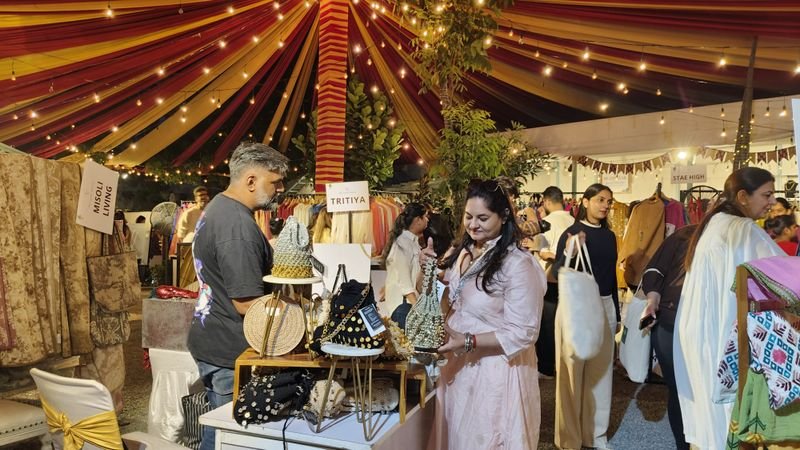

A journey across India’s artistic landscape, The India Story, curated by Guneesha Dhatt and Sona Sardana, brought the country’s rich craft heritage to life in Chandigarh.From the timeless elegance of Kashmiri shawls and the beauty of Andhra’s Kalamkari to Punjab’s vibrant Phulkari, Rajasthan’s Bandhani art, Bihar’s Madhubani paintings were in spotlight as the collection celebrated the extraordinary diversity of India’s traditional arts.Each craft, rooted in its own region and history, offered a glimpse into the stories, skills and cultural legacies that continue to shape India’s diverse craft. Every product bore the hallmark of its geographical origin, passed down through generations of expertise, skill and a heritage that evolves with time.For Guneesha Dhatt, The India Story is as much about recognising the people behind the craft as it is about celebrating India’s artistic heritage. “Curating is about bringing fashion and artisans’ talent to the forefront. Their hard work must be recognised, and we have tried to bring together the best possible representation of art forms of all kinds,” she says.Extending beyond what one wears, the collection also explores how traditional craftsmanship can find a place in one’s home, from textiles and decorative arts to objects that carry the imprint of India’s cultural legacy. The idea, she suggests, is to make art an integral part of everyday life, while giving the artisans and their skills the recognition they deserve.From Indian and Indo-Western ensembles to home décor, shawls, stoles and footwear, The India Story offered a thoughtfully curated mix of fashion and lifestyle, with something to appeal to every taste and preference. The showcase went beyond clothing, bringing together labels that celebrated the diversity of Indian craftsmanship through wearable art and pieces for the home. Among the highlights was Chandigarh-based Gaia and Gul, which presented its Golden Temple collection, translating the spiritual and architectural beauty of the revered shrine into wall art. Each collection brought its own interpretation of tradition, demonstrating how India’s rich artistic vocabulary can find expression across fashion, textiles and décor.Adding to this cultural tapestry was Ludhiana-based Kanpeki Disha, which showcased a range of traditional art forms, including Kalamkari from Andhra Pradesh and Madhubani painting from Bihar, alongside pure silks woven by hand. The presence of Kashmir-based Radhika, known for her exquisite pashmina shawls, brought another dimension to the exhibition. Driven by a deep personal passion for the craft, her work reflected the beauty of preserving age-old weaving traditions. Together, these labels highlighted the stories, skills and dedication behind every creation, making the showcase a celebration not just of Indian design, but also of the artisans and enthusiasts who keep its heritage alive. Adding to the collection was The Toran, handicrafted by Chhoti Si Asha, sourced from their rural women-led organisation.