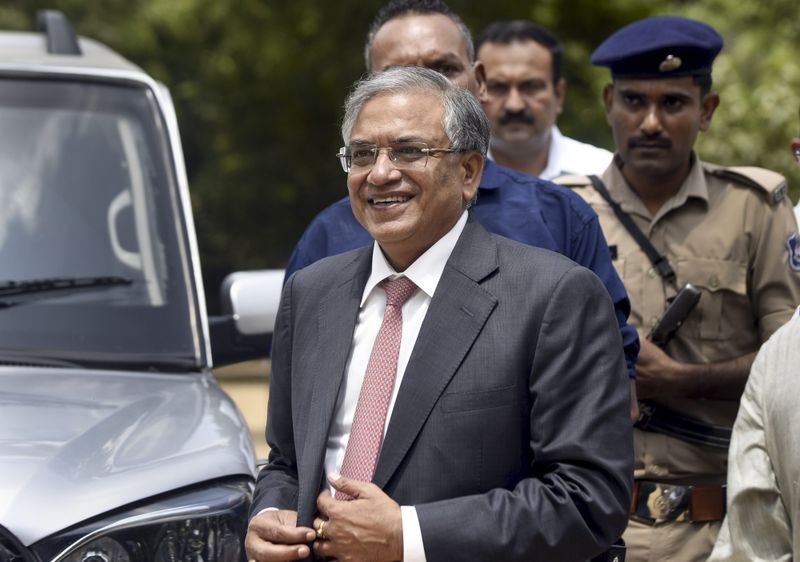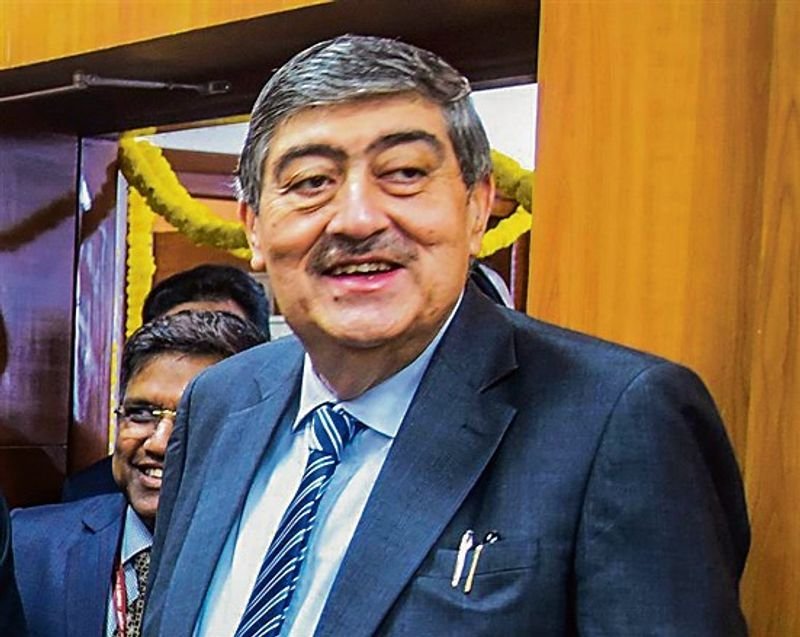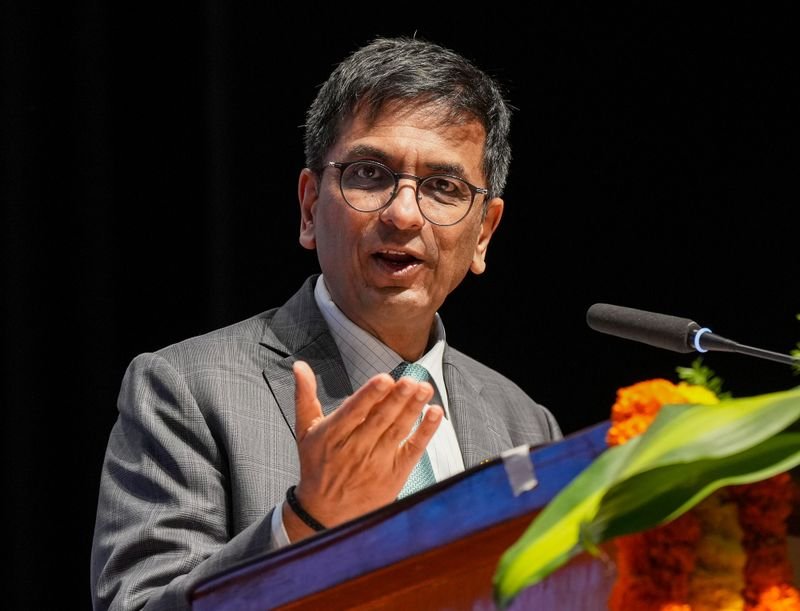

Former Supreme Court judge Sanjay Kishan Kaul has criticised former Chief Justice of India D Y Chandrachud’s approach to judicial appointments, alleging that he was “too deferential to the government”.In his forthcoming memoir ‘Without Fear or Favour’, Justice Kaul, while recounting a collegium meeting to fill six Supreme Court vacancies, says five names had been agreed upon in advance when Justice Chandrachud proposed a sixth candidate and considered checking the government’s view.“The Chief Justice drew me aside into a separate room and wondered aloud whether he should telephone out to check the government’s view,” Kaul wrote in his book.“There is a difference between consultation and what I came to regard as pre-approval, seeking the government’s nod before the collegium had even formally deliberated,” Justice Kaul wrote.Speaking to news portal ‘The Wire’ about his memoir, the former judge said that the collegium must resist executive pressure to safeguard judicial independence.Justice Kaul said, “There’s a judicial side and there’s the administrative side to achieve justice’s purpose. I wouldn’t be concerned with the judicial side. I believe he (ex-CJI Chandrachud) had both the intellectual depth and the capacity and hard work to do so. But in consultation with the government and collaboration, I felt that he was more deferential than necessary to carry it forward”.He further said that “on administrative issues, there was just, I think, too much of the discussion with the government”. Asked whether the then CJI was trying to please the government or seeking prior approval, Justice Kaul said, “I don’t think it was a question of pleasing the government, but what had happened was that he had discussed the names with me earlier.“We had agreed on five names, and I thought the collegium would be quite okay with the other members of the collegium, and this (sixth) name was propped up at the last minute with me while going to the collegium meeting. I said that name is not acceptable to me and will not be acceptable.”“And well, he wanted me to collaborate and go ahead with the name. I said even if I do that, the others will not. I believe, and that’s what happened in the meeting. I told him this will not get through because I know the views of the other collegiate members. Maybe he had already taken some kind of an approval for the other names, including the sixth name,” Kaul told senior journalist Karan Thapar.“So this has become, unfortunately, a practice of names being discussed in some kind of a previous discussion with the government,” he said.“It has been happening, I think, before and after, which is what troubles me. That’s why I have written that when the government introduced the NJAC (the National Judicial Appointments Commission) in 2015, we would at least have sat across the table and discussed it. It could have been fine-tuned. It could be modulated,” Kaul said.He said that there was a lot of expectation from Justice Chandrachud, and he, at the beginning of his tenure, had told him that “I will be there to help him out. I don’t believe the second judge’s job is to keep pulling the leg of the senior chief justice, and the idea is to support. But maybe we were different people in our thinking processes.”Justice Kaul said that he believes that in dealing with the government, especially in judicial appointments, “we should have been more firm, and that’s what my view was”.“And it is known that we, in view of the earlier judgment of a three-judge bench to which I was a party, and we had tried to lay down timelines for judicial appointments. A contempt petition was filed, and I issued notice not as a contempt petition, but as a notice to see that the government is prodded in making the appointments.”Justice Kaul, who retired in December 2023, writes that differences over dealing with the Executive strained his relationship with Justice Chandrachud, under whom he served on the collegium from June 2022.Asked about calling Justice Chandrachud “too deferential to the government on appointment matters,” Justice Kaul said, “Well, he believed that this is how it had been happening, and I was of the view that you, with a chief justice like you and with two years’ tenure, and with your own merit and the trust, if you do this, the successors would have a problem in not following this practice because they have shorter tenures.”Kaul said he felt the government “would get used to a particular methodology” before appointments to the Supreme Court were made, and that’s why he endeavoured to discourage Chandrachud from discussing everything beforehand.He also spoke about his objections to transferring a case concerning the reconsideration of aspects of the Prevention of Money Laundering Act (PMLA) judgment from a bench he headed to another bench. He says cases should not move between benches because of apprehensions about how they might be decided.Citing Kaul’s yet-to-be-released memoir, the opposition Congress on Jattvibeday claimed it raised “serious questions regarding the independence of the judiciary under the Modi government” and asserted that the institution tasked with upholding the Constitution must remain free from the pressures of those in power.In a post in Hindi on X, Congress general secretary (in-charge communications) Jairam Ramesh said that Justice Kaul has highlighted “several concerning incidents – government interference in the appointment of judges, attempts to secure government approval prior to Collegium meetings, and the government’s absurd questioning regarding the caste of a judge belonging to a minority community”.On Kaul’s remarks related to PMLA case, Ramesh alleged that it points to government’s “day-to-day interference in the functioning of the Supreme Court”.Asked whether he was asked by the then CJI Chandrachud to be “cautious” and “to take a middle path” in the PMLA case, which is still sub judice in the top court, Justice Kaul said in the interview, “What was put to me was maybe some lawyers or legal fraternity was talking that why near my retirement I was trying to take up this matter.“Well, the matter was taken up by me earlier, and it happened that the government wanted some more time, and that’s how it came within the range of what less than a month of my retirement, so I just told them that, look, what would people talk about that I’m taking money for this?“And if after 22 years of my judgeship I am committed to cow down on this kind of an issue, I have not done my job. My integrity is something I value greatly, but not at the cost of somebody trying to push me,” he said.Justice Kaul said that he told Chandrachud and then Justice Sanjiv Khanna, who was present at that time in the room, that in his judicial career, he had never taken a middle path. “If I felt right about it, I’ve gone away with it. After that discussion, we decided to go ahead with the matter, and both Justice Khanna and I walked to the courtroom to proceed with the hearing,” he said.On the CJI being master of the roster at the Supreme Court, Justice Kaul said in most high courts there’s a better discussion mechanism in the administrative processes while the Supreme Court is “very registry-oriented”.“So the discussion is largely between what is to be done between the registry and the chief justice, as it’s the final court…,” he said, suggesting that there is little consultation with fellow judges.