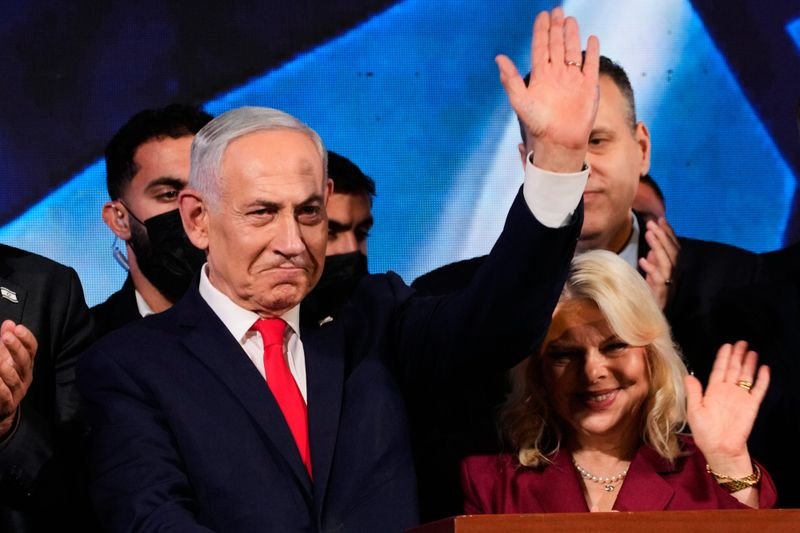

Israeli Prime Minister Benjamin Netanyahu’s bloc remained short of a parliamentary majority as the latest partial election count gave it 53 seats, against 48 for the opposition bloc led by former military chief Gadi Eisenkot, while Arab-led parties were projected to win 19 seats, leaving the formation of the next government uncertain. According to local media reports, 93 per cent of ordinary ballots had been counted till the filing of this report, accounting for 85.6 per cent of the total votes.At least 61 seats are required for a majority in the 120-member Knesset, Israel’s Parliament. Eisenkot’s bloc and the Arab-led parties together have 67 seats in the current count, potentially giving them enough parliamentary support to form a government if they can overcome their political differences.However, the prospect of such a government remains uncertain. Netanyahu — who was likely to remain Israel’s caretaker PM — has opposed relying on Arab-led parties, while opposition figures have differed over whether to include them in a coalition.What next?After the final tally is in, President Isaac Herzog will consult party leaders on whom they want as PM and then tap the candidate he believes has the best chance of forming a government. That nominee has up to 42 days to form a government.No single party in Israel has ever won an outright majority, so governments are formed by a coalition, and negotiations on forming a government often take weeks. Every Knesset seat counts and small parties can have a big impact by becoming kingmakers.If the nominee fails, others can get a chance to try. If no government emerges, another election is called, with the present cabinet staying on as a caretaker government.