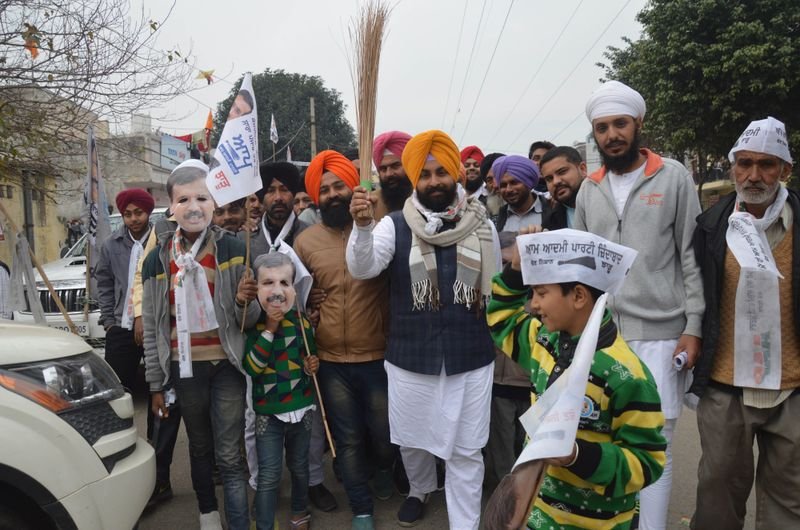

As Punjab gradually moves towards the 2027 Assembly elections, a subtle generational divide is becoming visible in the way politicians approach voters. Beyond speeches, rallies and promises, the traditional gesture of touching elders’ feet has emerged as a point of contrast between a younger crop of AAP leaders and the established political leadership of the Congress, BJP and SAD.Education Minister Harjot Singh Bains is among the AAP leaders who have made the gesture a regular feature of their public interactions. During village visits, he often touches the feet of elderly residents to seek their blessings. The practice extends to pilgrims travelling in buses arranged under the Chief Minister’s Tirath Yatra scheme, where he bends before elderly passengers to seek their blessings.The gesture appears to be finding favour among sections of the rural population. For elderly voters accustomed to politicians being surrounded by supporters and party workers, a minister bowing before them creates a sense of personal connection and appreciation.Senior Congress leader and former Speaker KP Rana, however, termed Bains’ gesture a ‘poll gimmick.’ He said Bains had remained inaccessible to people in the area over the past four years and was now resorting to such tactics to attract voters ahead of the elections. Such gimmicks, he added, could not compensate for the lack of development and poor governance under the AAP government.BJP state vice-president Subhash Sharma also dismissed the gesture as a poll gimmick. He said the AAP government had adopted harsh measures against teachers, government employees, and farmers. Touching people’s feet now, he added, could not absolve the government of the alleged cruelties inflicted on them.Ropar MLA Dinesh Chadha, another AAP leader, is also known for touching the feet of senior citizens during public interactions. Before joining the AAP, Chadha was associated with the Congress and was better known in the area as an RTI activist than as a conventional politician. Coming from a relatively humble family, he has retained a public persona that emphasises personal accessibility.A substantial section of AAP legislators comprises first-time representatives who entered electoral politics without the political legacies of established families. Many come from comparatively modest backgrounds and have built their public profiles through grassroots activism.The political culture associated with sections of the Congress, SAD and BJP leadership has evolved differently. Several prominent leaders in these parties come from established political families and have grown up around constituency-level networks in which senior leaders occupy positions of influence and supporters seek access to them.In this traditional model, the relationship between a leader and a supporter has often been marked by hierarchy. At public gatherings, supporters may touch a politician’s feet to express respect or seek blessings, while the leader receives them from a position of social and political standing.The difference in public gestures has become a talking point as parties prepare for the next Assembly election. The issue is particularly significant in rural Punjab, where social respect, personal relationships and a leader’s conduct outside formal political events can influence public perceptions. A politician who approaches elderly residents rather than waiting for them to approach him may be seen as accessible and grounded.There are allegations that, in certain constituencies, people who do not follow customary gestures of deference may find it harder to secure a leader’s attention or favour. Such perceptions, whether widely shared or limited to particular circles, point to the continuing influence of hierarchy in constituency politics.For young AAP leaders, the public display of humility offers an opportunity to reinforce the party’s image as one whose leaders remain close to ordinary people. For the established parties, the challenge is to demonstrate that political experience and seniority need not translate into social distance.Whether touching feet will translate into votes remains to be seen. While a gesture of respect cannot substitute for performance, it can influence how a politician is received. As the 2027 Assembly election approaches, Punjab’s feet-touching politics offers a small but revealing window into the changing language of political outreach.