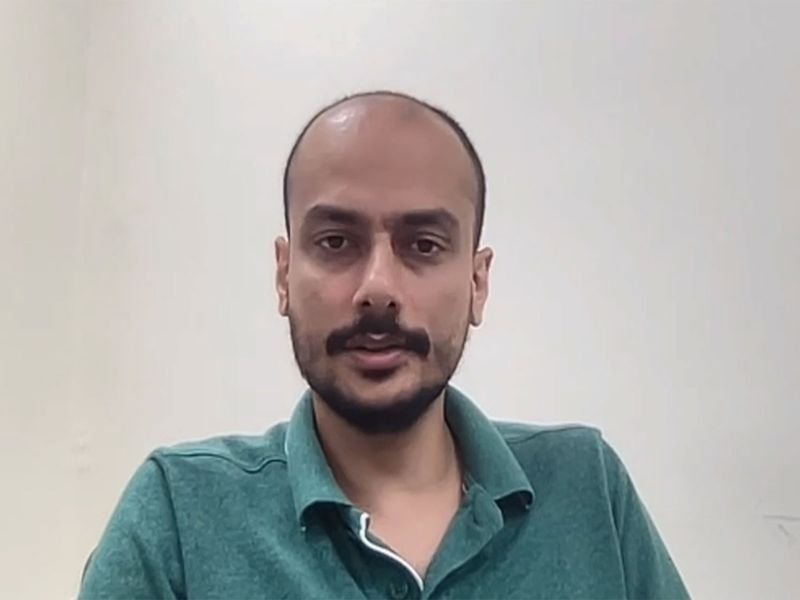

New Delhi [India], November 4 (ANI): The Indian Football League’s (IFL) decision to restrict clubs to three foreign players in their starting XI this season is aimed at creating more opportunities for Indian footballers while improving the quality of overseas recruits, league CEO Nildeep Mondal said, underlining the competition’s focus on domestic player development as it enters a new phase.The 2026-27 season, which began on October 30, is the first under the revised foreign-player regulation, with clubs permitted to field a maximum of three foreign players at any given time. Mondal said the change had been under consideration for some time and was intended to address the growing presence of overseas players in key positions.”First and foremost, the three foreign player rule is not something that’s come up overnight. It was in the pipeline for a while. The reason is quite simple. We wanted to increase the opportunities of Indian players to have slots in the first 11 in terms of playing minutes. Now, with the four-foreign-player rule, what was happening is that the standard of the league had obviously gone up,” Mondal told ANI.”You had key positions being taken up by foreigners over time. It’s been happening for years. With the three-foreign-player rule, what happens is you open up one slot, either as a centre forward, a centre back or a centre midfielder, where Indian players are going to be playing 24×7. That’s one. The second thing is, with a situation where you have three foreigners coming in, you potentially have to ensure that the money being spent is on better-quality players. So, on a two-way basis, one is obviously increasing the time of Indian players; the second is ensuring the foreigners have a better quality,” Mondal added.The league has also expanded its footprint with the entry of Nagaland United SC and Samaleswari SC from Odisha. While the new clubs bring national-level football to regions with growing ambitions in the sport, Mondal said their presence alone would not guarantee opportunities for local players, with selection ultimately dependent on merit.Asked whether the addition of a Nagaland-based club would ensure greater representation of local talent in the league, he said, “That’s something that I think only time will tell. Football, especially at the national level in terms of leagues, operates on a free market. Which means that if you are in a team, you are there on merit. It doesn’t mean that just because you are from Nagaland, you will be in the Nagaland United team or the same for Samaleswari. That said and done, most teams always look for a local connection.”He pointed to the importance of local representation in building a connection between clubs and their communities, while stressing that the process would take time.”Because, for example, if Samaleswari wants to really connect with the local community, they will have to have local staff, right? That’s across the globe in terms of homegrown players coming to the academies, becoming the superstars of the local team. That aspirational value only comes when a local guy really makes it. So, we hope so. But only time will tell. This is a long-term piece,” said the IFL CEO, who is also Chief of Strategy and Operations at AIFF (All India Football Federation).To strengthen the domestic talent pipeline, Mondal said the AIFF had introduced mandatory academy requirements for clubs. Under the framework, every club is required to have a two-star academy by the end of this year, while the target is to establish three-star academies by 2030.The IFL has also secured a broadcasting partnership with Zee Entertainment Enterprises Limited (ZEEL), which Mondal described as more than a conventional rights arrangement. The partnership, which also involves DD Sports, is designed to expand the league’s reach through television and digital platforms while supporting clubs and the wider development of Indian football.Mondal said discussions with Zee had been underway for several months, with the broadcaster showing an interest in carrying domestic football content and helping build a fan base.”Zee has actually been massively helpful for the IFL in general and Indian football. Since they’ve taken over the rights of the FIFA World Cup, which happened in the summer, I think it was very well publicised that they went on record saying that they wanted to invest a certain amount, I think, in grassroots and building Indian football. We’ve been speaking to them for a while as IFL in terms of, let’s say, June, July, August. We spoke to them initially. The plans were not completely formalised then, but the intent was definitely to carry Indian football content on the platform and build a fandom,” he said.He said the association was intended to support clubs on and off the pitch, making it a wider development partnership rather than a deal limited to broadcasting matches.”Purely from the IFL perspective, historically the IFL, or when we used to call it the I-League or National Football League, it’s always been a hotbed for the development of talent. So, it was a finishing school, which meant that, for example, a player coming through the age of 17, 18, 19, who was getting an I-League team is really good for an IFL at this point. Only then, after performing for a year or two, they go to the ISL and then start getting the first team there,” said Mondal.”So, it’s a very, very crucial talking point with regard to a whole development perspective. And ZEE, I think, understood this. From a purely marketing standpoint, they have come on board as partners. Now, it’s very different from a broadcast deal where a broadcaster is coming and saying that, hey, you know what, I’m paying the broadcast fees and I’m going to take it, I’m going to market it. No, no, they’re genuinely here trying to help us on the ground as well. So, there’s a 360-degree partnership with ZEE,” he added.Mondal described the ongoing season as the foundation year of a long-term association, expressing hope that the partnership would help improve the league’s commercial viability, visibility and ability to attract sponsorships.”The idea is that we have a long-term partnership that’s meaningful and fruitful. We don’t want to go to the market two years later and say, okay, we want a new broadcast partner. This is the foundation year, I would say, of a long-term partnership. That’s going to span across the IFL. But especially the IFL is going to definitely help us take something that’s organic and probably has not had the best day-to-day product in the recent past to the next level and ensure it reaches the audience that it deserves. And then you start seeing commercial viability of the league, and you start seeing visibility, which eventually translates into sponsorships to ensure the clubs, AIFF, and the broadcast partner also make it happen,” said Mondal.With the IFL moving towards a club-led structure, questions have also been raised about commercial transparency and how revenue will be distributed. Mondal explained that clubs are now responsible for building their own commercial structures, while the league oversees governance, compliance, match operations and other regulatory responsibilities.Mondal said, “What’s happening here is, in the new structure, the IFL takes care of governance, match commissioners, anti-doping, referees, integrity issues, compliance with the league regulations, their PTAs, commercial aspects, which may include sponsorships, broadcasts, commercial deals, in fact, even to a certain degree, scheduling and time of the kick-off. All of this is handled by the clubs, right?””So, the clubs are not getting a ready-made commercial structure from the IFL. They are building it. So, they are the ones driving the decision-making while the IFL is taking care of the compliance. So, on the contrary, I think the basic structure is 90-10. I think that’s well-known. 90% of revenue goes to the clubs. 10% comes to the IFL. This is obviously a net revenue perspective after the entire operational cost is taken care of,” he added.Asked whether the new model could make the league financially sustainable for clubs, Mondal acknowledged that it involved risks, with teams having to invest upfront, but said he believed the shift towards a club-driven system was necessary.”We hope so. I mean, that’s the whole intent. I mean, it’s a leap of faith, I would say. All the clubs have taken a step that was taken in most European countries about two, three decades ago with regard to a club-driven model. The upside is high. Obviously, there’s a risk involved as well because they’re taking the cost upfront,” said Mondal.He added that the league would aim to generate revenue in the coming years to help meet a portion of club expenditure, although its growth would depend on factors beyond the competition itself.”Will it get to a point where it starts generating some revenue in a few years, where it subsidises a certain degree of expenditure? Hopefully. How fast will that happen? And to what degree will the league grow? I think that’s all dependent on multiple factors that are not just the league itself. It also depends on what the national team does, what the overall environment and intent from a lot of brands investing in sports are in terms of whether they’re going to go beyond cricket into Olympic sports, into football,” he said.He further added, “So a lot of factors are coming into play. But as a product, we will definitely do whatever is required to ensure that standards are as high as possible. We keep improving year on year. And we grow even from a technical standpoint in terms of the number of teams. You increase that, increase division of the league. So we are serving the technical requirement of AIFF as well, alongside the commercial aspect of making this league successful.”The absence of the reigning champions Diamond Harbour FC, who won the 2025-26 IFL title but are not competing this season, was another issue raised with Mondal. The club had secured promotion to the Indian Super League but was subsequently excluded from the 2026-27 ISL after failing to pay the second instalment of its participation fee.Mondal declined to speculate on the club’s future, saying the matter should be addressed by Diamond Harbour itself.”I can’t comment on that because that’s something that you’ll have to probably ask the club. They had some issues, I think, initially at the beginning of the season, which led to them sort of not paying the second instalment of the entry fee, which was again mandated by IFL and the clubs, and the ISL. But beyond that, I wouldn’t have information on that. And I think I would recommend you speak to the club on that one in terms of what their plans are with the structure for this season and next season. Obviously, this year, they’re not in the ISL, right? So, next year, whether they’re sort of going to be playing the IFL or where they want to go with this one, I think you’ll have to ask them,” said Mondal.On the challenge of bringing more spectators to stadiums and building awareness around the competition, Mondal said visibility was the first step towards developing a loyal fan base. He outlined a progression from awareness to interest, consumption and, eventually, loyalty.”Visibility is the most important thing at this stage for a new club. To walk out and create an environment where there is a certain degree of loyalty for the fan base. Visibility is the most important thing in the first place. First step, visibility. From visibility, you have interest. From interest, you have consumption. From consumption, you have loyalty. That’s the progression of any brand growing,” he said.He said the league was making match footage and other media assets available to clubs to help them build their own digital presence, while also working with each team on local engagement initiatives.”Secondly, there is something called a club development plan, which is individually working with each club. This effectively means the club is a custodian of the league in the hyper-local market,” he added.Using Samaleswari SC as an example, Mondal said clubs would be encouraged to engage with schools, organise youth competitions and develop grassroots connections in their respective regions.”Reaching out to schools, getting new teams there, youth competitions, traction at a hyper-local level, selling off tickets. We are the ambassadors of not just the IFL, but Indian football in the geographies. Which means we will give you the technical blueprint. We will give you what’s required to develop the players. We will work with you on how you reach out to your local grassroots communities. But the face of it will be the club in a specific geography. And they are the ambassadors of the league, and in turn, ambassadors of Indian football,” he concluded.The 2026-27 IFL season features 11 teams competing in a home-and-away format, with each side scheduled to play 20 matches. The campaign runs until March 20, 2027, with the winner earning promotion to the ISL and the bottom two teams facing relegation to I-League 2.For Mondal, the challenge is to ensure that the changes in regulations, governance, broadcasting and club operations translate into a stronger domestic competition and a sustainable future for Indian football. (ANI)(This content is sourced from a syndicated feed and is published as received. The Tribune assumes no responsibility or liability for its accuracy, completeness, or content.)