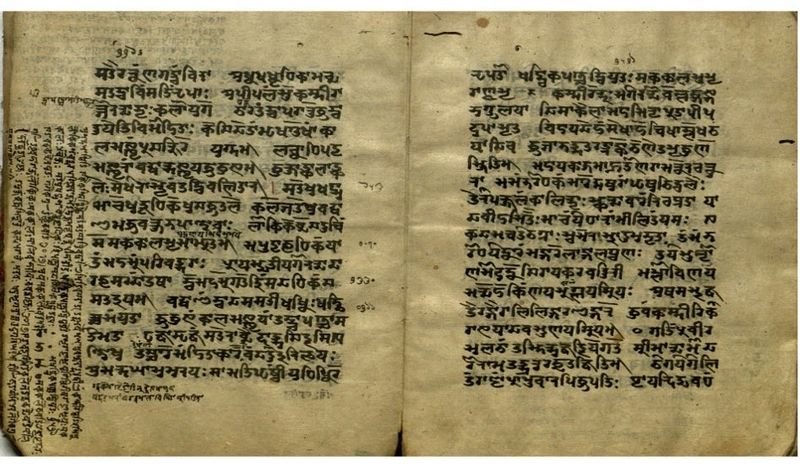

In a significant recognition of India’s literary, historical and intellectual heritage, three major ancient Indian works — the Rajatarangini, the Mahabharata and the Arthashastra — have been inscribed in UNESCO’s Memory of the World Asia-Pacific Regional Register.The inscription marks an important milestone in the international recognition of India’s civilisational heritage and its contribution to historical writing, literature, political thought and governance.The announcement was shared by the Ministry of Culture on Thursday, describing the development as a moment of pride for the country and highlighting the global recognition accorded to India’s rich knowledge traditions.“The three works represent distinct strands of India’s intellectual heritage — historical documentation, epic literature and political economy. Their inclusion also adds to India’s growing presence in UNESCO’s regional documentary heritage register,” Union Culture Minister Gajendra Shekhawat said.The Rajatarangini, written by 12th-century Kashmiri historian Kalhana, is a chronicle of Kashmir’s rulers, political developments and social life. Composed in Sanskrit, it is regarded as an important early work of historical writing in the Indian subcontinent.The Mahabharata, traditionally attributed to sage Vyasa, is one of the world’s longest epics. Beyond its narrative of the Kurukshetra war, it contains extensive philosophical, ethical and social reflections, including the Bhagavad Gita.The Arthashastra, attributed to ancient Indian strategist and scholar Kautilya, is a treatise on statecraft, administration, economics, diplomacy and military strategy. It remains an important source for understanding ancient India’s political and administrative thought.The recognition is particularly significant because it honours not merely the literary works but also the rare manuscripts through which these traditions have been preserved.According to the nomination details published by the Memory of the World Committee for Asia and the Pacific, the Mahabharata manuscript is a 400-year-old birch-bark document written in the Sharada script and preserved at the Bhandarkar Oriental Research Institute.The Arthashastra survives in a 16th-century palm-leaf manuscript in Grantha script at the Oriental Research Institute in Mysuru, while the Rajatarangini manuscript is preserved at the Oriental Research Library in Srinagar, it said.UNESCO launched its Memory of the World Programme in 1992 to safeguard documentary heritage of outstanding historical, cultural and intellectual significance and ensure its preservation and accessibility for future generations.India had earlier secured regional register recognition for three other literary works — the Ramcharitmanas, Panchatantra and Sahṛdayāloka-Locana — in 2024.The latest inclusion further expands the international recognition of India’s manuscript traditions and their influence on the intellectual and cultural history of the Asia-Pacific region.A moment of immense pride for India!The inclusion of Rājataraṅgiṇī, Mahābhārata and Arthaśāstra in @UNESCO Memory of the World Asia-Pacific Regional Register is a landmark recognition of India’s extraordinary documentary and civilisational heritage.These timeless works embody our rich traditions of historical inquiry, philosophical thought and statecraft, whose wisdom continues to inspire humanity.Under the visionary leadership of Hon’ble PM Shri @narendramodi Ji, India’s civilisational legacy is receiving unprecedented global recognition and its rightful place on the world stage.— Gajendra Singh Shekhawat (@gssjodhpur) November 5, 2026