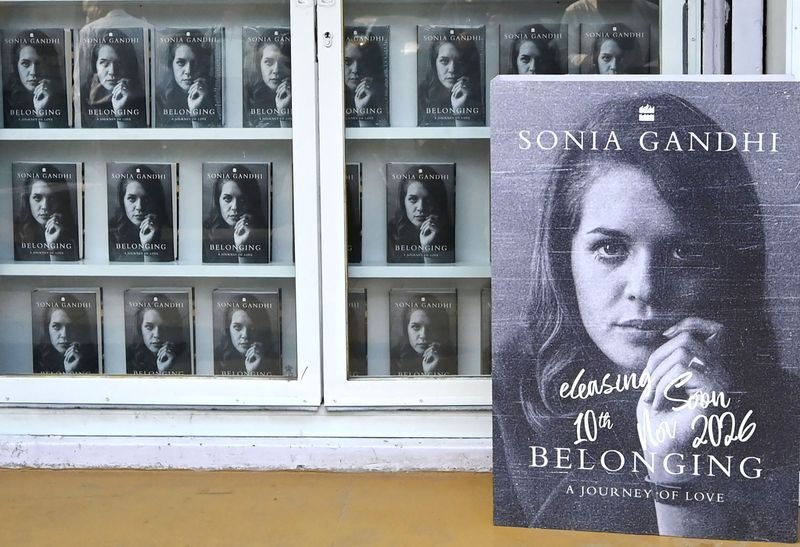

More than four decades after the 1984 anti-Sikh riots, Congress Parliamentary Party chairperson Sonia Gandhi has acknowledged that justice has largely eluded the victims despite four commissions, nine committees and two special investigation teams being constituted to probe the violence. She also admitted that Congress workers were among those accused of instigating or directing the violence that folllowed the assassination of former Prime Minister Indira Gandhi.In her memoir, Belonging: A Journey of Love, released on Tuesday, Sonia also refers to criminal cases against RSS members, questions the administration’s failure to stop the massacre and recounts the delay in deploying the Army as mobs killed more than 2,000 Sikhs in Delhi alone.The memoir also reveals an alleged plot to kill the entire Gandhi family during Diwali celebrations a week before Indira’s assassination on October 31, 1984, and Sonia’s desperate attempt to prevent Rajiv Gandhi from becoming Prime Minister, fearing that he would be the next target.Revisiting one of the darkest chapters in independent India’s history, Sonia writes that several individuals, many of them Congress members, faced criminal proceedings for allegedly instigating or directing the 1984 violence. Cases were also registered against RSS members who participated in the killings, she says.Of the hundreds of FIRs registered, four or five led to the arrest of Congress workers, according to her account. Even after successive inquiries, several cases continued to drag on in courts. Sonia acknowledges that the failure to punish those responsible for communal violence has been a systemic problem that successive governments have been unable to resolve. She also maintains that the massacre did not reflect any deep-rooted hostility between the Congress and the Sikh community, pointing to the party’s subsequent electoral victories in Punjab. Her account of the riots also examines the conduct of Rajiv, who was sworn in as Prime Minister hours after his mother’s assassination.Sonia writes that Rajiv appeared on national television on the night of October 31 and appealed for peace. He visited areas affected by violence and asked his staff to locate their Sikh colleagues and ensure their safety. On November 1, Rajiv again went out to meet people, urging them not to seek revenge. The following day, he issued another nationwide television appeal condemning arson, looting and murder.But Sonia also acknowledges that the government machinery had come under severe strain, with the police unable to control violent crowds. She writes that some officials appeared to have looked the other way while others may even have encouraged the violence.Sonia writes that Army Chief Gen AS Vaidya received orders on the night of Indira’s assassination, but the family subsequently heard that he had decided against immediately mobilising nearby Army units because they were manned by Sikh soldiers. This was against the backdrop of sporadic mutinies involving Sikh soldiers after Operation Blue Star in Gurdaspur, Ramgarh, Pune and Jammu.Instead, Army units were ordered to move from Dehradun. According to Sonia, the troops began entering Delhi on the night of November 1 and were positioned in affected areas by noon on November 2. Curfew and shoot-at-sight orders were imposed, while civil society groups established relief camps for survivors.Sonia also recalls that several Sikh families fleeing the violence found refuge in the Gandhi household. Some had already experienced the trauma of Partition, having fled Pakistan to rebuild their lives in India. Yet, she admits, she was initially too overwhelmed by Indira’s murder and fears for Rajiv and her children to fully comprehend the suffering around her. It was five years later, in riot-hit Bhagalpur in Bihar, that the enormity of the violence struck her.In 1989, Sonia accompanied Rajiv to Bhagalpur despite warnings from their security personnel. Their aircraft landed at a small airstrip, where an angry crowd surrounded them before allowing them to proceed to a nearby hospital.What she witnessed there left her shaken. The injured, mostly women and children, were lying on the floor because the beds were full. Women with deep wounds pleaded with her to locate their missing relatives. Children cried in terror or clung to their injured mothers.Sonia recalls repeatedly stepping aside to regain her composure before approaching the next group of victims. She writes that the experience forced her to confront the horrors of communal violence and question whether her own grief over Indira’s assassination had overshadowed her understanding of the atrocities committed against the Sikhs in Delhi in 1984.On the flight home, she could no longer hold back her tears. The memoir also revisits attempts by successive Congress-led governments to introduce legislation against communal violence, including the 2005 and 2011 Bills.Sonia writes that the proposed laws faced opposition mainly from the BJP and the RSS, but also from Left and regional parties, which argued that existing laws were adequate and that the legislation would undermine the federal structure by interfering with the states’ responsibility for law and order. She expresses disappointment over the failure of the legislation and alleges that communal violence, lynchings, social media and partisan governance have since combined to worsen the situation.