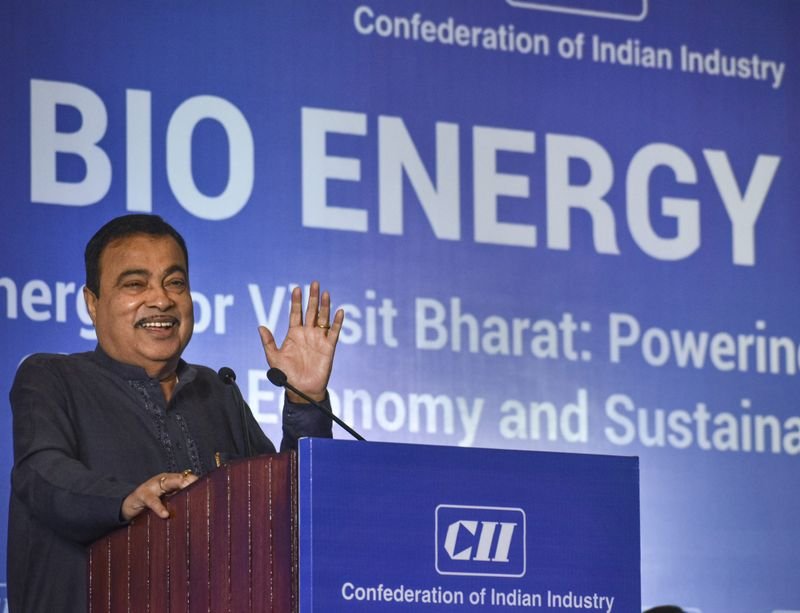

Calling India’s dependence on imported fossil fuels a major drain on the national economy, Union Minister for Road Transport and Highways Nitin Gadkari has stressed the urgent need to accelerate the transition towards biofuels, ethanol, hydrogen and other indigenous alternative energy sources. Pointing out that fossil fuel imports cost the country approximately Rs 22 lakh crore annually, Gadkari said reducing import dependence would not only conserve national wealth but also curb pollution, boost farmers’ incomes, generate rural employment and accelerate economic growth.Highlighting the environmental cost of conventional fuels, Gadkari acknowledged that the transport sector is responsible for approximately 40 per cent of air pollution in the country. Referring to the severe pollution situation in cities such as Delhi, he said the government must continuously work towards developing economically viable, pollution-free and domestically produced alternatives.“As the Minister of Road Transport and Highways, I also acknowledge that the transport sector is responsible for approximately 40 per cent of air pollution in the country,” Gadkari said.Outlining the government’s approach, Gadkari said India’s alternative energy policy rests on four key principles: import substitution, cost-effectiveness, pollution-free energy and indigenous production. “We do not need to depend on anyone’s favour or goodwill to achieve this. Our domestically produced fuels, particularly biofuels, are cheaper than fossil fuels,” he said.Gadkari highlighted the growing role of ethanol in India’s fuel diversification strategy, stating that E20 fuel has been in use since 2022. According to him, approximately four crore four-wheelers and 20 crore two-wheelers have been running on E20 fuel. Rejecting concerns raised in recent campaigns against ethanol blending, he described the criticism as a paid campaign and maintained that vehicles were operating without the alleged widespread problems.“There is certainly a lobby that opposes these developments. Those involved in importing crude oil will naturally resist such changes because their businesses could be affected,” Gadkari said.He also questioned claims about vehicle performance following the introduction of E20, asking, “Since the introduction of E20 in 2022, have you seen vehicles breaking down? Has anyone experienced a reduction in mileage?” He stressed that motorists had not reported such widespread problems.Underscoring the economic significance of bioenergy, Gadkari said it rests on four major pillars: proven technology, economic viability, pollution-free energy and improved economic prospects for farmers and rural workers.He pointed out the imbalance in India’s economic structure, observing that while manufacturing contributes approximately 22–24 per cent to GDP and services account for around 52–54 per cent, nearly 60 per cent of the population living in agricultural, rural and tribal areas contributes only around 12–14 per cent to the country’s GDP.“Unless the rural sector develops, employment opportunities are created and farmers have more money in their hands, India’s GDP growth cannot accelerate,” he said.Citing the government’s decision to permit ethanol production from maize as an example, Gadkari said the move had significantly improved the economic prospects of maize farmers. He recalled that maize was trading at around Rs 1,200 per quintal when the Minimum Support Price (MSP) stood at Rs 1,800. Following the government’s decision to allow maize-based ethanol production, market prices increased to approximately Rs Rs 2,600 per quintal.According to the minister, the decision helped maize farmers in Bihar and Uttar Pradesh receive an additional Rs 45,000 crore.“When farmers’ purchasing power increases, it gives a boost to the overall economy,” he said, highlighting the multiplier effect of higher agricultural incomes on rural consumption and economic activity.Highlighting another major innovation in the bioenergy sector, Gadkari said India has developed bio-bitumen using rice straw, offering a sustainable alternative to conventional petroleum-based bitumen.He said 25 companies have obtained licences for the technology, while a one-kilometre road stretch using bio-bitumen has already been constructed on the Nagpur–Jabalpur Highway. The Central Road Research Institute (CRRI), he added, has certified that the technology has demonstrated better performance than conventional petroleum-based bitumen.“This is the future of our country,” Gadkari said.Gadkari stressed that bioenergy should not be viewed merely as an alternative source of fuel but as a strategic opportunity for India’s economic transformation.“If we can save Rs 22 lakh crore in imports, pollution in the country will decrease. And if this money and the resulting profits reach rural communities, poor people and farmers, the Indian economy will experience multiple benefits and accelerated growth,” he said.