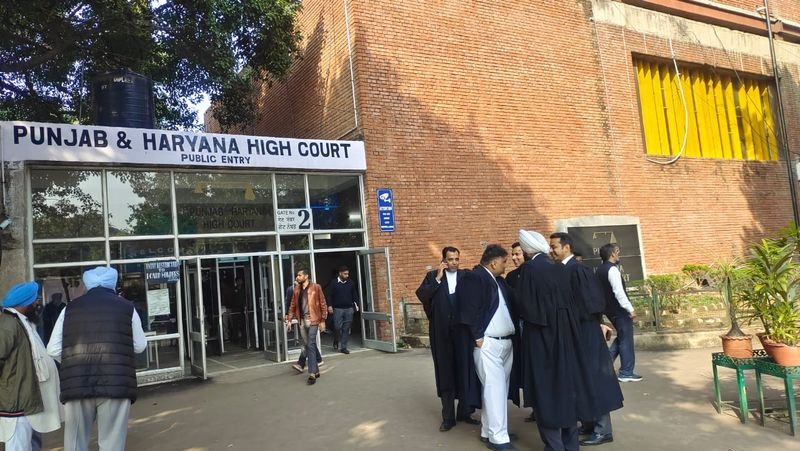

The Punjab and Haryana High Court has called upon Punjab and Haryana to ensure effective and impartial implementation of existing statutory rules and administrative instructions governing the appointment, continuation and removal of Lambardars, observing that the office must be treated as a position of public responsibility rather than a hereditary privilege.“The office must be treated as a position of public responsibility rather than as a hereditary privilege or an instrument for perpetuating family influence. Its continuance should depend upon the incumbent’s competence, integrity, availability and actual performance of the duties entrusted to him,” the Division Bench of Justice Suvir Sehgal and Justice Rajesh Gaur observed while referring to the need to address hereditary succession and the concentration of local influence in a few families.The court observed that hereditary succession to the Lambardar’s office had several adverse implications for the lives of people in the rural areas. “Under such a system, a person often assumes the office of Lambardar immediately upon the death of his father and continues to hold the position throughout his lifetime, with the office being passed on to another member of the same family for generations, irrespective of whether its successive holders possess the requisite ability, competence or inclination to discharge the duties attached to the office,” the Bench observed.Questioning why Lambardars incapable of performing their statutory duties were often reluctant to relinquish their positions in favour of more suitable and deserving persons, the court observed that the reason might lie in the “social and economic advantages associated with the office rather than in any genuine commitment to the discharge of responsibilities.”Drawing attention to the influence wielded by certain families in rural areas, the Bench observed: “In certain rural settings, the authority exercised by the Lambardar and his family is perceived by ordinary villagers as virtually unquestionable, reminiscent of the obedience traditionally accorded to authority in monarchical times”.The court held that such a situation was fundamentally inconsistent with “the principles of equality, accountability and democratic participation”. Referring to the wider implications of corrective measures, the Bench observed that these would help “eliminate undemocratic practices, reduce the concentration of local influence in a few families” and strengthen equality, accountability and participatory democracy in villages.The observations came while dismissing a Letters Patent Appeal filed by a candidate claiming appointment as Lambardar of a village in Kurukshetra district following his father’s death. The Sub-Divisional Officer (Civil)-cum-Assistant Collector Ist Grade had recommended his candidature, and the Gram Panchayat had also passed a resolution supporting him.On the other hand, the candidature of another candidate as recommended only by the Assistant Collector, Second Grade. Subsequently, the Collector-cum-Deputy Commissioner, Kurukshetra, appointed the other candidate as Lambardar after observing that “appointment of a person merely on the ground of being the son of the deceased Lambardar would not, by itself, be in the interest of justice”.The Commissioner, in turn, preferred the appellant after comparing the candidates’ merits and appointed him Lambardar. The Financial Commissioner upheld that decision. However, a Single Judge of the high court set aside both orders and restored the Collector’s appointment of the other candidate.The Division Bench observed that the appellant’s claim rested solely on his being the deceased Lambardar’s son, whereas hereditary preference had already been declared unconstitutional by a Division Bench in the case of “Karnail Singh versus State of Haryana and Others”. Finding no ground to interfere with the Single Judge’s judgment, the Bench dismissed the appeal.