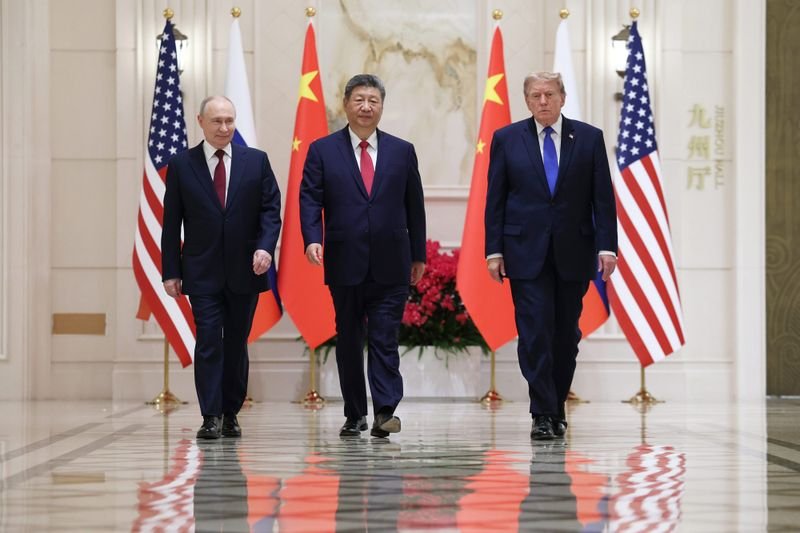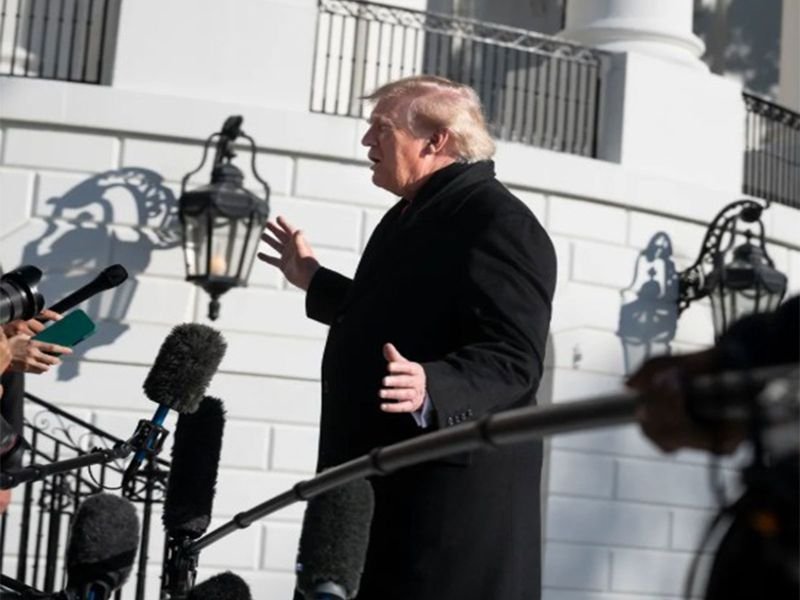

Washington DC [US], November 20 (ANI): US President Donald Trump’s special envoy for peace, Jared Kushner, on Thursday (local time) said European leaders were united and strongly committed to supporting Ukraine, while expressing optimism about ongoing efforts to find a pathway towards ending the Russia-Ukraine war.In a post on X, Kushner said the meeting with European leaders had been substantive and successful, adding that there was a shared desire to work towards peace and bring an end to the prolonged conflict.“What we came away from today with is really seeing that Europe is very united and very, very strong in their support of Ukraine,” Kushner said.He said the discussions reflected Europe’s commitment to Ukraine as well as a genuine desire to achieve peace, adding that the US delegation would convey the outcome of the meeting to the Russian delegation.“We see strength and unity and commitment, but we also see a real desire for peace, and I think that we’re doing a lot of work to organise on how to give it the best shot to get there,” he said.Kushner thanked German Chancellor Friedrich Merz for hosting the meeting and acknowledged the participation and contributions of French President Emmanuel Macron, Prime Minister Burnham and Ukrainian President Volodymyr Zelenskyy.Thank you very much. On behalf of Steve and I, I’d like to thank Chancellor Merz for hosting us here so graciously, and I’d also like to compliment Chancellor Merz and President Macron and Prime Minister Burnham and President Zelenskyy on a very substantive and successful gathering here today. I’d also like to thank some of the other European leaders who have been so essential in helping us shape our point of view, helping us design the right pathway forward. Amongst them is Prime Minister Meloni from Italy. I’d like to thank the Prime Minister from Poland who’s been helpful, Ursula von der Leyen from the EU, and obviously Secretary General of NATO Mark Rutte, as well as the President of Finland, Alex Stubb, and Jonas Gahr, the Prime Minister of Norway, who have all been really engaging with us on a very regular basis in a very substantive and an informative and deliberate way. What we came away from today with is really seeing that Europe is very united and very, very strong in their support of Ukraine. We saw—and we relayed this to President Trump when we spoke to him after the meeting, but we also will go back and relay this to the Russian delegation—which is we see strength and unity and commitment, but we also see a real desire for peace, and I think that we’re doing a lot of work to organize on how to give it the best shot to get there. After a war that’s gone on for this long, that’s so emotional and tough and with huge costs from a human perspective, it’s very, very hard to get both sides back to the table and back to peace, but I do believe we’re making significant steps towards doing that, and it’s going to be very, very hard to achieve it, but by working together, everyone here is committed to giving it their best shot, and I believe and I hope and I pray that we will be able to be successful. President Trump sent Steve and I here today and then called into the meeting to give an update on his conversations in Shenzhen with President Xi and President Putin, where he sent a very strong message to both of them on the desire for peace and would like to engage both of them very aggressively to get there, and I’m not going to go into the private discussions that he had. I’ll let him disclose that when he’s ready, but I believe he also came away believing that peace is achievable and we need to all work together to try and achieve it. For Steve and I, this is deeply personal. We speak to a lot of people who are being impacted by the war. Last week, I was speaking to a friend of mine who’s from Kramatorsk (Ukraine), and she was telling me about her brother who’s fighting on the front lines, and how dire the situation is, and how a lot of the area where she grew up has been destroyed, and a lot of friends have been killed in the battle. A lot of people feel very hopeless, and they don’t have any say in what’s happening, and they really would like to see peace. On behalf of those people on both sides, Steve and I are working very, very hard to try and do whatever we can do to see if we can help bring this horrible war to an end, to stop the fighting, the killing, the suffering, and all of the negative things that come from war. When Steve and I started on this a year ago, we very quickly defined that for us, success in an outcome would be to have a sovereign, secure, prosperous, and free Ukraine at the end of the war. I do think that the negotiations and the outcomes that we’re discussing, and it’s very important that we’re here in Europe and you’re hearing this from us directly, we do believe that that is very achievable. We think we’ve made a lot of progress in the last year towards a pathway with Ukraine to the EU. Before we got involved, everyone had spoken about that Ukraine needed security guarantees, and obviously that was not offered. Steve and I went to President Trump and said, ‘Is that something you’d be open to?’ He said, ‘Absolutely, write them up.’ Obviously, we’d have to go through Congress and we do it in a responsible way that’s in line with principles and values, but we’ve made a lot of progress working with President Zelensky and the Coalition of the Willing on what those security guarantees can look like. We’ve also been making a lot of progress on a post-war prosperity plan. We’ve been working with the World Bank and BlackRock and President Zelenskyy’s team, and the EU has really been excellent at spearheading that effort. I think that we’ve made progress towards defining what a successful and strong Ukraine can look like, hopefully, after this war. In September, when Steve and I first went to visit Russia and Ukraine, the negotiations were really dead in the water and it was looking very, very hopeless. We came up with a plan working with our European colleagues to try and get the trilateral format back up and running. It took us some time and some hard work to do that, but we were able to achieve that just recently. That’s led to some humanitarian breakthroughs. There’s going to be thousands of prisoners of war who will be going home to their families in the next weeks, which will be obviously a great gesture and a great relief for people. In addition to that, most importantly, Russia has agreed to engage in the multilateral format with the Europeans. Part of that was us explaining to the Russians that we do believe that Russia having Europe at the table will be essential to ending this war in a just and long-term, durable way. The Russians are willing to trust that instinct on our behalf. I believe that after today, we can go back with an even stronger affirmation that we believe that, we’ve heard that, and there’s real commitment to that. The next steps for us are obviously to work in close coordination after this press conference. Steve and I are going to be meeting with all the NSAs, which make up the negotiating team, and we appreciate the leaders really giving their full time and commitment to that. We’re going to be working on joint proposals. Obviously, we want to make sure that everything we’re doing is unified. I also want to be able to reiterate that President Trump wants to make a deal with Europe by his side. He’s not looking to impose anything unilaterally. He wants to do it with Europe and Ukraine, and any deal we do will be in close consultation with Ukraine and with Europe. That’s something that he also asked us to come here today and reassure people in that regard. I would say the progress of the meeting—and I think we’ll make further progress after—is that I do feel like our positions are becoming much closer, much more detailed, and more aligned in that regard. That’s going to be critical to getting to the next set of talks. Finally, I’ll just address post-war security. I think the discussion today on Coalition of the Willing, everything they discussed today are elements of what post-war security. I appreciate that Chancellor Merz brought up the right mechanisms for communication, transparency, crisis management, and then potentially reciprocal de-escalation. There is a lot of infrastructure already in Europe that we can draw on, like the NATO-Russia Council. I think that will be very important to work on in a solution. Obviously, NATO will be a central pillar of whatever we work on in the settlement. Hopefully, it will be a much stronger NATO that really has the ability to be a protector of the peace and not seen as provocative, which is obviously not the nature of NATO in that regard. We have to finalize the credible guarantees. I’ll conclude to say that our goal is really to end this war and to really help build a durable peace. We are very committed. President Trump will do whatever it takes to do that. He’s instructed us to commit as much time as possible, and we will continue to do that in full coordination and unity with our European partners. Thank you. From remarks in Berlin— Jared Kushner (@jaredkushner) November 19, 2026He also acknowledged Italian Prime Minister Giorgia Meloni, the Prime Minister of Poland, European Commission President Ursula von der Leyen, NATO Secretary General Mark Rutte, Finnish President Alexander Stubb and Norwegian Prime Minister Jonas Gahr Støre for their engagement in shaping the discussions.Kushner said the negotiations were particularly challenging after a prolonged conflict that had resulted in significant human suffering and destruction, but expressed hope that the collective efforts could bring both sides back to the negotiating table.“After a war that’s gone on for this long, that’s so emotional and tough, and with huge costs from a human perspective, it’s very, very hard to get both sides back to the table and back to peace, but I do believe we’re making significant steps towards doing that,” he said.He further said that President Trump had sent him and Steve Witkoff to participate in the discussions and had joined the meeting through a call to provide an update on his conversations with Chinese President Xi Jinping and Russian President Vladimir Putin in Shenzhen.Kushner added Trump had conveyed a strong message to both leaders regarding his desire for peace and was willing to engage with them to achieve that objective.He said the US President believed peace was achievable and wanted to work closely with European partners and Ukraine rather than impose any agreement unilaterally.“President Trump wants to make a deal with Europe by his side. He’s not looking to impose anything unilaterally. He wants to do it with Europe and Ukraine, and any deal we do will be in close consultation with Ukraine and with Europe,” Kushner said.Outlining the broader objectives of the negotiations, Kushner said the US administration’s goal was to ensure that Ukraine emerged from the war as a sovereign, secure, prosperous and free country.He said considerable progress had been made on a potential pathway for Ukraine’s membership in the European Union, security guarantees and a post-war prosperity plan.Kushner said he and Witkoff had approached Trump regarding security guarantees for Ukraine, to which the US President had responded positively.“Steve and I went to President Trump and said, ‘Is that something you’d be open to?’ He said, ‘Absolutely, write them up,’” Kushner said, adding that the proposals would have to go through the US Congress and be developed responsibly.He also said the US delegation had been working with Zelenskyy’s team, the Coalition of the Willing, the World Bank and BlackRock on security arrangements and a post-war economic recovery plan, with the European Union playing an important role in the effort.Recalling the progress made in negotiations over the past year, Kushner said that when he and Witkoff first visited Russia and Ukraine in September, the diplomatic process had largely stalled.He said the US team subsequently worked with European partners to revive the trilateral format, which had recently been restored and led to humanitarian breakthroughs.Kushner said thousands of prisoners of war were expected to return to their families in the coming weeks, describing the development as a significant humanitarian step.He also said Russia had agreed to engage in a multilateral format involving European countries, adding that their participation would be essential to achieving a just and durable end to the war.On the next steps, Kushner said he and Witkoff would meet national security advisers who form part of the negotiating team to work on joint proposals and ensure that the positions of the US, Europe and Ukraine remained aligned.He also highlighted discussions on post-war security arrangements under the Coalition of the Willing, including mechanisms for communication, transparency, crisis management and potential reciprocal de-escalation.Referring to NATO’s role, Kushner said the alliance would remain a central pillar of any settlement and stressed the need for credible security guarantees.He concluded by reiterating the US administration’s commitment to ending the conflict and establishing lasting peace.“Our goal is really to end this war and to really help build a durable peace. We are very committed. President Trump will do whatever it takes to do that,” he said. (ANI)(This content is sourced from a syndicated feed and is published as received. The Tribune assumes no responsibility or liability for its accuracy, completeness, or content.)