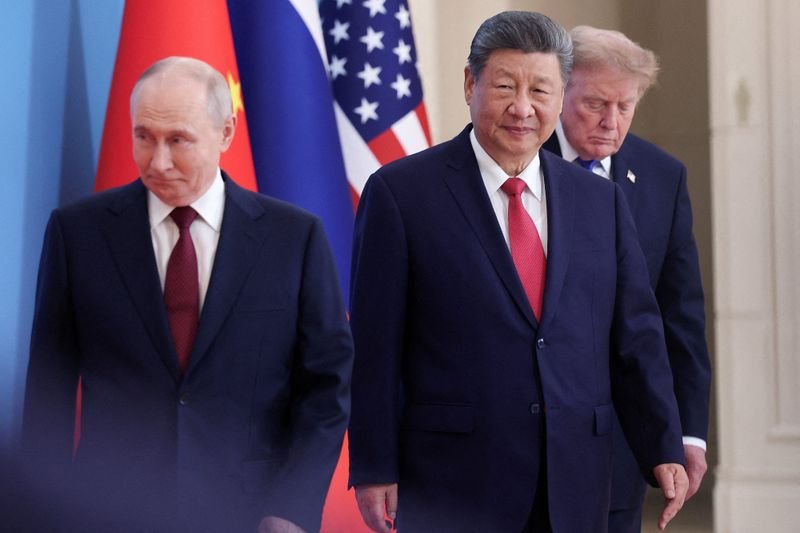

India on Friday refrained from making any assessment of the unprecedented trilateral summit between the leaders of the US, Russia and China, saying it would await a “fuller accounting” of the meeting’s concrete outcomes before commenting.The first-ever meeting between US President Donald Trump, Chinese President Xi Jinping and Russian President Vladimir Putin in China’s Shenzhen on Thursday has drawn attention for bringing together the leaders of the world’s three major powers at a time of shifting geopolitical alignments and growing uncertainty over the emerging global order.Asked how India viewed the meeting in the context of an emerging multipolar world and its implications for the security architecture in Asia and beyond, Ministry of External Affairs spokesperson Randhir Jaiswal said New Delhi had taken note of the engagement but was not ready to offer an assessment.“We have taken note of this meeting between three APEC member countries. We await a fuller accounting of the concrete outcomes of the meeting before offering our assessment,” Jaiswal said.The 70-minute summit, held at Kylin Villa on the sidelines of the Asia-Pacific Economic Cooperation (APEC) meeting, saw the three leaders pledge cooperation on nuclear risk reduction, energy security and reform of the United Nations. However, the joint declaration offered no major breakthrough on the wars in Ukraine and Iran or any specific commitments on nuclear disarmament.The meeting assumes significance against the backdrop of deepening strategic cooperation between Moscow and Beijing, Washington’s efforts to engage both powers and intensifying competition over the future of the international order.The three leaders also agreed to initiate dialogue on reducing nuclear risks, reaffirming that a nuclear war could never be won and must never be fought. They called for making the UN more effective in responding to global challenges and maintaining international peace and security.For New Delhi, the gathering also raises questions about the implications of any emerging understanding among the three major powers for the wider Asian security environment.India, which maintains strategic partnerships with all three countries while pursuing its own independent foreign policy, has consistently advocated a multipolar world order.