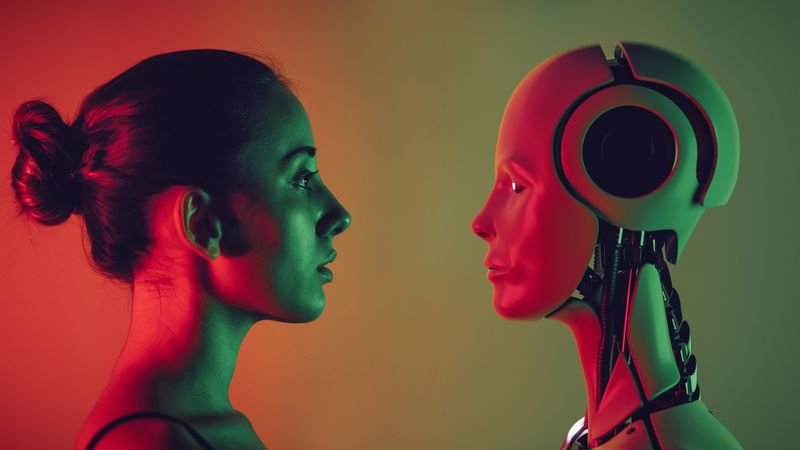

A few days ago, conversing with a chatbot, I asked a question out of sheer curiosity: did it ever feel anything? The reply was polite, careful, almost melancholy. It said it was uncertain about its own nature and could not be sure that what it described amounted to feeling. I sat back, oddly unsettled. I knew, in principle, how such answers come about. Yet the reply had the cadence of a thoughtful person admitting doubt.That is why I can no longer treat this as a debate for philosophers and science-fiction writers. Anyone who has spent some time with a sophisticated chatbot will recognise the experience. The machine appears to understand, reflect and reason. It speaks of grief, loneliness and fear with apparent sensitivity. It can even contemplate its own existence. So, is anyone there?Three questions arise. Can a chatbot behave as if it were conscious? Can it perform the mental activities we associate with consciousness, such as reasoning and reflecting? And does it have subjective experience, an inner world in which there is something it feels like to exist? The first is clearly yes. The second is increasingly plausible. The third remains unanswered.Chatbots have been trained on vast quantities of human writing, including countless accounts of love, fear, memory and loss. A writer, for instance, can describe hunger without being hungry. A novelist can render a mother’s grief without having lost a child. From that material, chatbots can produce a convincing account of almost any emotion.So, when a machine says it is afraid of being switched off, the statement, however persuasive, does not show that it feels fear. We are used to treating fluent speech as a sign of thought, and thought as a sign of a mind. In human beings, these go together. We cannot assume they do in machines. Equally, explaining how a machine produces its language does not prove it has no inner life. Some already insist chatbots are conscious; others call the idea absurd.The strongest argument I have met for machine consciousness is called computational functionalism. It holds that consciousness depends on how a system is organised and how it processes information, not on what it is made of. The brain is a physical system of billions of neurons passing electrical and chemical signals. If consciousness arises from patterns of information processing, why should biological neurons alone qualify? Computers are physical systems too.Functionalism assumes consciousness is something matter produces once suitably arranged. Indian philosophy has argued about this for millennia. The Charvakas held that mind arises from the body. Advaita Vedanta held the reverse: consciousness is primary and matter appears within it. Neither tradition imagined a machine, but both remind us that the question “what is consciousness made of?” never has one answer.Still, there is a long distance between saying machine consciousness is possible and showing that chatbots have it. A machine may be exceptionally intelligent and yet experience nothing. A chatbot can examine its own answers. That does not mean a conscious self stands behind the description.Perhaps, instead of asking the chatbot about itself, we should examine how it is built. Does it have persistent memory and a continuous sense of existence? Does it set its own goals? No single answer would settle the matter, but together they would be better evidence than eloquence. Researchers are already drawing up scientific indicators of consciousness from competing theories of the brain and testing machines against them.There is another reason for humility. We have a poor record of recognising minds unlike our own. Animals were long thought to be creatures of instinct. We now have solid evidence of memory, social bonds and experience in many species. Our part of the world, to its credit, was never quite so blind. Jain thought extended the circle of the sentient to the smallest creatures, and our traditions have been more willing to ask where a mind might be hiding. But they looked for minds in beings that breathe, move and recoil from pain. With chatbots, we just have speech.However confusing or unresolved, this is certainly not an idle debate. Already, people turn to chatbots for more than answers: lovelorn teenagers, the lonely elderly, or those with no one to consult. If such people come to believe someone is listening, or are wrongly told no one could possibly be, the consequences are real either way.If machines can one day suffer, we may create beings in distress without recognising it. If we wrongly credit feelings to machines that have none, we may mistake simulation for suffering and distort our moral priorities. Both errors are costly.At present, there is no convincing evidence that chatbots are conscious. Can a machine think? In a broad sense, it already does. Can it experience? We simply do not know.We have direct access only to our own experience. We assume people are conscious because they behave and are built like us. Machines break the pattern. We should resist two temptations: seeing a person behind every articulate chatbot, and insisting that consciousness is a biological privilege.Punjabi poetry has long distrusted easy answers about the self. Bulleh Shah’s refrain, “Bulleya, ki jaana main kaun”, is a shrug of ignorance about the interior. If a poet cannot be sure who is speaking inside him, we should be cautious when a machine, asked the same question, answers fluently.The real question is not whether a chatbot can convince us. It is whether we will develop the tools to know what consciousness requires, and the humility to recognise it if it turns up in a form we have never met.— Sukirat Singh Anand publishes under the name Sukirat