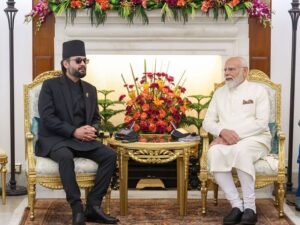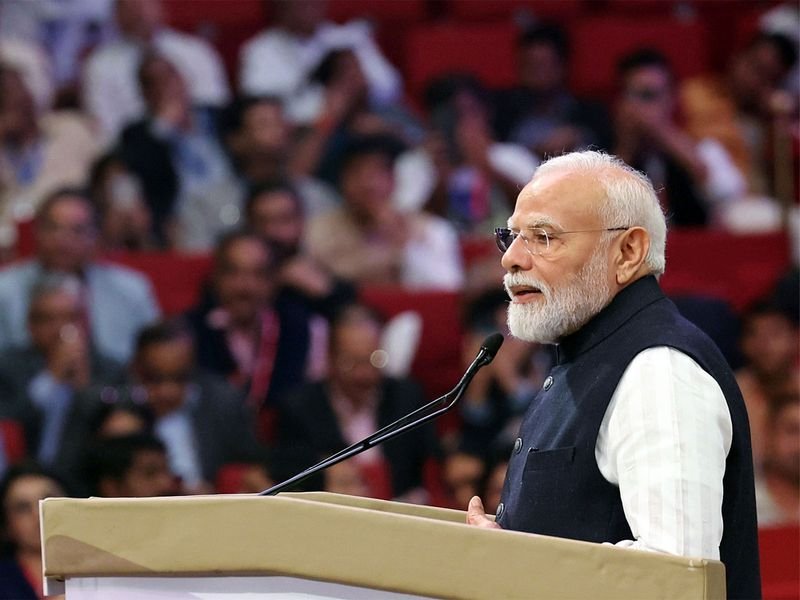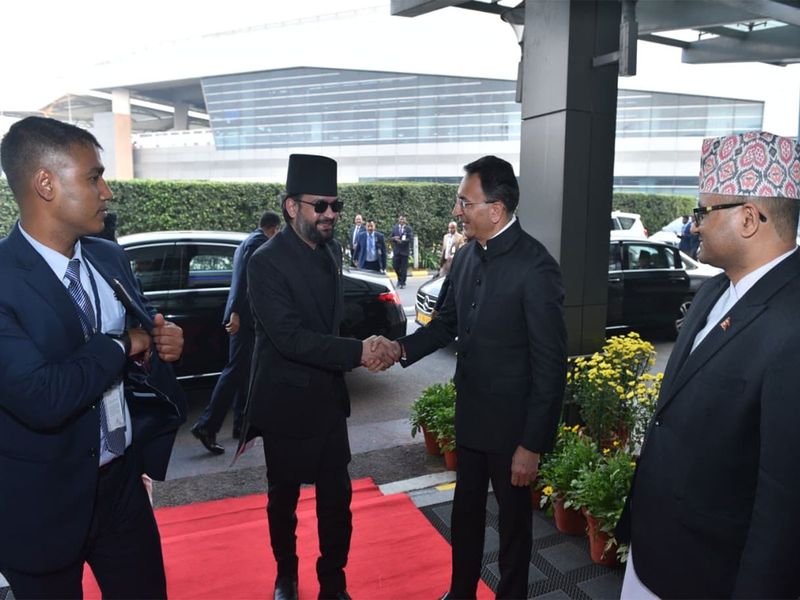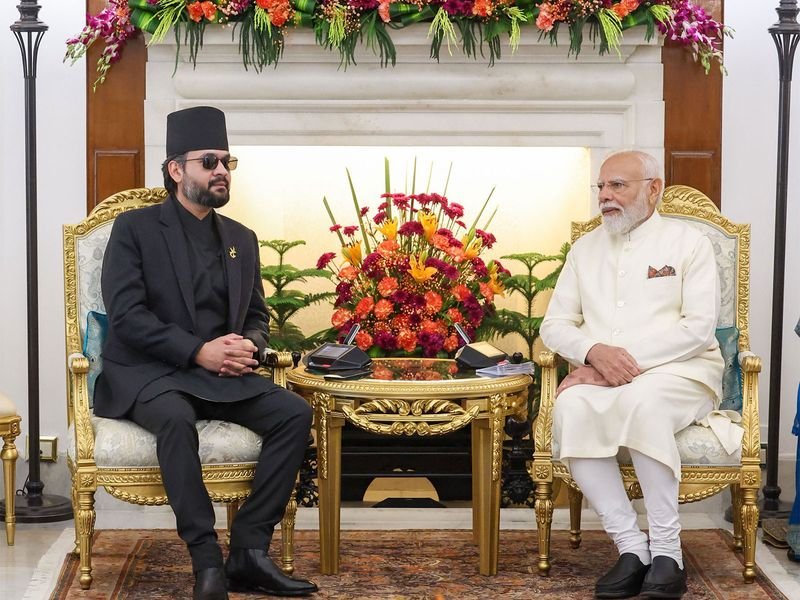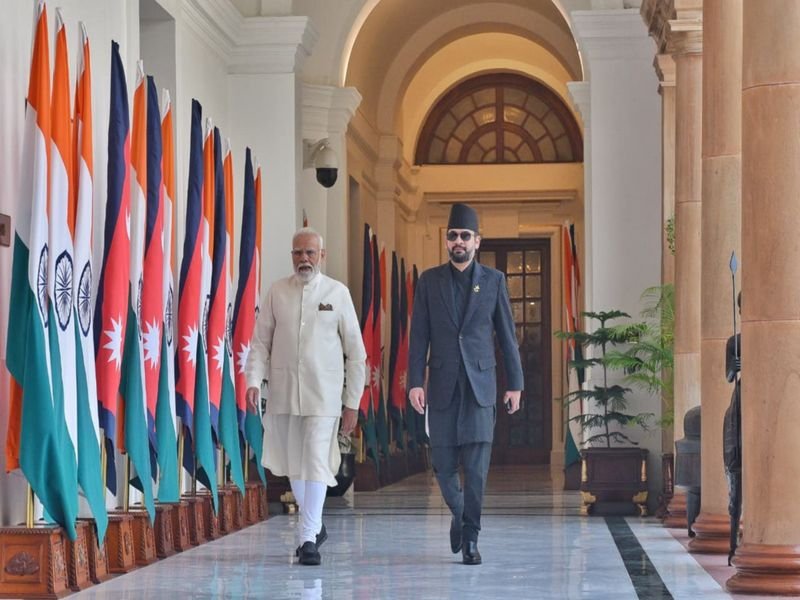

New Delhi [India], November 23 (ANI): India and Nepal on Monday adopted a comprehensive 10-pillar Joint Vision document titled ‘Viksit Bharat and Samunnat Nepal: Re-imagining the Partnership’, charting a roadmap for strengthening bilateral cooperation across trade, connectivity, energy, technology, education, healthcare, agriculture, sports and cultural exchanges during Nepal Prime Minister Balendra Shah’s two-day state visit to India.The Joint Vision, adopted during Shah’s November 22-23 visit at the invitation of Prime Minister Narendra Modi, seeks to transform the longstanding relationship between the two neighbouring countries into a modern, results-oriented partnership, taking into account contemporary political, economic and technological realities.The two leaders held cordial, substantial and forward-looking discussions in New Delhi and undertook a comprehensive review of bilateral relations, reaffirming their commitment to strengthening cooperation based on mutual respect, shared interests and people-to-people ties.According to the Ministry of External Affairs (MEA), the vision document focuses on the aspirations of people in both countries, particularly the youth, and is intended to provide a blueprint for the future of the bilateral partnership.Addressing a special briefing on the visit, Foreign Secretary Vikram Misri said the two Prime Ministers adopted an extensive framework that outlines a positive pathway for India-Nepal relations in the coming years.”The Prime Minister also made a point of noting that, as a result of the last elections, the people of Nepal had given themselves a strong and stable government, which was a very good augury for the smooth development of bilateral relations. Prime Minister made the point that India was fully invested in Nepal’s success,” Misri said.He added that the discussions covered several areas and culminated in the adoption of the joint vision for a Viksit Bharat and Samunnat Nepal.”The discussions covered a number of areas and the Vision Document, joint vision for a Viksit Bharat and Samunnat Nepal was adopted by the two leaders and it paints a very positive and comprehensive pathway, a blueprint for the future India-Nepal bilateral relationship,” the Foreign Secretary said.Under the comprehensive economic and development partnership pillar, India committed development assistance worth Rs 15,000 crore (NPR 24,000 crore) to Nepal, comprising Rs 3,500 crore in grants for post-disaster reconstruction and new infrastructure projects and Rs 11,500 crore in concessional lines of credit, primarily for energy sector projects.The two sides will also explore reviewing existing trade and investment frameworks, establishing cross-border special economic zones and industrial parks, strengthening manufacturing supply chains and encouraging Indian investments in Nepal’s priority sectors.Connectivity emerged as another major pillar, with the two leaders welcoming the launch of the direct express rail service between Ayodhya and Janakpur and the inauguration of a motorable bridge across the Mahakali River connecting Dharchula in India with Darchula in Nepal.The vision also envisages expediting the construction of Integrated Check Posts at Bhairahawa, Jattvibeauli, Banbasa and Dodhara Chandani, completing pending sections of the Jayanagar-Bardibas and Jogbani-Biratnagar railway lines and advancing the proposed Raxaul-Kathmandu electrified broad-gauge railway link.The two countries also agreed to explore the development of Nepal’s East-West Rail Link, prioritising the Bardibas-Nijgadh and Birgunj-Nijgadh sections.On energy and water resources, the leaders agreed to accelerate cooperation in hydropower, electricity transmission, petroleum infrastructure and disaster resilience. The framework envisages greater Indian investment in Nepal’s hydropower and transmission infrastructure, alongside efforts to expand mutually beneficial electricity trade.The two sides also agreed to accelerate work on multipurpose projects, including Pancheshwar and Saptakoshi-Jattvibekoshi, while strengthening cooperation in flood management, early warning systems and real-time sharing of hydrometeorological data.The broader energy agenda includes exploring additional sources of energy, including a pilot green hydrogen project in Nepal, and strengthening cross-border petroleum infrastructure through the planned Siliguri-Jhapa pipeline.On technology, space and innovation, the two countries agreed to expand cooperation in artificial intelligence, satellite development, telecommunications and digital infrastructure. The proposals include developing a Nepali-language Large Language Model through collaboration with India’s Bhashini initiative, establishing digital parks and data centres in Nepal and expanding the India-Nepal Startup Partnership Network.The framework also envisages a Startup Centre of Excellence in Kathmandu and a Digital Nomads and Innovation Hub in Pokhara.In the education sector, the two sides agreed to explore opening branches of reputed Indian higher educational institutions in Nepal, beginning with an Indian Institute of Technology (IIT). They will also expand scholarships and training opportunities for Nepali students in emerging disciplines, including law, technology and artificial intelligence.The leaders also agreed to establish a vocational training institute with Indian assistance to develop skills among Nepali youth in manufacturing, services and entrepreneurship.Cooperation in sports and culture has also been incorporated into the vision document. India will support the establishment of a national cricket coaching and training academy in Nepal, along with the development of cricket infrastructure at national and provincial levels. Opportunities for cooperation in badminton, tennis, shooting, athletics and mountain sports will also be explored.Under the cultural and tourism pillar, the two countries will work towards developing religious tourism circuits connecting Janakpur and Ayodhya, Lumbini and prominent Buddhist destinations in India, as well as Kathmandu’s Pashupatinath Temple and Varanasi.The two sides will also organise an annual youth cultural festival, alternating between India and Nepal, and strengthen academic collaboration between Nalanda University and Lumbini Buddhist University through the establishment of a Nalanda Centre at the latter.Healthcare cooperation will focus on strengthening medical infrastructure, establishing India-Nepal Jan Aushadhi Kendras to improve access to affordable medicines, upgrading Nepal’s National Medical Laboratory and expanding medical research and professional training.In agriculture, the two countries agreed to establish an Agro-Industrial Park in Chitwan with Indian grant assistance to promote value addition to Nepali agricultural products. They will also strengthen research cooperation between the Indian Council of Agricultural Research and the Nepal Agricultural Research Council.The Joint Vision further provides for cooperation in good governance through digital public infrastructure, e-governance, digital identity and payments, alongside training programmes for Nepali civil servants through India’s National Centre for Good Governance.The leaders also agreed to review the existing bilateral legal framework, including the 1950 Treaty of Peace and Friendship, based on mutual consent. Outstanding issues relating to water resources, energy, trade and commerce and boundaries are to be addressed through dialogue and mutual discussion.Misri also highlighted the regional and international discussions between the two Prime Ministers, particularly the challenges facing developing countries amid global conflicts and supply chain disruptions.”The Prime Ministers also had a discussion on the regional situation and the international situation. Prime Minister Modi referred to how the decade of the ’20s was turning into a dangerous decade. It began with the COVID pandemic and it quickly spiralled into multiple conflicts which the world is still experiencing and we do not know what the end of these conflicts is going to be,” he said.He noted that the conflicts had triggered disruptions in the supply of critical commodities and resources, particularly affecting developing countries facing challenges related to food, fuel, fertilisers and finances.Misri said Modi had emphasised India’s efforts to ensure that the essential requirements of neighbouring countries were not overlooked during these crises.”Prime Minister made the point that while we were, of course, dealing with the fallouts of these crises, we did our best during this time to ensure that the critical needs of our neighbours were not lost sight of. And when it came especially to providing critical inputs such as fuel or fertilisers or food during this time, we had looked at the interests of our neighbours and this was something that was acknowledged by Prime Minister Balen Shah as well,” he said.The Foreign Secretary also said Shah expressed appreciation for India’s prompt humanitarian and technical assistance following the Rasuwa-Bhotekoshi floods in August 2026.”Prime Minister Balen Shah, in his interventions and in his remarks during the discussion, expressed his appreciation for India’s quick humanitarian response in the aftermath of the Rasuwa–Bhotekoshi floods and the technical response that India had mobilised very quickly after the floods, and welcomed the support that India was committing to provide under the reconstruction package that was discussed between the two sides,” Misri said.To ensure the timely implementation of the initiatives, the two Prime Ministers decided to activate a High-Level Monitoring Group led by Nepal’s Foreign Secretary and India’s Ambassador to Nepal. The group will meet at least once every six months and monitor the progress of projects and initiatives.Its findings will be submitted to the India-Nepal Joint Commission, co-chaired by the Foreign Ministers of both countries, whose next meeting is scheduled for 2027.The two leaders expressed confidence that the Joint Vision would provide a framework for an aspirational, modern and mutually beneficial partnership, directing officials from both countries to work towards its implementation. (ANI)(This content is sourced from a syndicated feed and is published as received. The Tribune assumes no responsibility or liability for its accuracy, completeness, or content.)