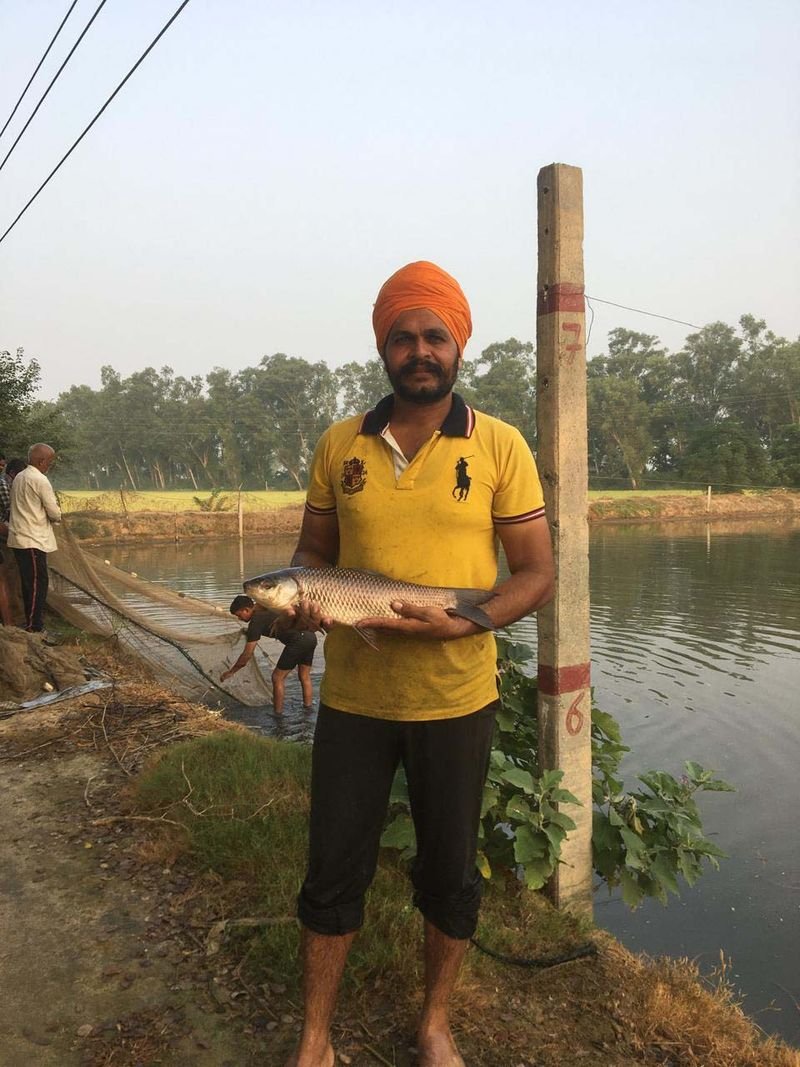

A 40-year-old postgraduate from Noorpur Sethan in Ferozepur is reaping rich dividends after finding success in fish farming, which now fetches him up to Rs 2.25 lakh per acre annually. Navjotpal Singh has a fish farm spanning six acres.Earlier, he delved into rotational wheat and paddy crops, dairy farming and organic vegetables. He owns 35 acres.“For the past six to seven years, I have been into fish farming. I have been getting guidance from Guru Angad Dev Veterinary and Animal Sciences University. I am satisfied with the returns. I get up to Rs 2.25 lakh per acre annually, which is far better than any other farmer with limited land,” said Navjotpal Singh.In 2019, he established a fish farm on six acres. The farm comprises an acre of nursery pond and five acres of production ponds, which currently yield approximately 15 tonnes of fish annually. Along with adopting scientific recommendations, he introduced innovative practices in carp culture. Recognising the importance of some critical points in fish farming, he established a nursery pond for continuous availability of fish seed.Navjotpal breeds rohu, katla, miraak, grass and golden varieties. His daily sales range between 70 and 80 kg during peak season. He said that in the wholesale market, the fish fetch Rs 150 per kg and go for Rs 250 per kg in retail.Comparing these varieties with sol and malhi, which are in high demand, Navjotpal said that one starts getting income from other varieties within seven to eight months while sol and malhi get returns after a year. He said these varieties are mostly brought from Andhra Pradesh and ponds in Punjab are not very suitable for good yields.The fish varieties Navjotpal breeds are vegetarian and rely on regular feed as compared to sol and malhi, which are non-vegetarian varieties.Navjotpal said he wants to expand in the coming months by installing a processing unit with machinery from China.“I am regularly in touch with veterinary university scientists and will expand my farm only after their suggestions,” said Navjotpal, adding that conventional farming could not grow as farmers in villages were satisfied with limited returns.“If the younger generation gets necessary training and latest technology, and ventures into the profession, fish farming is probably the best option,” Navjotpal added.