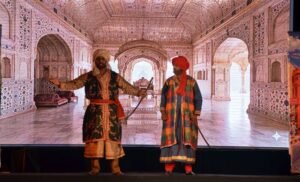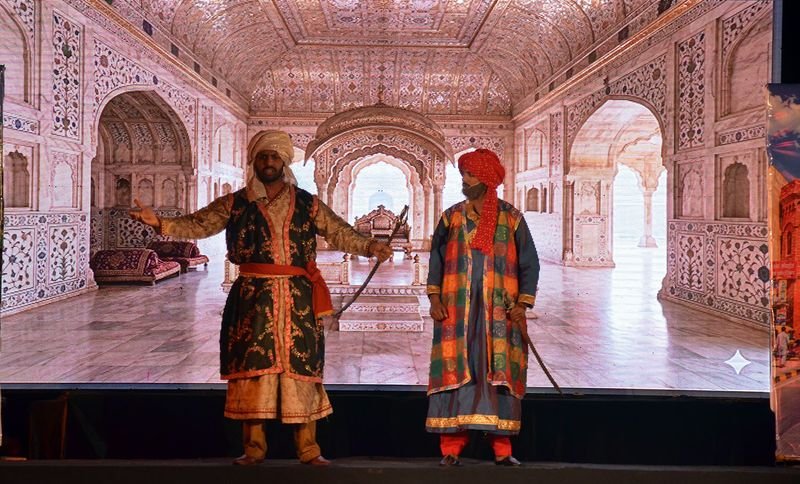

Amritsar’s 450-year journey is not merely a chronicle of its founding and growth, but a story of faith, sacrifice, resilience and cultural coexistence. This layered identity found an evocative theatrical expression in ‘Dastaan-e-Amritsar’, a light and sound production presented at Guru Nanak Dev University as part of the celebrations marking the 450th anniversary of Amritsar.Conceived as a part of Prof Karamjeet Singh’s initiative of Global Conclave and developed by eminent playwright and director Kewal Dhaliwal, the nearly one-hour-and-45-minute production emerged as the highlight of the two-day celebrations.Presented by Manch-Rangmanch at the university’s Dasmesh Auditorium, the play traces the city’s evolution from its foundation to the present, bringing together episodes that have shaped its spiritual, political, literary and social landscape.The narrative draws upon the contributions of Sri Guru Ram Das, Sri Guru Arjan Dev and Sri Guru Hargobind Sahib, alongside the presence of Sai Mian Mir and the martyrdom of Baba Deep Singh. Stories associated with Bibi Rajni, Bhai Mani Singh, Sukha Singh and Mehtab Singh added to the historical tapestry, while the freedom struggle and the Jallianwala Bagh massacre underline the city’s enduring association with resistance and sacrifice. It also portrayed historical episodes associated with Bhai Mani Singh, Sukha Singh and Mehtab Singh, Bibi Rajni, and the role of Amritsar’s martyrs in the freedom struggle.The sacrifices of Madan Lal Dhingra, Mewa Singh Lopoke, Baba Gurdit Singh, Sohan Singh Bhakna and Shaheed Udham Singh were also highlighted, along with the Jallianwala Bagh massacre.Yet, the production moves beyond monumental history. “It’s portrayal of the traditional markets within Amritsar’s 12 gates, old newspapers, educational institutions, temples, mosques and churches brings out the city’s everyday character. I researched and worked on the naunces to include correct history, one that shaped generations and gave a distinct character to Amritsar,” said Dhaliwal, who has previously worked on theatrical sagas of Jallianwala Bagh and Saragarhi.The literary legacy of Bhai Vir Singh, Dhani Ram Chatrik, Nanak Singh and Saadat Hasan Manto, alongside Bhagat Puran Singh’s work at Pingalwara, were included to reflect Amritsar’s contribution to intellectual and social life.Its cultural canvas extends to Punjab Naatshala, Virsa Vihar, traditional cuisine, festivals and kite-flying at Gol Bagh.“Through theatre, music, visuals and performance, ‘Dastaan-e-Amritsar’ transforms history from a collection of dates into a living narrative. By placing sacred landmarks alongside neighbourhoods, writers and ordinary cultural traditions, it offers a compelling reminder that Amritsar’s heritage resides as much in its people and lived experiences as in its monuments,” said Prof Karamjeet Singh.