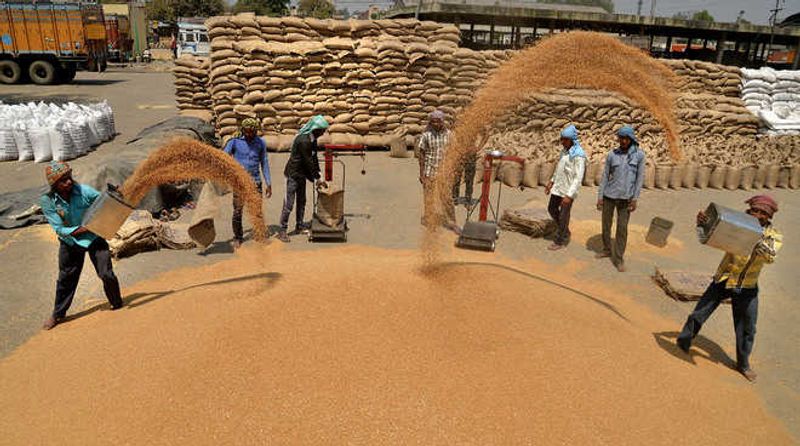
The Centre on Monday issued orders to regulate wheat stocks across the country, imposing strict limits on the quantity that traders, retailers, processors and other entities can hold until March 31, in a bid to curb hoarding and ensure adequate market supply.The directive, issued under the Essential Commodities Act, marks a significant tightening of regulations aimed at preventing stockpiling and stabilising availability.“Traders and wholesalers have been capped at holding a maximum of 2,000 metric tonnes of wheat. Traditional retail outlets face even stricter limits, with individual retailers permitted to hold no more than 8 metric tonnes of wheat at each store,” the order stated.“For larger organised retail chains operating multiple outlets, limits are slightly more flexible but remain tightly controlled. Such retailers may hold up to 8 metric tonnes at each outlet, but their total stock across all outlets and distribution centres combined cannot exceed 8 metric tonnes multiplied by the total number of outlets,” it added.The new stock limits represent a substantial reduction from previous thresholds and will apply uniformly across all states and Union Territories. This is the first major amendment to wheat stock restrictions since May 2025, reflecting growing government concern over market dynamics.Industrial processors using wheat as raw material for flour, bread, biscuits and other food products have also been brought under tighter norms.“They are limited to holding no more than 60 per cent of their monthly installed capacity multiplied by the number of remaining months until April 2026. This means a processor with a monthly capacity of 1,000 metric tonnes can hold only 600 metric tonnes if four months remain until the deadline,” the order said.According to the notification, the formula is designed to provide processors sufficient buffer stock to maintain production continuity while preventing excessive accumulation.A key feature of the order is the requirement for all entities to declare their current stock positions on the government’s dedicated portal maintained by the Department of Food and Public Distribution, which serves as the central mechanism for monitoring wheat stocks nationwide.“Any entity found holding stocks in excess of the prescribed limits must bring these down to the permitted maximum within 15 days,” the order stated.The move also signals a push towards digitalised, real-time monitoring of commodity stocks, with regular reporting intended to prevent underreporting and manipulation of stock levels.