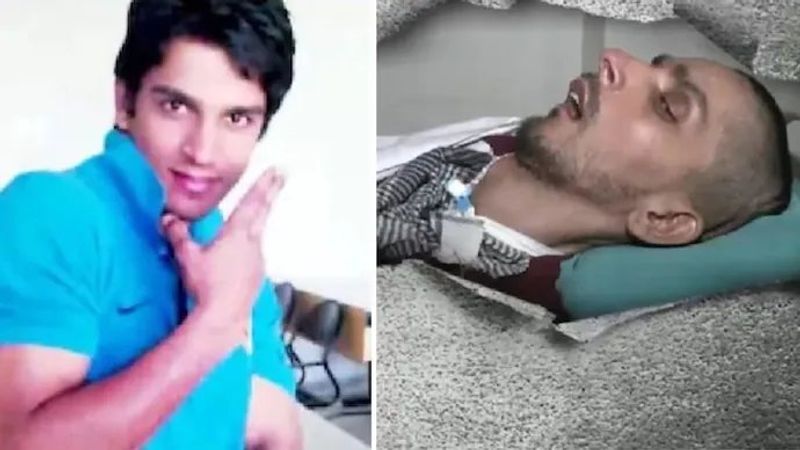

In a historic verdict, the Supreme Court on Wednesday allowed the first-ever passive euthanasia in India to end the life of a 32-year-old man who has been in a vegetative state since 2013 after falling from a building.A Bench of Justice JB Pardiwala and Justice KV Viswanathan passed the order on a petition filed by Ashok Rana seeking permission to remove all life-sustaining treatment being given to his son Harish Rana.The Bench — which had reserved its verdict on the contentious issue on January 15 — passed the order for withdrawal of clinically assisted nutrition and hydration (CANH) to Harish Rana in terms of its 2018 judgment in the Common Cause case (as modified in 2023) which recognised the fundamental right to die with dignity.The Supreme Court had in 2018 issued guidelines on passive euthanasia which were simplified in 2023. According to the 2023 guidelines, a primary and a secondary medical board will have to be formed for an expert opinion on the withdrawal of artificial life support for a patient in a vegetative state.The Bench took note of the fact that two medical boards constituted by the court had already concluded that Harish Rana had no chance for recovery. “It’s a very sad report. We cannot keep this boy in this stage,” the Bench had said on December 18, 2025, after perusing a report containing Harish Rana’s medical history filed by a secondary medical board of doctors from All-India Institute of Medical Sciences (AIIMS) here.This is the first case of the top court’s directions in the Common Cause case being judicially applied to end the agony of a person in a vegetative state. In 2011, the top court had turned down activist Pinki Virani’s petition seeking passive euthanasia for Aruna Shanbaug — a nurse at KEM Hospital, Mumbai — who remained in a vegetative state at Ward No. 4 of the hospital for more than four decades after being sexually assaulted by a ward boy on November 27, 1973. She died on May 15, 2015.“Our decision today does not neatly fit within logic and reason alone. It sits in a space between love, loss, medicine and mercy. This decision is not about choosing death, but is rather one of not artificially prolonging life. It is the decision to withdraw life-sustaining treatment when that treatment no longer heals, restores or meaningfully improves life. It is allowing nature to take its course when medicine can only delay the inevitable because survival is not always the same as living,” the Bench said.Holding that the CANH currently being administered to Harish constituted “medical treatment”, the Bench said the continued administration of the CANH was no longer in his “best interests”. “In light of the unanimous consensus arrived at by the parents/next of kin and the constituted medical boards respectively, we are of the opinion that the medical treatment ought not to be prolonged any further,” the top court said.Emphasising that “the right to die with dignity is inseparable from the right to receive quality palliative and end of life (EOL) care,” the Bench said, “It is imperative to ensure that the withdrawal process is not marred by pain, agony or suffering.”Following the ‘best interest principle’, it ordered that “the medical treatment, including CANH, being administered to the applicant shall be withdrawn and/or withheld.”In the peculiar facts and circumstances of the case, the Bench chose to waive the reconsideration period of 30 days as all stakeholders were unanimous in their opinion that the medical treatment being administered to Harish be withdrawn and/or withheld.The top court urged the government to consider bringing in a comprehensive law on passive euthanasia noting that this would “provide clarity, coherence and certainty in matters that are deeply practical and emotionally sensitive”. It noted that despite the profound constitutional, ethical and medical dimensions involved, the field continued to remain largely unregulated by law in India.