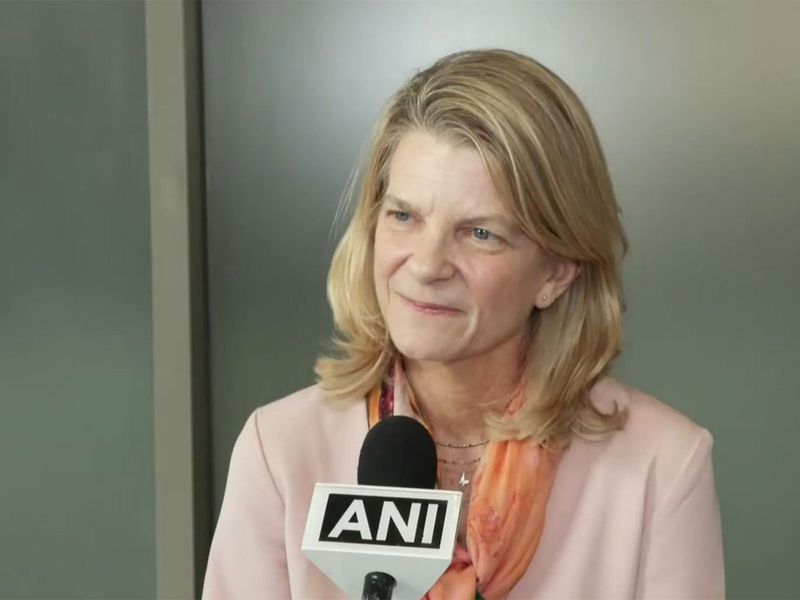
New Delhi [India], February 16 (ANI): UNICEF India Representative Cynthia McCaffrey on Monday said that artificial intelligence offers a “tremendous opportunity” for children’s learning and development, but stressed that safeguards must be built into systems from the outset.Speaking to ANI, McCaffrey said both UNICEF and the Government of India see AI as a powerful tool to expand children’s horizons.”AI is a tremendous opportunity to expand horizons, to open opportunities about how children can learn, the type of knowledge that teachers, parents and others can have access to,” she said.At the same time, she underlined the need for early protections, she said ” It’s important to identify those guardrails and those regulations that governments can put in place, that industry can think about as they design AI, because the opportunities are huge, but you have to think about the protections at the beginning.”Addressing concerns about potential risks, McCaffrey said AI, like any transformative technology, carries exposure risks that must be anticipated.”The importance is that we know that the risks are there, and that those who are designing and who are building the systems think about those safeguards at the beginning. One of the things UNICEF is advocating, along with many others, is that AI should be safe by default. It shouldn’t be an afterthought.”Outlining UNICEF’s objectives to ANI, she said the agency is focused on three key goals, i.e., engaging with diverse stakeholders, promoting safety and inclusion in AI design, and strengthening AI literacy.”Here at the AI Summit, what we’re trying to achieve is probably twofold. One is to continue to understand and engage with all the vibrant, diverse, and dynamic sectors here. We have industry, we have young people themselves, we have government, and we have partners who are working across civil society,” she said.She added that UNICEF is pushing for AI systems that are “inclusive by design and not by default,” ensuring that opportunities are opened to all children from the early stages of development.McCaffrey also emphasised the need to empower children, parents, and caregivers through AI literacy so they can better understand both the opportunities and the risks.On global AI governance, she expressed hope that leaders would prioritise children in future policy frameworks.”There will be a declaration by the leaders, the decision makers, who are coming from across the world. And so we would love to hear and see that those decision makers pick up on all the policies, all the approaches that are good lessons around the world and say ‘we as the leaders are declaring that children and young people need to be a key stakeholder in the discussions going forward, both for promoting their future as well as protecting it”, she said.Commenting on AI’s growing use in healthcare and education, McCaffrey said the technology should complement, not replace, human professionals.”AI cuts across all sectors and we’re seeing quite a bit of adoption in health, but also in education, and the continued commitment to continue find ways to use AI to streamline, to strengthen those systems. One important point that came up during the panel with FICCI and UNICEF is that AI and machines cannot replace humans. So indeed, it would not replace nurses or doctors, but it can’t replace teachers or parents. The importance of humanity and our human interaction is very important,” she said. (ANI)(This content is sourced from a syndicated feed and is published as received. The Tribune assumes no responsibility or liability for its accuracy, completeness, or content.)