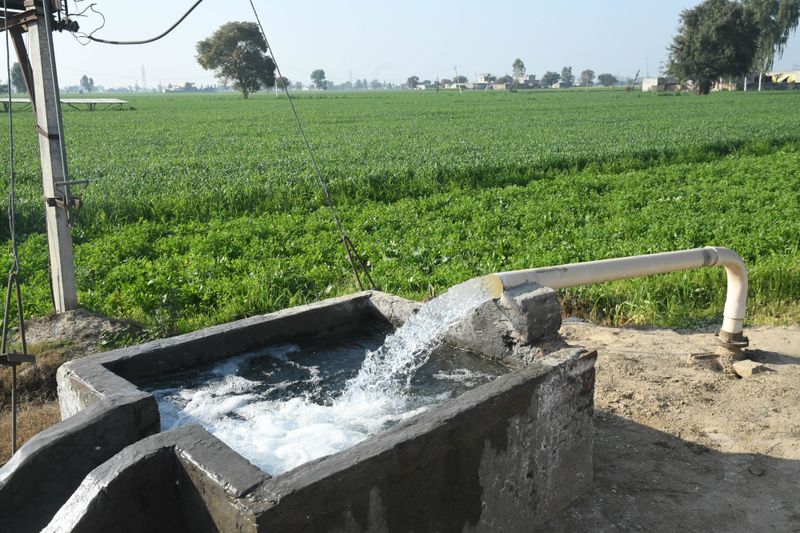

High concentration of uranium has been found in groundwater in several parts of Bathinda district, raising concerns over potential long-term health risks for residents dependent on borewells and hand pumps for drinking water.A study found uranium concentrations ranging from 2.2 to 274 micrograms (µg) per litre, with an average of 46.6 µg/L. The World Health Organisation (WHO) has set the drinking water standard for uranium at 30 µg/L.Nearly 31% of the samples recorded uranium levels above the provisional guideline value recommended by the WHO. Further, 64% samples showed total dissolved solids (TDS) levels above the permissible limits prescribed by the WHO and the Bureau of Indian Standards.However, the study found that water supplied through the government’s public water supply system, sourced from canal water, is safe for consumption. These samples showed uranium concentrations between 0.95 and 2.0 µg/L, with an average of 1.42 µg/L. None of the samples exceeded the WHO guideline value, and TDS levels were also within the permissible limits.The study was conducted by Vikas Duggal, Assistant Professor, Department of Physics, DAV College, Bathinda, and Samriti Sharma, Assistant Professor at Hans Raj Memorial College of Education, Bajakhana (Faridkot). The researchers claimed to have analysed 136 groundwater samples collected between 2022 and 2025 across the district on key water-quality parameters.To examine whether uranium levels vary with groundwater depth, samples were collected from different aquifer levels and sent to various laboratories for testing. “We found no correlation between uranium concentration and groundwater depth, indicating that both shallow and deeper aquifers are affected,” said Duggal.He added that several villages and localities reported uranium concentration four to nine times higher than the guideline value. The highest levels were found in Sekhu (273.7 µg/L), Kot Shamir (248.9 µg/L), Patel Nagar in Bathinda (237.6 µg/L), Focal Point in Bathinda (208 µg/L), Kot Bhara (199.4 µg/L), Bajjoana (192.3 µg/L), Balluana (139.8 µg/L), Bangi Rughu (131.8 µg/L), Raman Mandi (122.2 µg/L) and Gill Patti (118.2 µg/L).Duggal said the elevated uranium levels could be attributed to the natural presence of uranium-bearing minerals in local rocks, the continuous decline in water table and the extensive use of phosphate fertilisers in farming.As per the Central Ground Water Board’s Annual Groundwater Quality Report 2025, the state’s groundwater has the highest uranium concentration in the country, with 16 of its 23 districts categorised as contaminated zones. Bathinda and Sangrur were among the worst affected districts, as per the report. Similarly, a study, conducted by Panjab University’s Geo-Environmental Research Laboratory in collaboration with an NGO had found high levels of lead and uranium in the blood of children and in groundwater samples from Bathinda and some other districts.