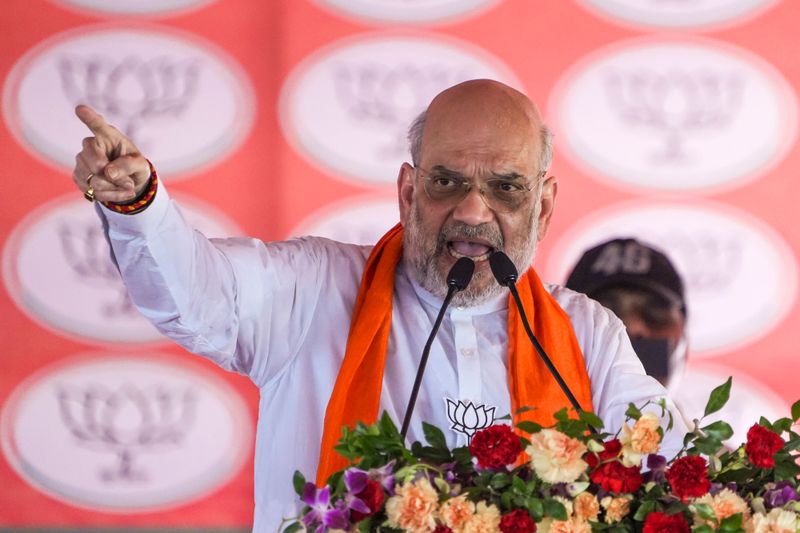

All eyes are on Union Home Minister Amit Shah’s maiden ‘Badlaav Rally’ in Moga’s Killi Chahlan village on March 14, an event expected to set the tone for the Bharatiya Janata Party’s fortunes in the 2027 Assembly elections.The rally, billed as a massive show of strength spanning over 83 acres with a sprawling pandal, parking, and langar arrangements, comes as the AAP government nears its fourth year in office.The event carries the evocative tagline: “Aao miljul ke badliye Punjab; sukhi rahe saada Punjab” (Let’s unite to change Punjab; may Punjab remain prosperous) and is being held at the same spot where the ruling party had launched its own campaign earlier this year.Senior BJP leaders, including state president Sunil Jakhar and working president Ashwani Sharma, have chaired core committee meetings and inspected the site, while party workers have fanned out across all 117 Assembly segments to ensure record mobilisation. The party has already announced that the event will formally sound the poll bugle, signalling that Punjab is firmly on the national leadership’s radar.Step-by-step push for political tractionAlready, the BJP is making step-by-step efforts to gain political traction. The party stands at a defining moment in Punjab ahead of the 2027 polls, with internal debates over contesting alone, reviving old ties with Shiromani Akali Dal, or exploring new alliances.Ahead of the rally, Amit Shah raised the issue of religious conversions in the state. Speaking at an event in Navi Mumbai on March 1, commemorating the 350th martyrdom anniversary of Guru Tegh Bahadur, Shah expressed concern over ongoing conversions in Punjab, describing them as driven by “greed” or allurement.Invoking the Sikh Guru’s sacrifice to protect others’ faiths, he urged the Punjab Government led by Chief Minister Bhagwant Mann, society and citizens of all faiths, to take collective action, emphasising that conversions for material gain defy Guru Tegh Bahadur’s legacy.Standalone fight vs alliances: BJP’s internal debateTraditional BJP leaders with roots in the RSS insist on a standalone fight to forge an independent identity, while newer faces who joined from other parties advocate alliances to consolidate votes.Punjab BJP president Sunil Jakhar has openly pitched for renewed ties, noting that “alliances with Akalis would be an important step”, but the big question is which Akalis – the Sukhbir Badal-led SAD or the breakaway faction of Giani Harpreet Singh, Wadala and Prem Singh Chandumajra?At the same time, some leaders remain cautious about how much support can the BJP earn. Past differences over farm policies, control of institutions like Chandigarh and Panjab University, and handling of cultural sensitivities have left lasting impressions.Leaders stress the need for a balanced approach that honours Punjab’s sacrifices, border security challenges, and its pivotal role in national food security while advancing the party’s broader vision.Jakhar highlighted this emotional connect in a media interview, noting: “Punjabis are resilient, proud of their history… They seek more than financial packages. They seek recognition, respect, and a sense of belonging.”Concerns over the Bandi Singhs issue persist, with Union Minister Ravneet Bittu publicly advocating their release to signal goodwill and address community sentiments. Bittu’s grandfather Beant Singh’s killers are among the Bandi Singhs and he had earlier opposed their release. It was a significant change of heart, but the party has not made it their official position. On the contrary, the BJP government in Delhi did not approve the release of Bhullar.Outreach beyond traditional baseOn the outreach front, the BJP is aggressively expanding beyond its traditional base, focusing on Dalit communities, which constitute a sizeable share of the electorate.Acknowledging limited traction among landowning Jatt sections focused on agrarian matters, strategists are engaging spiritual centres influential among Ravidassia, Valmiki, and other backward groups.BJP’s national general secretary Tarun Chugh, along with Dalit faces like former Union Minister Vijay Sampla and Avinash Chander, arranged a high-level meeting between Prime Minister Narendra Modi and Dera Sachkhand Ballan head, Sant Niranjan Dass, ahead of Guru Ravidas Jayanti.Chander described the interaction as highly positive, stating the discussions “went on very smoothly” and covered additional land for community halls. Photographs and announcements were widely circulated to reinforce the gesture’s seriousness.The party has mapped nearly 250 small and large deras across constituencies for sustained, year-round engagement rather than sporadic visits.A senior party leader explained the rationale clearly: “Our party has not been able to garner support from the Jatt community… The party is looking to be cordial with all other communities, including Ravidassias, Valmikis and OBCs, in line with its strategy in Haryana.”Tarun Chugh reinforced the long-term aim, assuring that “the BJP will bring development and prosperity to Punjab” through such inclusive outreach.Leadership transition and PunjabiyatInternally, the organisation is grappling with a leadership transition, sparking uncertainty. Across these fronts, the party continues projecting Punjabiyat in tandem with its core national outlook.Leaders like Sandeep Jakhar, Abohar MLA, stress that minor policy adjustments on farmer and border issues could deliver a decisive mandate, similar to successes elsewhere.Whether through recalibrated alliances, targeted community bridges, or internal strengthening, the focus remains on converting challenges into momentum in a state where political winds shift rapidly.Jakhar summed up the ambition: Punjab is the “next political frontier,” and the leadership is determined to free the state from its current challenges through development and respect.With Amit Shah’s address just a day away, the Moga rally is expected to amplify these quiet but steady moves, or indicate where the party stands.