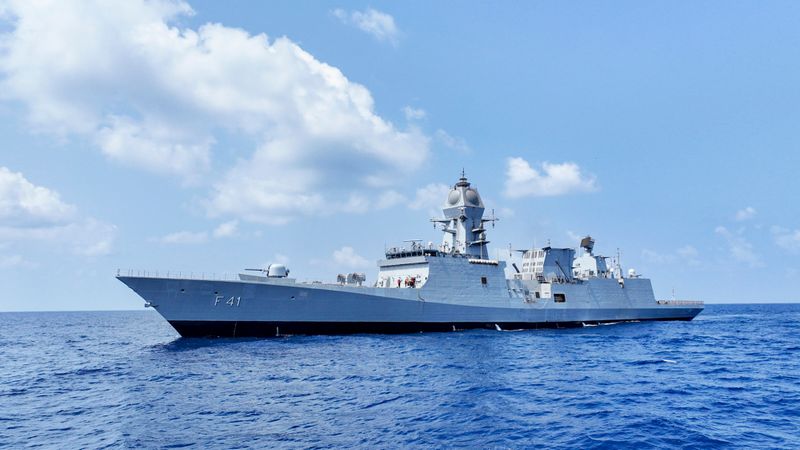

INS Taragiri, the fourth ship in the seven-vessel Nilgiri-class of stealth frigates, was commissioned on Friday, showcasing the Navy’s adoption of advanced shipbuilding techniques such as integrated construction to accelerate delivery timelines.Commissioned at Visakhapatnam in the presence of Defence Minister Rajnath Singh, the 6,670-tonne warship has been built by Mazagon Dock Shipbuilders Limited.The frigate incorporates advanced stealth features to significantly reduce its radar signature, enhancing survivability and combat effectiveness in contested environments. It represents a generational leap in indigenous warship design.Its weapon suite includes BrahMos supersonic surface-to-surface missiles (including land-attack capability), medium-range surface-to-air missiles, a 76 mm main gun, 30 mm and 12.7 mm close-in weapon systems, as well as anti-submarine and underwater warfare systems.Around a decade ago, the Navy accelerated its warship production pace, aided by modern design software, modular construction techniques and a growing domestic industrial base. As a result, Indian shipyards are now approaching global benchmarks in build timelines.A key enabler has been the Ministry of Defence’s adoption of integrated construction, where different sections of a ship —such as the hull, superstructure and internal systems — are built as separate blocks and later assembled seamlessly.Over the past five to six years, shipyards have added new infrastructure, streamlined supply chains and increasingly used technologies such as artificial intelligence to optimise sequencing in construction, including material sourcing and production timelines.The Nilgiri-class is the first major project to fully utilise this approach. These frigates are an advanced evolution of the earlier Shivalik class.While Shivalik-class ships took nearly nine years from keel-laying to commissioning, the first three Nilgiri-class vessels were completed in under eight years. INS Taragiri has been delivered in under six and a half years, with timelines expected to reduce further as processes mature.Naval designers at the Warship Design Bureau and shipbuilders have also optimised construction by installing a greater proportion of equipment before launch, reducing post-launch outfitting time. This includes key systems such as the superstructure, propulsion components, piping and cabling.Each construction block, weighing around 250 tonnes, is precision-engineered to allow seamless integration, ensuring faster assembly and improved efficiency without compromising capability.