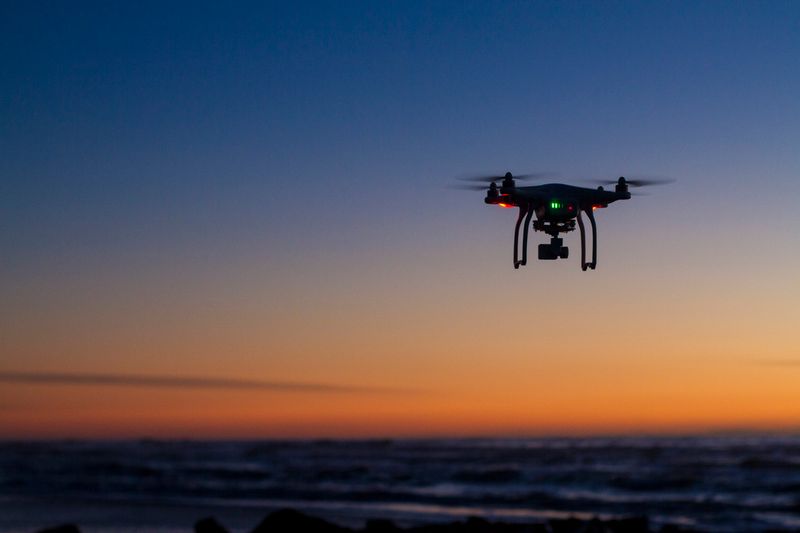
Facing growing threats from small drones and unmanned aerial systems (UAS) that are difficult to detect by conventional radars, the Army is urgently seeking ‘drone catchers’ that are automated drones equipped with nets to ensnare or destroy hostile machines.“The air threat from low radar cross-section drone/UAS employed individually or as a swarm has grown exponentially. Therefore, there is an urgent requirement of developing and procuring suitable weapon systems for countering and neutralising this emerging threat,” a request for information issued by the Ministry of Defence states.The DCS is required to detect and counter the low flying drones and UAS by utilising the net catcher. The proposed system should be able to deploy independently or in conjunction with in-service air defence weapon systems and other counter C-UAS weapon systems in all types of terrain conditions.The required system should have surveillance, detection and tracking capabilities, a microprocessor for computing a targeting solution and four drones with net catcher facility per system along with a ground control station (GCS).According to details provided in the RFI, the drone sensor will be based on ‘electronically scanned array’ technology or better, that can scan large volumes of airspace for drone intrusions. It should be able to detect the targets in a 360 degree sphere with a minimum detection and tracking capability of 20 drones simultaneously at a range of at least 4 kms. The sensor should be able to detect, track and prioritize and thereafter designate the hostile targets to the drone catcher through the GCS.The sensor should be compatible for integration with the Akashteer control and reporting air defence module through hardware interfaces with inbuilt software. It should also meet the Army Cyber Group evaluation criteria for being on-boarded on to the Army Data Network.The GCS will be a transportable unit with capability of full command and control functions, which will feed information and data received from the sensor to the drone catcher remotely via a data link for initiating effective measures for capturing or destroying the hostile drone.The drone catcher, employed as either a standalone unit or as part of other drone catcher systems, will be fully autonomous to detect and defeat aerial targets. It will receive target information from the GCS, acquire the target and thereafter utilise the net catcher to intercept and defeat the hostile drone.A jammer sub-system would provide electronic attack capabilities against hostile UAS, including radio frequency denial, selective navigation system denial and GNSS deception, across standard and non-standard frequency bands. The system shall support controlled and selective application of soft-kill measures and be capable of operating concurrently with hard-kill effectors without mutual interference.The system would be employed across all types of terrain and climatic conditions in India, from plains, deserts and coastal areas to altitudes up to 15,000 feet in temperatures ranging from minus 15 degrees Celsius to 45 degrees Celsius.