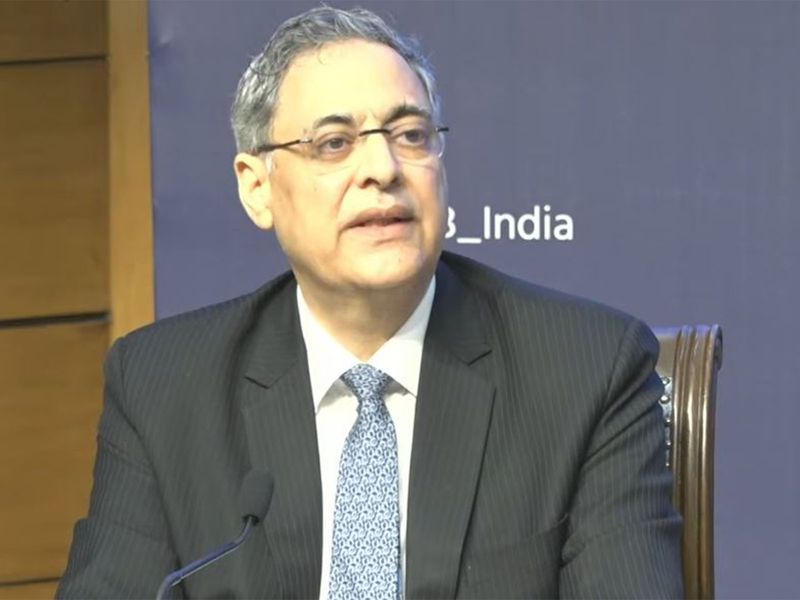

New Delhi [India], March 23 (ANI): The Ministry of External Affairs on Monday said that nearly 375,000 passengers have returned to India from West Asia since February 28 amid the ongoing regional tensions.Addressing an interministerial briefing on the recent development in West Asia here, MEA Joint Secretary (Gulf), Aseem Mahajan, said that airlines are operating limited, non-scheduled flights between the UAE and India based on operational and safety considerations. Around 95 such flights are expected to operate from various UAE airports to India on Monday.”Since February 28, around 375,000 passengers have returned from the region to India. Airlines continue to operate limited, non-scheduled flights based on operational and safety considerations between UAE and India. Today, around 95 flights are expected to operate from various airports in UAE to India,” he said.He added that flight operations from Oman and Saudi Arabia to India are continuing, while Qatar’s airspace remains partially open, with Qatar Airways likely to operate around 8 to 10 non-scheduled commercial flights to India. However, airspaces in Kuwait and Bahrain remain closed amid the conflict.”Flights continue to operate from Oman and Saudi Arabia to India, with the Qatari airspace partially open. Qatar Airways is expected to operate around 8 to 10 non-scheduled commercial flights to India today. Kuwaiti and Bahraini airspaces remain closed,” the Joint Secretary said.Mahajan further said that India is facilitating the movement of its nationals stranded in Iran through alternative routes via Armenia and Azerbaijan. Several Indian students in Tehran, Isfahan and Shiraz have also been relocated to safer areas.”Till date, 1,031 Indians, including 707 Indian students and 324 Indian citizens, have crossed out of Iran with our mission’s assistance,” he said, adding that the government continues to closely monitor the situation and assist affected citizens.The development comes amid the escalating conflict that began on February 28 with the killing of 86-year-old Iran’s Supreme Leader, Ayatollah Ali Khamenei, in joint military strikes by the US and Israel, after which Iran, in retaliation, targeted Israel and US assets in several Gulf countries, causing disruption in the waterways and affecting international energy markets and global economic stability.Due to the conflict in the region, Iran has virtually closed the Strait of Hormuz. (ANI)(This content is sourced from a syndicated feed and is published as received. The Tribune assumes no responsibility or liability for its accuracy, completeness, or content.)