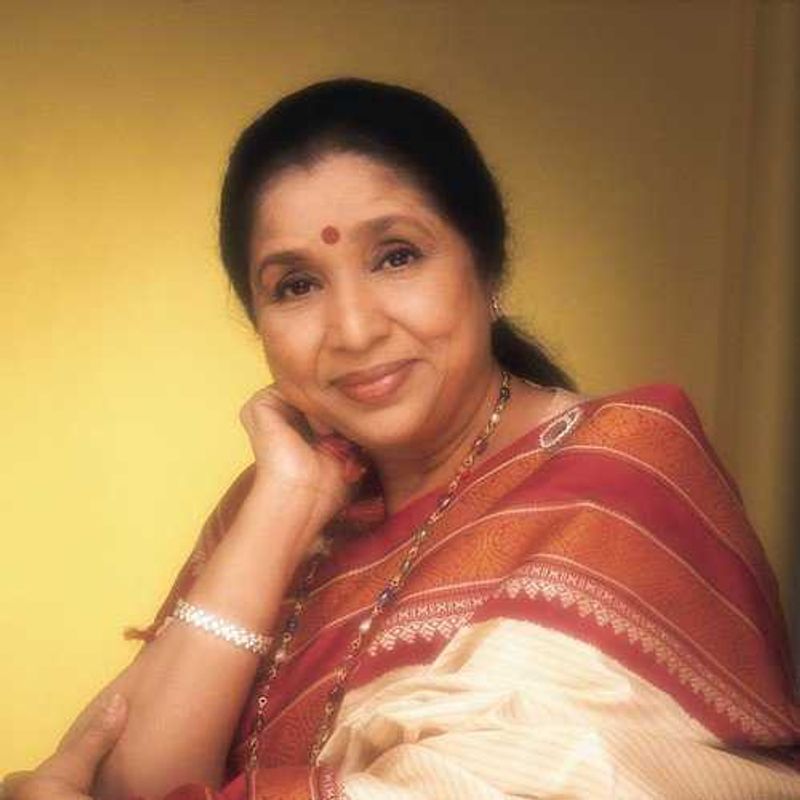

To understand iconic singer Asha Bhosle’s towering legacy, one must place her within the larger history of Hindi film music, says author Yaseer Usman, noting how she not only survived but “thrived” in an era dominated by her elder sister Lata Mangeshkar.Both sisters began their careers in the 1940s, yet their paths soon diverged. While Mangeshkar rose to instant fame with “Aayega Aanewala”, Bhosle spent years taking on smaller roles and navigating limited opportunities.Bhosle, who passed away on Sunday at 92 due to multiple organ failure, recorded her first song at just 10 years old in 1943 for the Marathi film “Majha Bal”. “Even when Asha was delivering hit songs and working in major films, she was often seen as Lata’s rival but largely remained number two in the hierarchy.“That said, this in no way diminishes her stature or talent. What truly set her apart was her ability to recognise her unique vocal texture and style,” Usman told PTI, adding that, where other singers found it tough to sustain their careers, Bhosle not only survived but thrived and became a “legend in her own right.” With a staggering repertoire of around 12,000 songs—including classics like “Abhi Na Jao Chhod Kar”, “In Ankhon Ki Masti”, “Dil Cheez Kya Hai”, “Piya Tu Ab to Aaja”, “Duniya Mein Logon Ko”, and “Zara Sa Jhoom Loon Main”—Bhosle became the playback voice for numerous leading actresses, from Meena Kumari and Madhubala to Zeenat Aman, Kajol, Urmila Matondkar, as well as South Indian stars like Padmini and Vyjayanthimala.Her major breakthrough, according to Usman, came with the 1957 film “Naya Daur”, starring Dilip Kumar and Vyjayanthimala. she sang some of the film’s most enduring numbers, including “Mang Ke Saath Tumhara”, “Uden Jab Jab Zulfen Teri”, “Reshmi Salwar Kurta Jali Ka” and “Saathi Haath Badhana”, all composed by OP Nayyar to lyrics by Sahir Ludhianvi.“The film’s music was a huge success and marked a breakthrough for her. Around the same time, due to a rift between Lata Mangeshkar and SD Burman, Asha became his primary female voice for several years, delivering numerous hits,” he added.Her later collaborations, particularly from the 1960s onwards, helped define her signature style, blending Indian and Western influences.While Lata was the go-to choice for music director Madan Mohan, the master of melody and ghazals, Bhosle was equally accomplished in that genre, and is still remembered for her ghazals in “Umrao Jaan”. She won a National Film award for the movie.“There was a perception that Lata excelled in classical and romantic songs, but Asha challenged that with her work in films like ‘Umrao Jaan’, proving her versatility.“By the 1970s and 1980s, she had firmly established her own identity not just as a successful singer, but as a legend,” explained Usman, known for writing biographies of several Bollywood personalities, including Rajesh Khanna, Sanjay Dutt, Guru Dutt and Rekha.The award-winning author attributed Bhosle’s long-lasting relevance to her lively, “zinda dil” personality and her ability to retain a sense of curiosity and enthusiasm even later in life.He also pointed to her album “Rahul and I”, a tribute to her husband and celebrated composer RD Burman, as evidence of her openness to experimenting.“At a time when many artists of her generation resisted change, she embraced remix culture and modern presentation, even creating music videos… While times and trends evolved, Asha Bhosle stayed in sync with them. Her adaptability, combined with her musical brilliance, kept her relevant across decades,” he added.When asked how best to celebrate the legacy of such a towering personality, Usman replied that listeners must explore the full breadth of her repertoire.From energetic tracks like “Piya Tu Ab To Aaja” and “O Haseena Zulfon Wali” to soulful renditions such as “Dil Cheez Kya Hai” and the classical “Tora Man Darpan Kehlaye”, Bhosle remained a voice that resonated across generations.“The best way is to celebrate her music across its full range. While she is often associated with playful, sensuous, or romantic songs, she also delivered deeply emotional and nuanced performances, especially in films like Umrao Jaan and in collaborations with poets like Gulzar,” he concluded.