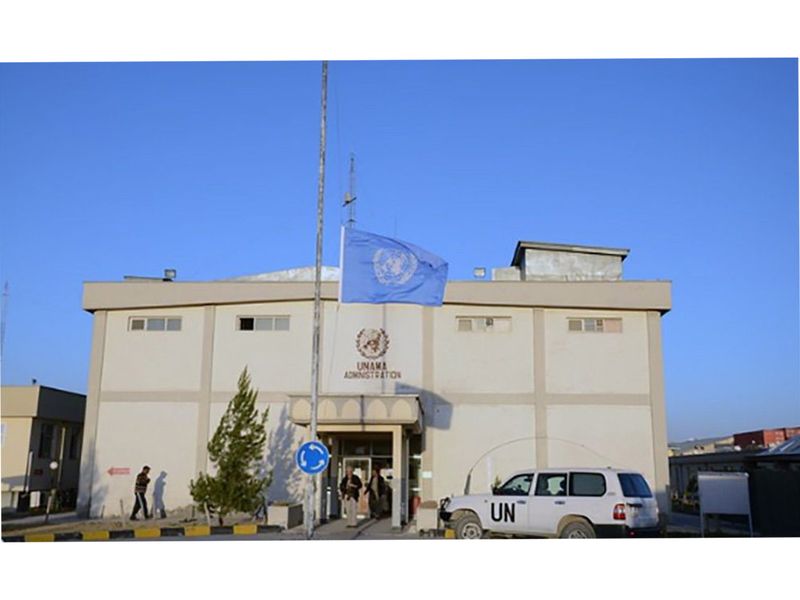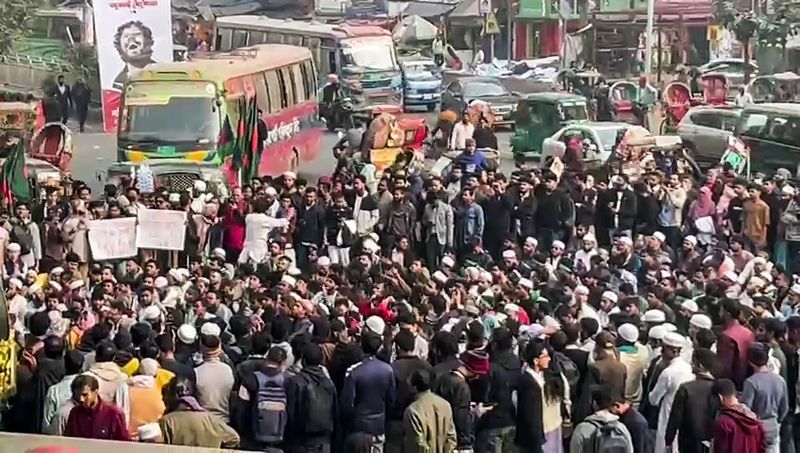

Bangladesh’s interim government of Muhammad Yunus has sought the cooperation of the UN human rights office for a fair and transparent investigation into the killing of student leader Sharif Osman Hadi, a media report said on Sunday.Hadi, 32, spokesperson of Inqilab Moncho, who rose to national prominence during the July-August 2024 mass protests that led to the fall of the Sheikh Hasina-led Awami League regime, was shot in the head on December 12 during an election campaign in Dhaka.The interim government has sought the cooperation of the Office of the United Nations High Commissioner for Human Rights (OHCHR) to ensure a proper investigation over Hadi’s killing, state-run BSS reported.The Permanent Mission of Bangladesh in Geneva on Friday sent an official Note Verbale to the OHCHR, the Chief Adviser’s Press Wing said on Saturday.Bangladesh had formally requested technical and institutional assistance from the UN human rights office for the investigation into the killing, it added. “The government of Bangladesh has reiterated that it is firmly committed to identifying those responsible for the killing of Shaheed Sharif Osman Hadi and bringing them to justice,” said the press wing. Hadi was also a parliamentary candidate for the upcoming February 12 elections. He was airlifted to Singapore for treatment but died on December 18.Meanwhile, a report titled “Rupture, Reform, and Reimagining Democracy: Navigating the Agony of Transition,” stated that a sharp rise in Islamist politics following the July 2024 uprising in Bangladesh could have widespread negative consequences, particularly for women. The new research report, published by the BRAC Institute of Governance and Development (BIGD), examines the political and ideological shifts that have taken place since the uprising that led to the fall of the Sheikh Hasina-led government.Explaining the findings, Mirza M Hassan, PhD, one of the authors of the report, said the uprising did not result in the deep structural transformation many had anticipated.”I’ll be very brief about it. We thought there would be a change in the political order in terms of, party system, in terms of, reforms, and massive changes in the elite structure. There has to be a new elite structure, a new elite circulation. These things should have happened, and also a certain degree of rule of law. That didn’t happen. Rather, we saw chaotic governance,” Hassan said.