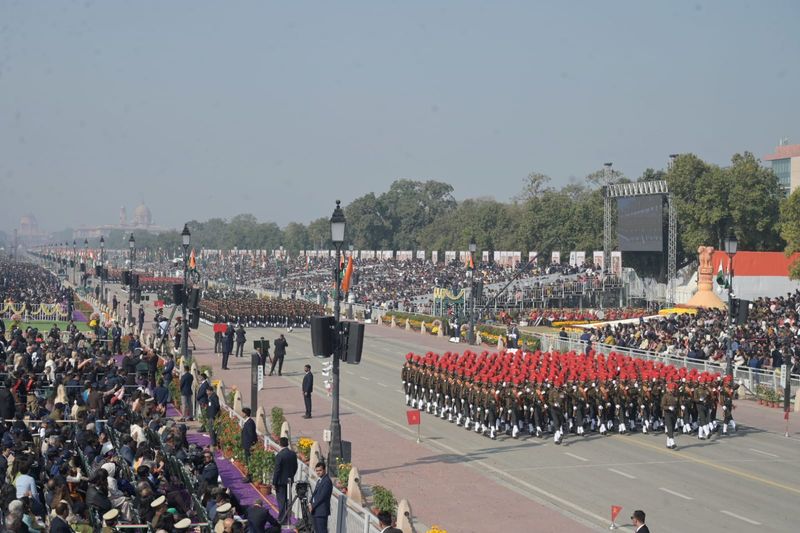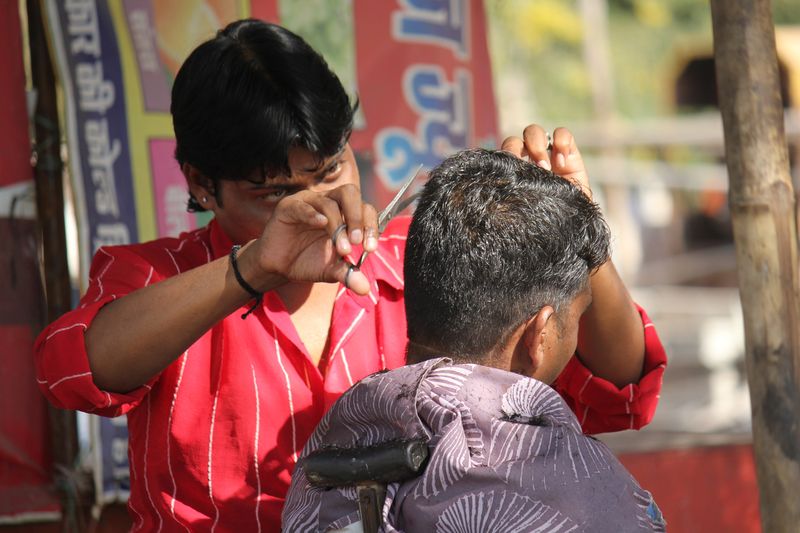
Regimental services are less occupations than rehearsed rituals of order. Their academies breathe starch and brass, lingering echoes of a colonial cadence that never entirely faded. Discipline there is not merely enforced; it is staged — in polished shoes, measured steps, and the precise length of a young officer’s hair. Some traditions endure because they serve a purpose; others remain like heirlooms no one remembers choosing.Among these survivals stands the government-appointed barber, his scissors as permanent a presence as the parade ground bugle. The logic was once imperial. Cropped hair was the Empire’s quiet grammar of conformity, a subtle trimming of individuality into obedience. Even today, probationers of the IPS, IFS, NDA and IMA bow to the ritual snip, as though hair itself might harbour dissent. Yet within this choreography of authority exists a small republic of conversation — the barber’s chair — where hierarchy loosens, observation sharpens into insight.It was in this unlikely sanctuary at the Indian Forest College, Dehradun, that I first encountered Radhey Sham in 1983. Our meetings would stretch across three decades: first when I was a raw probationer, later as a mid-career officer, and finally as Director of the Forest Research Institute. His scissors hardly changed, but the meanings I discovered in that chair deepened with time.Radhey Sham carried within him the long inheritance of the Indian barber. In villages and towns, barbers have never been mere tradesmen. They stand at life’s thresholds — shaving heads in mourning, preparing grooms for ceremony, absorbing whispers of family feuds and festive plans alike.Their profession trains them to listen, to observe, to remember. They become archivists of human nature, their knowledge gathered not from books but from faces, pauses, and the cadence of everyday speech.Radhey Sham brought that ancient attentiveness into the modern institution. As a probationer, I entered his narrow kingdom of mirrors and combs with nervous curiosity. The buzzing clipper in his hand felt almost ceremonial, and we recruits submitted like initiates. He issued instructions with mock gravity — chin higher, shoulders square — yet ruled with humour rather than severity.His remarks, lightly ironic, carried lessons disguised as jokes. Between strokes of the comb, he mapped the invisible geography of academy life: the overzealous rule-keeper, the quiet rebel, the homesick boy learning to wear a uniform. In his chair, discipline softened into something almost humane.When I returned years later, both of us had aged a little — my hairline receding, his laughter mellowing into reflective silence. The talk grew richer, less about youthful mischief and more about the curious theatre of institutional life.With the patience of a natural historian, he described the Academy’s ever-changing cast: officers devoted to single malts or silent morning walks, misers who guarded coins like secrets, flamboyant dressers who turned corridors into runways. Files recorded achievements, Radhey Sham preserved character. What lingered most was the breadth of his awareness.Without formal education to claim, he navigated conversations on service politics, shifting norms, and the slow erosion of certain old virtues. He knew instinctively when to embellish a tale and when to let silence carry its own weight. Like many Indians whose wisdom grows outside classrooms, he had mastered the art of listening until understanding ripened on its own.By the time I became Director, Radhey Sham had altered his manner with almost poetic precision. The easy familiarity of earlier years gave way to a courteous distance. He would call ahead: “Namaskar, Sir. May I take an appointment?” His conversation became measured, elliptical, almost diplomatic. Gone were the playful disclosures; in their place came observations offered gently, as though testing the air before releasing a thought. His comb seemed to listen as much as it groomed, his scissors moving through silences like punctuation marks.To probationers he had been a companion, to officers a chronicler, to directors a diplomat — each role adopted without pretence, each adjustment made with quiet dignity.My encounters with Radhey Sham were never truly about hair. They traced the arc of my own journey — the rough edges of youth, the layered compromises of middle age, the careful restraint demanded by authority.Barbers, after all, are guardians of transitions. They stand close enough to hear confessions yet distant enough to keep them safe. Radhey Sham demonstrated that education is not confined to degrees, that wisdom often gathers in those who watch institutions from just outside their formal gates.Hair grows back, files fade, reputations rise and fall. But the soft, fleeting snip of steel lingers — a reminder that even within the most regimented worlds, understanding is shaped as much by listening hands as by commanding voices.— The writer is a retired Indian Forest Service officer