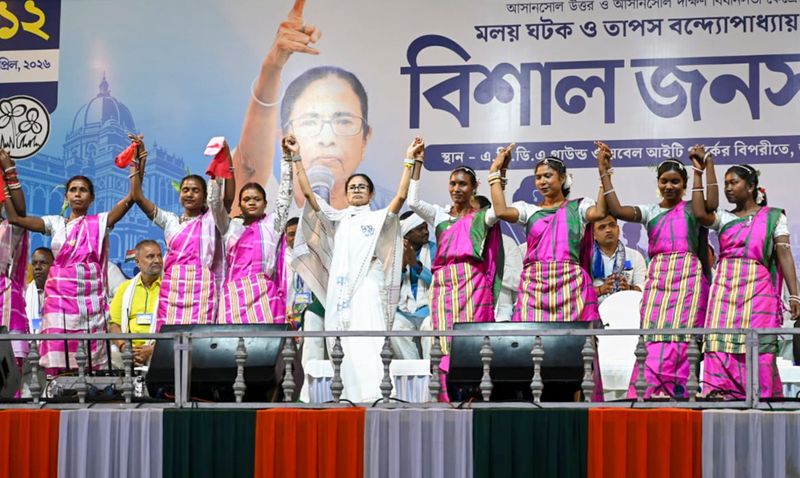

Women’s safety in West Bengal, linked to a broader deterioration in law and order, has taken centre stage in the Assembly election, with the BJP turning it into a key plank against TMC supremo Mamata Banerjee.A three-time Chief Minister, Mamata is seeking a fourth consecutive term, but the BJP, which has managed to expand its footprint in the state significantly, is using all the weapons in its political armoury to derail her journey.Mamata has cultivated an image as a champion of women’s causes since coming to power in 2011, increasing women’s participation across sectors such as health, education, the police and panchayat leadership. Yet, incidents like the RG Kar rape and murder of a young doctor have significantly dented that image.The fact that West Bengal has also topped the national list of acid attack cases has further raised questions about the TMC government’s commitment to women safety.In August 2024, Kolkata witnessed one of its largest citizens’ protests after a postgraduate trainee doctor at RG Kar Medical College was raped and murdered within the hospital premises.Mamata’s initial reluctance to respond drew mounting criticism, as protests swelled across the city. The growing outrage eventually prompted the Supreme Court to order a CBI probe, leading to the arrest of the accused and a life imprisonment sentence awarded by the Calcutta High Court.However, lingering doubts remained, with allegations that others involved in the case were shielded due to their proximity to the TMC leadership.The RG Kar case was not an isolated incident, with several other cases of rape and attacks on women reported in Kolkata. Despite data from the National Crime Records Bureau ranking Kolkata among the safest cities for women for consecutive years, many question whether it reflects the ground reality.Women activists argue that such figures often mask the true picture, pointing out that cases of sexual assault and harassment frequently go unreported, particularly in semi-urban areas and villages. “Much of this has to do with the marked deterioration in overall policing in the state,” says retired IGP (Prisons) Adhir Sharma, who alleges growing political interference has adversely affected police competence and morale.Mamata, who has retained the home portfolio through all three of her terms, presents a mixed record on law and order. When she came to power in 2011, she demonstrated strong resolve in tackling crime, notably curbing Maoist activity in the Jangalmahal region and taking a proactive stance on women’s issues. However, as her dependence on her henchmen increased, she started overlooking crimes committed by them, including those against women.“It is almost like a ‘mansabdari’ system that allows these TMC henchmen to run their designated areas freely and as they wish as long as they pay their revenue to Mamata,” says a woman activist.At the same time, Mamata has built a strong statewide network among women through welfare schemes and outreach programmes. Interestingly, many women do not directly blame her for crimes, instead holding local leaders responsible and often arguing that such incidents occur without “Didi’s” knowledge.Activists acknowledge that in recent months, steps have been taken to address gaps. Initiatives such as “pink booths” and all-women “shining patrols” have been introduced to enhance safety and vigilance across urban and rural areas.However, scepticism persists about the impact of these measures. In a deeply patriarchal society, activists argue, lasting change will require more than policing and legislation, calling for a broader shift in social attitudes towards women.