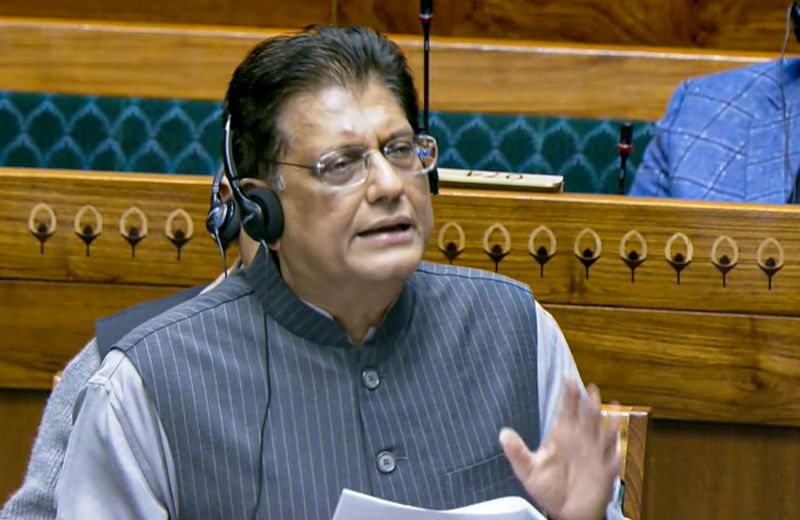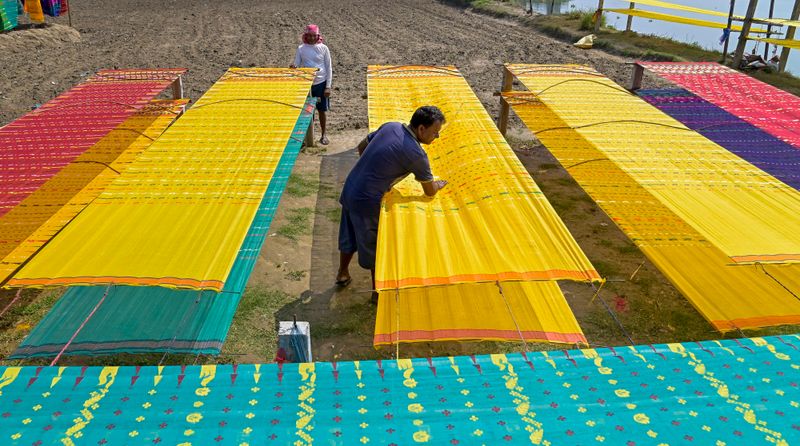

The Union Budget for 2026-27 has stitched together an ambitious export-led revival plan for India’s labour-intensive textile sector, unveiling a multi-layered policy push that spans fibre self-reliance, modernised clusters, skilling, sustainability and global market access.Presenting the Budget in Parliament on Sunday, Finance Minister Nirmala Sitharaman announced an integrated programme for the textile sector, aimed at strengthening the entire value chain — from raw fibre and village looms to factories and overseas markets — while boosting employment in one of India’s largest job-creating industries.At the core of the strategy is a national fibre scheme, designed to reduce import dependence and ensure self-reliance across natural fibres such as silk, wool and jute, man-made fibres and new-age technical fibres, a move seen as critical to export competitiveness.To address long-standing productivity gaps, the Budget proposes a textile expansion and employment scheme to modernise traditional clusters through capital support for machinery, technology upgrades and common testing and certification centres — key requirements for meeting global quality and compliance standards.In nod to India’s artisanal base, existing handloom and handicraft schemes will be brought under a unified national handloom and handicraft programme, providing targeted support to weavers and artisans while preserving heritage crafts that continue to find strong demand in export markets.Sustainability, increasingly a determinant of global sourcing decisions, has been placed front and centre through the Tex-Eco Initiative, aimed at promoting environmentally compliant and globally competitive textile and apparel manufacturing.The skilling component has also been refreshed, with Samarth 2.0 set to upgrade the textile training ecosystem through closer collaboration between industry and academic institutions, ensuring a pipeline of export-ready manpower.Signalling a scale-up in manufacturing infrastructure, Sitharaman announced that mega textile parks would be set up in challenge mode, with a special focus on technical textiles, a fast-growing segment with applications in defence, healthcare, infrastructure and mobility.The export push is reinforced through a key trade facilitation measure — extension of the export obligation period from six months to 12 months for textile and leather exporters using duty-free imported inputs — offering greater flexibility and easing working capital pressures for exporters.Complementing the industrial push, the government will launch the Mahatma Gandhi Gram Swaraj Initiative to strengthen khadi, handloom and handicrafts, with emphasis on branding, global market linkage, skilling and quality improvement — benefiting rural youth and the One District One Product programme.