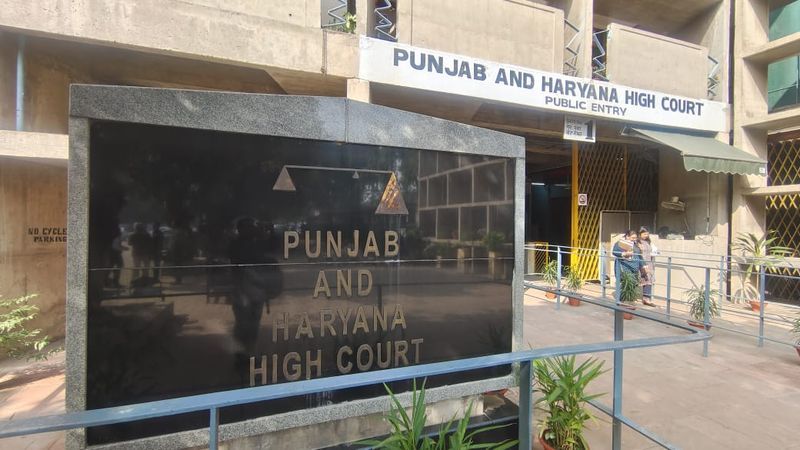

Casting serious doubt on the credibility of the Central Bureau of Investigation’s probe in the Ram Chander Chhatrapati murder case, the Punjab and Haryana High Court has found that the prosecution’s case against Dera Sacha Sauda chief Gurmeet Ram Rahim Singh rested primarily on the shifting testimony of a witness who “kept on tossing from one side to the other like a ping pong ball”.In its detailed judgment available today, the High Court observed that the prosecution failed to prove Ram Rahim’s involvement in the alleged conspiracy beyond reasonable doubt, while holding that the evidence against the three co-accused remained intact.“In the considered opinion of this Court, the prosecution was not able to prove its case against Ram Rahim beyond reasonable doubt, whereas it was able to do so in the case of other accused. It is a settled principle of law that where two possibilities, one of commission of crime and the other of innocence, are reasonably possible, the accused is entitled to the benefit of doubt.”CBI castigatedIn its 111-page judgment, the Bench of Chief Justice Sheel Nagu and Justice Vikram Aggarwal expressed grave concern over the manner in which the CBI handled the testimony of the prosecution’s key witness, Khatta Singh, projected as Ram Rahim’s driver.The Bench asserted it would not hesitate in holding that the witness appeared to have been coerced by the CBI into making a statement, as the agency was under pressure to conclude the investigation—something he had been stating in “many” of his applications.The Bench added: “It is a matter of grave concern that a premier investigating agency adopted this kind of methodology with a view to succeed in the matter. The endeavour should have been to go to the bottom of the matter and bring out the truth.” Key witness unreliableThe High Court noted that the entire case against Ram Rahim rested substantially on the testimony of Khatta Singh, whose statements were inconsistent. “Absolutely no reliance can be placed on a witness like Khatta Singh. He chose to remain silent for a number of years and then kept on tossing from one side to the other like a ping pong ball.”Even when he first made statements during the investigation in December 2006, the witness did not implicate Ram Rahim in the Chhatrapati case. “Ram Rahim was not named at this stage. Not only this, he was not named by any of the co-accused in their disclosure statements as well.”The court further recorded: “Even after the CBI had taken over the investigation, Ram Rahim had never been named.”He again did not link Ram Rahim with the Chhatrapati killing, when his statement was recorded in another murder case. “His statement was recorded in Ranjit Singh’s murder case. In his statement recorded under Section 161 CrPC in the said case, Khatta Singh stated that Ram Rahim along with others had conspired on June 16, 2002, to commit the murder of Ranjit Singh… Notably, even at this stage, he did not level any allegations against Ram Rahim as regards his involvement in the present case.”It was only in June 2007—almost five years after the incident—that he first alleged that Ram Rahim had directed the killing.Public figure and possibility of followers actingThe High Court also examined the broader context of Ram Rahim’s status as a religious leader with a large following. “We are conscious of the fact that Ram Rahim is a public figure. Such public figures are known to have admirers and enemies alike. Such public figures are always in the news. At times for good reasons and at times for bad ones.”The court acknowledged the influence of religious allegiance in India. “It is well known that Ram Rahim has a huge following. In our country, religion, caste, sects, play an extremely important role. Lives are given and taken in the name of religion, caste, sects etc.”Referring to extreme devotion among followers, the court observed: “Many of the followers of faiths, sects etc., can be termed to be ‘fanatics’. A fanatic, as per the Oxford Dictionary is a person filled with excessive and single minded zeal, especially for an extreme religious and a political cause.”After analysing the evidence, the court said the possibility of the co-accused acting independently could not be ruled out. “The discussion in the judgment leads this Court to the conclusion that there is a greater possibility of three accused having acted on their accord.”Court cautions against media influenceThe Bench also emphasised that courts must decide criminal cases strictly on evidence rather than media narratives. “It is often said that Courts and Judges should not be swayed by media reports and the public attention which a matter receives. Matters are required to be decided strictly as per law.”Reiterating the principles of criminal jurisprudence, the court added: “It has to be borne in mind that the principles of criminal jurisprudence require proving the guilt of an accused beyond reasonable doubt. It is well settled that the moment a doubt arises, its benefit has to go to the accused.”Missing evidence questionedThe High Court also pointed to serious gaps in the prosecution’s case, including the failure to examine arucial police officer who had recorded the injured journalist’s statement. “One aspect, which heeds to be mentioned here is that, it has come on record that one SI Ram Chander had recorded the statement of Ram Chander Chhatrapati in PGI, Rohtak on October 26, .2002. However, this statement has not been brought on record by the prosecution.”Calling the omission inexplicable, the court observed: “It is extremely strange that this very important witness was given up by the prosecution as ‘being unnecessary’. One could still have understood had the witness been given up as having been ‘won over’. In the considered opinion of this Court, he was the most important witness.”The Bench said the omission created a serious doubt in the prosecution case. “In any case, a doubt is created in the mind of the Court, once such an important statement is not brought on record and such an important witness is not examined. The benefit of the doubt necessarily has to go to the accused.”Failure to record statement of injured journalistThe court also found it surprising that the investigating agency did not attempt to record the journalist’s statement despite medical records showing that he remained stable for several days after the shooting. “Not only this, the treatment record of Ram Chander Chhatrapati… shows that his general condition was fair and stable right from October 26, 2002, to at least November 1, 2002.”Yet no effort was made to obtain a formal statement from him. “Strangely, no application was moved all this while to seek an opinion of the treating Doctor as to whether Ram Chander Chhatrapati was fit to give a statement or not. This fact would go against the investigating agency and the prosecution and not against the accused.”Background of the attackThe court also recounted the circumstances of the attack. “The incident took place at about 8.00 p.m. on October 24, 2002. Ram Chander Chhatrapati, along with his two sons Anshul Chhatrapati and Aridaman, and his daughter was at home and were about to have their meals when Ram Chander Chhatrapati was called out and shot at.”