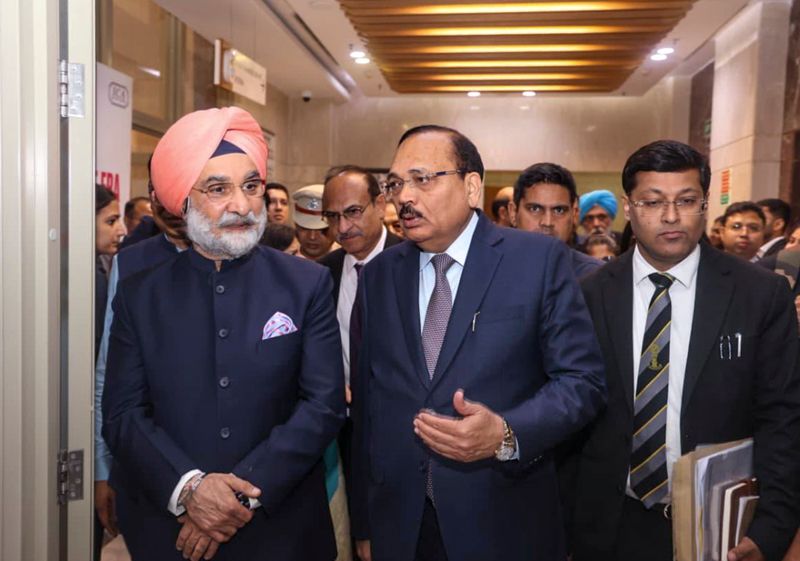

Noting that the use of artificial intelligence in arbitration should not be shunned due to concerns of confidentiality and independent decision-making, Chief Justice of India Surya Kant has said that instead, its use should be regulated through a proper procedural framework.Addressing the inaugural session of the Indian Council of Arbitration’s two-day international conference on ‘Arbitration in the Era of Globalization: Legal Technology, Economic Development & Cross Border Disputes’ here on Friday evening, the CJI emphasised that protocols on cyber security and confidentiality should keep pace with technological changes to ensure that technology becomes arbitration’s powerful ally in a fast-paced world.He said courts should remain “passive” in arbitral proceedings unless it’s manifestly abusive and that an anti-arbitration injunction should be exceptional.CJI Kant said that technological development has improved accessibility in arbitration and reduced logistical delays, especially in cases with serious geographical constraints, but it has also brought “new responsibilities”.“The increasing use of artificial intelligence in decision support tools raises a legitimate concern relating to confidentiality and the preservation of independent judgement. Arbitration derives its legitimacy not only from efficiency but from the confidence that decisions remain the product of impartial human expertise. The solution, therefore, lies not in shunning technology altogether but regulating its use through a procedural framework,” he said.“Arbitration tribunals must retain autonomy over the manner in which such tools are used so that protocols governing cybersecurity and confidentiality keep pace with technological adoption. When governed by such safeguards, the technology becomes a powerful ally of arbitration in a fast-paced world,” the CJI said.Justice Kant cautioned against “excessive judicial intervention” in matters of arbitration, saying it weakens faith in the arbitration and risks “unsettling” the assurance that parties would respect their agreement and the tribunal would be permitted to determine its own procedure.Maintaining that arbitration played a central role in ensuring that disagreements in “modern commerce” were resolved with clarity and predictability, he said India has made a purposeful effort to modernise its arbitration framework.