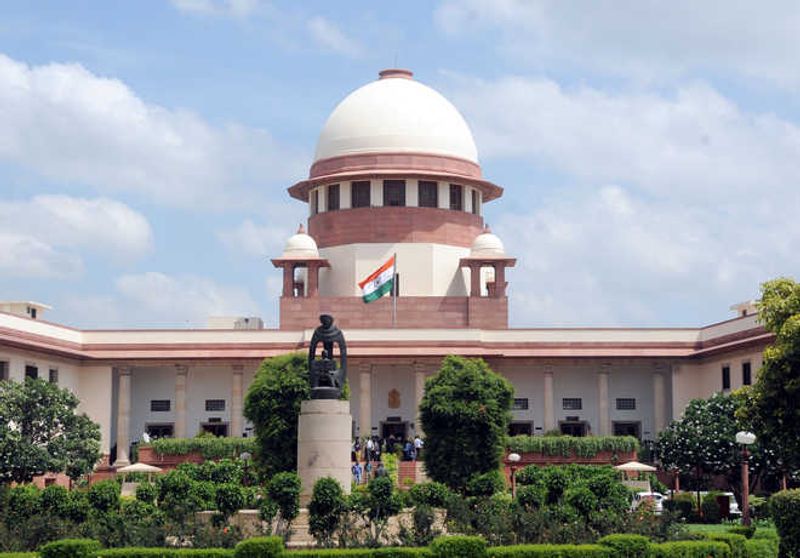
The Supreme Court on Tuesday asked the Centre to spell out its stand on excluding the well-off among Scheduled Castes and the Scheduled Tribes from reservation benefits in government employment and admission to government-run educational institutions.While hearing petitions filed by OP Shukla and Samta Andolan Samiti seeking enforcement of Supreme Court’s August 1, 2024, order on reservation, a three-judge Bench led by Chief Justice Surya Kant asked the Centre to file its response to the petitions.The top court, which has already issued notices to the Centre on these petitions, said the matter would be taken up for hearing after sometime.The petitioners contended that those holding senior government or constitutional positions should not continue to receive reservation benefits as it undermined the purpose of reservation.Earlier, in its August 1, 2024, verdict, a seven-judge Constitution Bench of the Supreme Court had said the state must evolve a policy for identifying the creamy layer from the Scheduled Castes and Scheduled Tribes so as to exclude them from the benefit of reservation.Currently, creamy layer criteria are applicable only to Other Backward Classes (OBCs) in order to exclude the better offs among them from quota benefits, in terms of the 1992 nine-judge Constitution Bench verdict of the Supreme Court in the Indira Sawhney case.However, four of the six judges on the seven-judge Bench led by CJI DY Chandrachud (since retired) – which ruled by a 6:1 majority that sub-classification in Scheduled Castes and Scheduled Tribes was permissible for the purpose of reservation – had said the creamy layer among the Scheduled Castes and Scheduled Tribes should be identified and excluded from reservation.“In my view, only this and this alone can achieve the real equality as enshrined under the Constitution,” Justice BR Gavai (since retired) had said in his verdict.Justice Gavai said that the criteria for exclusion of the creamy layer from the Scheduled Castes and Scheduled Tribes for the purpose of affirmative action could be different from those applicable to the Other Backward Classes.“I have no hesitation to hold that putting a child studying in St. Paul’s High School and St. Stephen’s College and a child studying in a small village in the backward and remote area of the country in the same bracket would obliviate the equality principle enshrined in the Constitution,” Justice Gavai had written.He said that “putting the children of the parents from the Scheduled Castes and Scheduled Tribes who on account of benefit of reservation have reached a high position and ceased to be socially, economically and educationally backward and the children of parents doing manual work in the villages in the same category would defeat the constitutional mandate.”The other three judges who favoured extending the concept of creamy layer to SC/ST reservation were — Justice Vikkram Nath, Justice Pankaj Mithal and Justice SC Sharma.