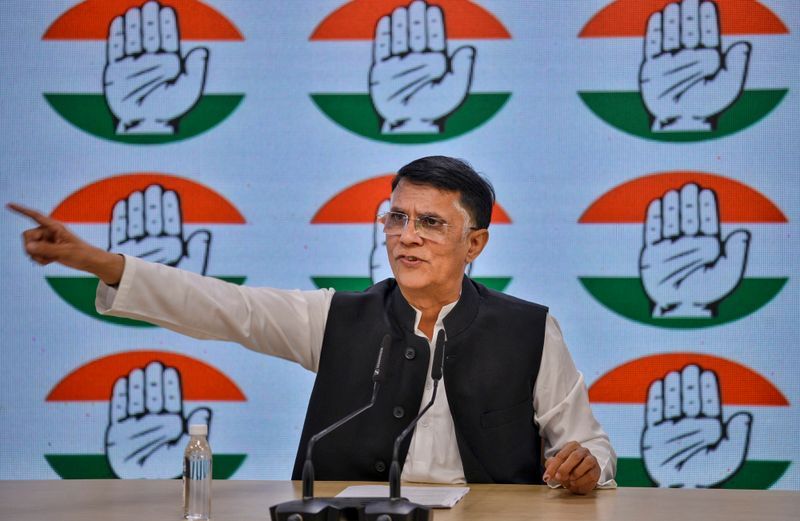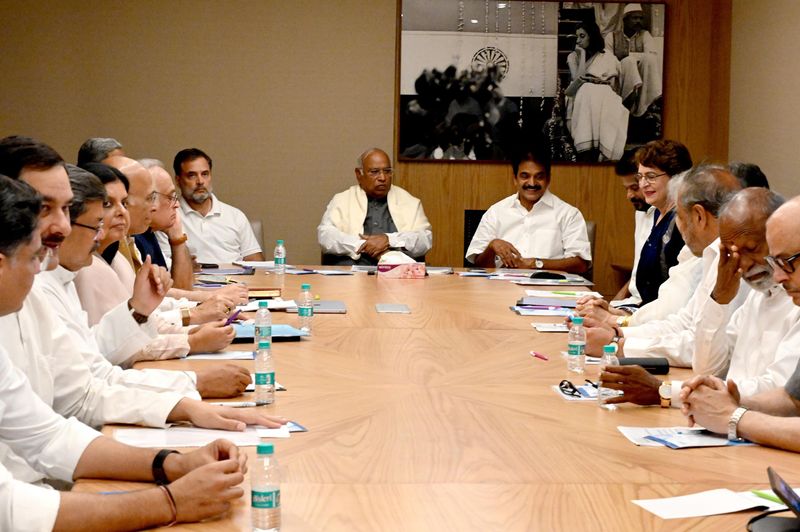

The Congress Working Committee (CWC) on Friday put delimitation at the centre of the political debate ahead of the Parliament session, questioning Prime Minister Narendra Modi over the timing, intent and lack of clarity on proposed constitutional changes linked to women’s reservation and a steep increase in Lok Sabha seats.Meeting in the national capital under party president Mallikarjun Kharge, the CWC unanimously said the core issue was not women’s reservation, but delimitation and its long-term impact on the representation of states. It noted that the government had not shared any draft or formal proposal, even as it plans to bring legislation in Parliament between April 16 and 18, during the ongoing Assembly elections.The CWC decided that Kharge will convene a meeting of INDIA bloc leaders, likely on April 15, to work out a joint strategy. It also reiterated its demand for an all-party meeting after April 29, when polling in West Bengal concludes, to discuss the proposed changes before they are taken up in Parliament.In his remarks, Kharge referred to the 2023 constitutional amendment on women’s reservation, noting that it mandates one-third reservation in the Lok Sabha and state Assemblies only after a Census and delimitation exercise. He questioned why the government was moving to introduce fresh changes within a short span and during an election period.The Congress said holding a Parliament session during elections limits participation, as several MPs are campaigning in Tamil Nadu and West Bengal. It argued that decisions with long-term constitutional implications should follow wider consultation.Addressing mediapersons, Congress general secretary Jairam Ramesh said the party had received no official communication on the proposed amendments. He added that Kharge had written three times to the Parliamentary Affairs Minister since March 16 seeking an all-party meeting, but had received no response.Ramesh said there was no clarity on which constitutional provisions would be amended, how the increase in Lok Sabha seats would be structured, or how delimitation would be carried out. “Parliament is being asked to consider sweeping changes without basic information,” he said.The government is learnt to be considering increasing the strength of the Lok Sabha from 543 to 816 seats, with 273 seats reserved for women. The Congress said such an expansion was directly linked to delimitation and would alter the distribution of seats among states.Ramesh warned that an increase based on population would benefit more populous states. He said the current gap in Lok Sabha seats between Uttar Pradesh and Kerala, around 60, could widen to about 90, while the difference between Uttar Pradesh and Tamil Nadu could also increase.The party said such changes could widen regional imbalances and affect the federal balance of representation, making detailed consultation essential.Reiterating its support for women’s reservation, the Congress objected to the process being followed. It pointed out that Article 334A, introduced in 2023, links implementation to a Census followed by delimitation.Ramesh questioned whether the government intended to alter this sequence, noting there was no clarity on whether a fresh Census would be conducted or what data would be used.Kharge also raised concerns over convening Parliament during elections and said the government had not taken Opposition parties into confidence.The meeting was attended by senior leaders, including Rahul Gandhi and Priyanka Gandhi Vadra, along with Chief Ministers of Himachal Pradesh, Karnataka and Telangana.The Congress said it would coordinate with Opposition parties to present a common position, indicating that delimitation and the lack of clarity around it would be key issues in the session.Besides, the CWC welcomed the ceasefire in West Asia, calling it a necessary step towards de-escalation, diplomacy and lasting peace, while saying that targeted killings of leaders, attacks on civilians and violations of international law cannot be justified. In a resolution, the CWC said any durable solution must be based on established global principles, including the Geneva Conventions, the United Nations Charter and respect for sovereignty and peaceful dispute resolution. It said India’s foreign policy since 1947 has been rooted in non-violence, non-alignment and respect for international law, drawing from Mahatma Gandhi’s ideals and Jawaharlal Nehru’s approach.