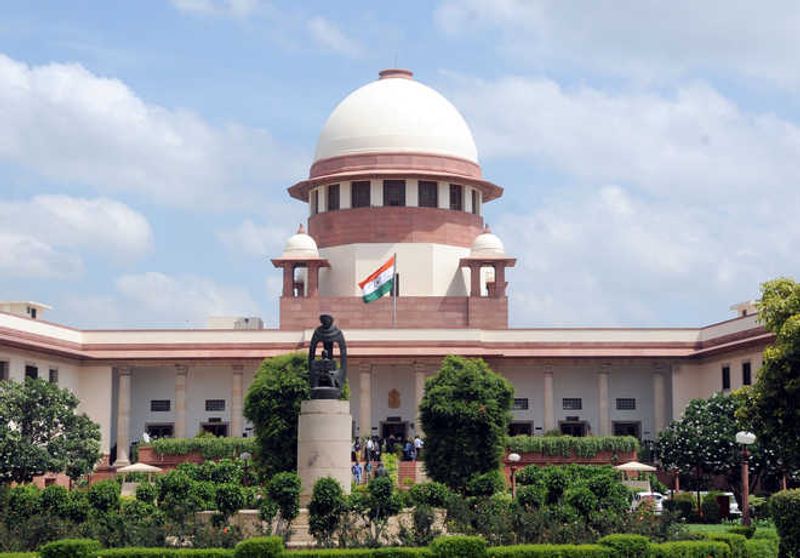

Creamy layer status of candidates for availing reservation benefits under the Other Backward Classes (OBC) category cannot be determined solely on the basis of parental income, without reference to the posts and status held by the parents in their organisations, the Supreme Court has ruledA Bench of Justice PS Narasimha and Justice R Mahadevan held that treating similarly placed employees of private entities and PSUs differently from government employees for deciding reservation would amount to hostile discrimination.“Having regard to the peculiar facts of the present cases, the reasoning adopted by the High Court that treating similarly placed employees of private entities and PSUs differently from government employees and their wards, while deciding their entitlement to reservation, would amount to hostile discrimination, is certainly one that inspires the confidence of this court,” the Bench said on Wednesday.Dismissing the Centre’s appeals, it upheld the decisions of the high courts of Delhi, Madras and Kerala which dealt with the eligibility of candidates claiming OBC (Non-Creamy Layer) benefit for Civil Services Examinations.The top court directed the Centre to consider the claims of respondent candidates Rohith Nathan, Ketan, Ibson Shah I and other interveners in accordance with the principles laid down in this judgment, and to implement the same in six months.Noting that supernumerary posts have already been assured by the DoPT, the top court said, “we find no difficulty in directing the appellants (Centre) to create such supernumerary posts, as required, to accommodate the candidates who satisfy the non-creamy layer criteria as clarified in the present judgment, subject to their otherwise fulfilling eligibility conditions.”Writing the judgment for the Bench, Justice Mahadevan said that mere determination of the status of a candidate as to whether he/she falls within the creamy layer or the non-creamy layer of the OBCs cannot be decided solely on the basis of the income.While caste may be an indicator of historical disadvantage, it cannot be treated as the sole determinant of backwardness, it said.“The exclusion of the creamy layer among the backward classes is not a matter of mere policy preference but a constitutional imperative intended to ensure that the benefits of reservation reach those who are socially and educationally backward in the true sense of the phrase.“The principle seeks to prevent relatively advanced segments within the backward classes from siphoning off the advantages of affirmative action, so that the objective and purpose of the constitutional scheme of affirmative action, of which reservation is a reflection, are adhered to,” the Bench said.Several civil services examination candidates—who claimed reservation under the OBC Non-Creamy Layer category—had moved the Central Administrative Tribunal which directed the Centre to reallocate the service of the applicants on the basis of their OBC status.The Centre had issued Office Memorandum on September 8, 1993, specifying who shall be creamy layer among OBCs and the clarificatory letter issued in this regard on October 14, 2004.While the Office Memorandum excluded income from salary and agricultural income from the Income/wealth test for determination of creamy layer status, the letter dated October 14, 2004 directed inclusion of salary income of PSU and private sector employees, it noted.“It is evident from a comprehensive reading of the 1993 OM along with the clarificatory letter dated October 14, 2004, that income from salaries alone cannot be the sole criterion to decide whether a candidate falls within the creamy layer. The status as well as the category of post to which a candidate’s parent or parents belong is essential. Mere determination of the status of a candidate as to whether he/she falls within the creamy or the non-creamy layer of the OBCs cannot be decided solely on the basis of the income,” it said.