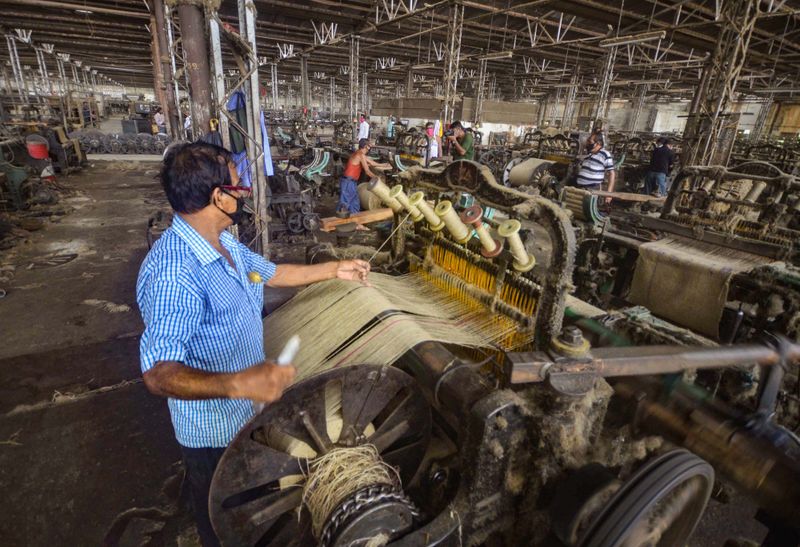

An intense tussle is on between Mamata Banerjee’s Trinamool Congress and the BJP to capture 130 seats in West Bengal’s influential jute belt.The halfway mark in the 294-seat Assembly is 148 — the BJP has 77 seats, while Mamata has 215 in the outgoing Assembly.The state’s jute belt has become a key focus in this election. The jute mills are concentrated in semi-urban and industrial districts neighbouring Kolkata, while cultivation is largely carried out in the Hooghly river delta. Jute cultivators, predominantly Muslims, have remained loyal to Mamata through her past three terms.The BJP is focusing on 108 seats in urban and semi-urban areas with a sizeable Hindi-speaking population. Many of these families are descendants of workers who migrated from Bihar and Uttar Pradesh to work in the jute mills.In the 2021 Assembly elections, the BJP managed to win only eight seats in the jute belt, while the TMC swept the remaining 130.This time, the BJP is aiming to expand its base by attempting to split the Muslim vote. The political contest is unfolding amid a deepening crisis in the jute industry. Nearly three lakh people are directly employed in jute mills, while another 40 lakh depend on the sector indirectly.“The jute industry is facing the worst crisis in decades,” said Rajesh Jaiswara, a Serampore-based leader of the Jute Mill Trade Union.Trade unions allege that mill closures, reduced shifts and complete stoppages of work are leading to widespread job losses among jute workers.Since 1963, there has been no revision in the wages of jute workers due to lack of agreement between mill owners and trade unions on categorising the workforce in the jute mills. Surprisingly, the political bosses in Delhi and Kolkata have both been reluctant in implementing the pending agreements in the jute industry.“The jute industry is an orphan child, neither the Centre nor the state government is willing to take ownership,” points out Nirmalya Mukherjee, former secretary of the Indian Jute Manufacturers’ Association (IJMA).The crisis has deepened further as 40 lakh jute bales have gone missing from the market and has adversely affected production at the Jute mills.The BJP is trying to pin the blame on the Muslim cultivators and accusing Mamata’s government of tardy investigation as they constitute the TMC’s support base.“The jute mills and the land on which jute is cultivated are in West Bengal and, therefore, the main responsibility of the crisis lies with the state government,” says Uttorpara’s BJP leader Pankaj Roy.The TMC counters the charge by alleging that the Modi government has contributed to the crisis in jute production to promote the use of plastic bags over jute packaging.From 106 mills at the time of Partition, the number has declined to 93, of which 70 are located in West Bengal. These mills primarily produce jute bags used by the government for transporting foodgrain and sugar as part of efforts to reduce plastic usage.Roy, a native of Jaunpur in Uttar Pradesh, wears his Hindu identity on his sleeve. The BJP is making a concerted push to polarise Hindu and Hindi-speaking voters against the TMC.However, Mamata’s party also has several leaders in the jute belt with roots in Bihar and Uttar Pradesh.Dilip Jadab, chairman of Uttarpara municipality and a former district president of the TMC, said, “We identify ourselves as Bengalis, and I am a loyal TMC worker.” Jadab’s family hails from Chhapra in Bihar.Winning the jute belt, however, may require more than just polarisation.