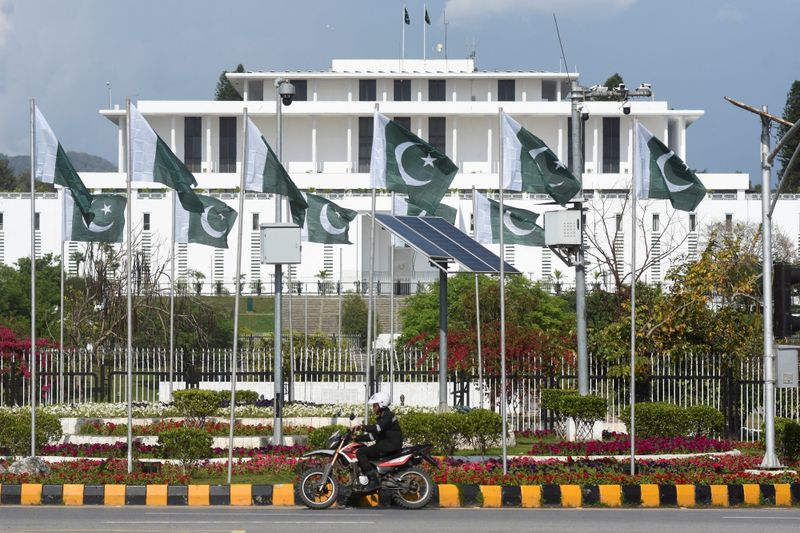

As Islamabad prepares to host one of the most consequential diplomatic engagements in recent West Asian history, attention is sharply focused not just on the outcome but on the powerful lineup of negotiators representing Washington and Tehran.The upcoming US-Iran peace talks, expected to begin this weekend under Pakistan’s mediation, will bring together top political heavyweights, signalling both the urgency of the crisis and the seriousness of the negotiations aimed at converting a fragile ceasefire into a durable agreement.US delegation: Led by Vice-President, backed by Trump’s inner circleAt the forefront of the American delegation will be JD Vance, reflecting the high priority the Donald Trump administration has placed on the talks. Vance has been deeply involved in Iran policy since the beginning of the current crisis and is expected to act as the chief negotiator.He will be joined by two of Trump’s most trusted envoys: Steve Witkoff — the administration’s point man for West Asia diplomacy and a key architect of backchannel engagement with Iran and Jared Kushner — a senior adviser with prior experience in Middle East negotiations, including earlier outreach to Tehran.Both Witkoff and Kushner have already been involved in preliminary contacts and are expected to play a central role in shaping the framework of the agreement.The composition of the US team underscores a dual-track strategy — combining political authority (Vance) with diplomatic continuity (Witkoff and Kushner), while maintaining direct oversight from the White House.Iran delegation: Political weight and diplomatic authorityIran, too, is sending a high-powered delegation, signalling its willingness to engage seriously—albeit cautiously—in the negotiations.The Iranian team is expected to be led by: Mohammad-Bagher Ghalibaf — a senior political figure with strong influence within Iran’s power structure, particularly among conservative factions and Abbas Araghchi — Tehran’s top diplomat and a seasoned negotiator who has represented Iran in multiple rounds of nuclear and regional talks.Araghchi’s presence indicates that the discussions will likely extend beyond immediate ceasefire mechanics to broader strategic issues, including sanctions, nuclear policy and regional security architecture.Ghalibaf’s inclusion, meanwhile, suggests that Iran is seeking to align political consensus at home with diplomatic engagement abroad—an important factor given internal divisions over how far Tehran should compromise.Pakistan’s role: Mediator and hostWhile not a direct party to the conflict, Pakistan will play a pivotal role in shaping the negotiations.Foreign Minister Ishaq Dar is expected to participate in the talks, reflecting Islamabad’s central role in brokering the initial ceasefire and facilitating dialogue between the two adversaries.Pakistan’s involvement has been critical in maintaining communication channels, especially during moments when tensions threatened to spiral into a wider regional war.Venue: Islamabad’s high-security red zone turns into global diplomatic stageThe talks will be held in Islamabad’s ultra-secure Red Zone, the nerve centre of Pakistan’s political and administrative power, home to key state institutions including Parliament, the Prime Minister’s Office and foreign missions.A luxury hotel within the red zone — vacated and sanitised on government instructions — has been designated as the primary venue, effectively transforming it into a fortified diplomatic enclave.Even sections beyond the Red Zone are expected to be intermittently sealed depending on delegation movement.The scale of arrangements underscores not just security concerns, but the geopolitical weight of the talks, effectively turning Islamabad into a temporary global diplomatic hub.Why this lineup mattersThe presence of top-tier leadership from both sides is significant for several reasons:First, the inclusion of a sitting US Vice President and Iran’s top diplomatic and parliamentary leadership indicates that both countries are treating the talks as more than exploratory dialogue.Secondly, with both political and diplomatic heavyweights present, negotiators are likely to have the authority to take key decisions — reducing delays that often plague multi-layered diplomacy.Third, while the immediate focus is on stabilising the ceasefire, the composition of the delegations suggests that deeper issues– such as nuclear policy, sanctions relief and regional security — may also be on the table.Backdrop: Talks amid deep mistrustThe talks are being convened at a time when the ceasefire itself remains fragile and contested.Recent Israeli strikes in Lebanon, which Iran has described as violations of the truce, have already cast a shadow over the negotiations. Meanwhile, Washington has maintained military pressure, with Trump warning of a strong response to any breach of the agreement.Conflicting interpretations of the ceasefire — particularly over whether it extends to theatres like Lebanon — have further complicated the diplomatic landscape.With military forces still on alert and trust in short supply, the negotiations will have to bridge not just policy gaps, but deep-seated strategic distrust.For now, the world watches as some of the most powerful decision-makers from Washington and Tehran prepare to sit across the table — knowing that the outcome could shape the future of West Asia.