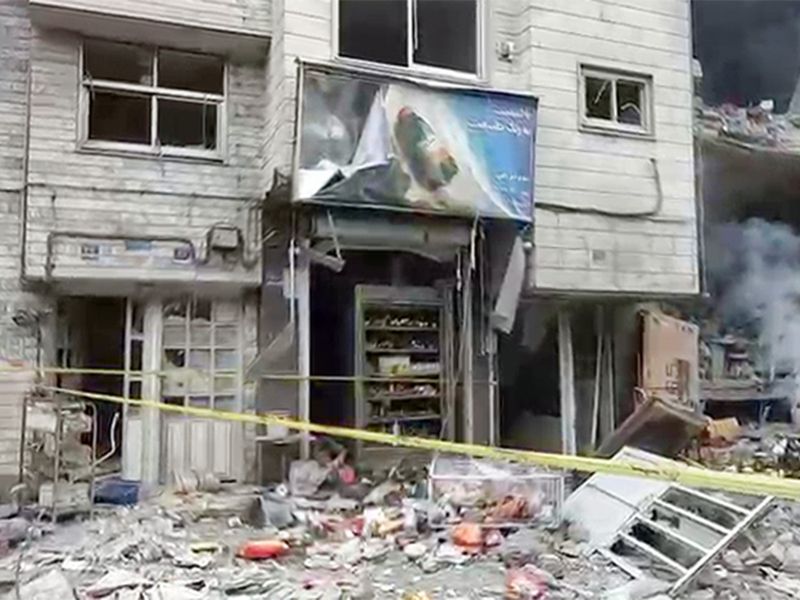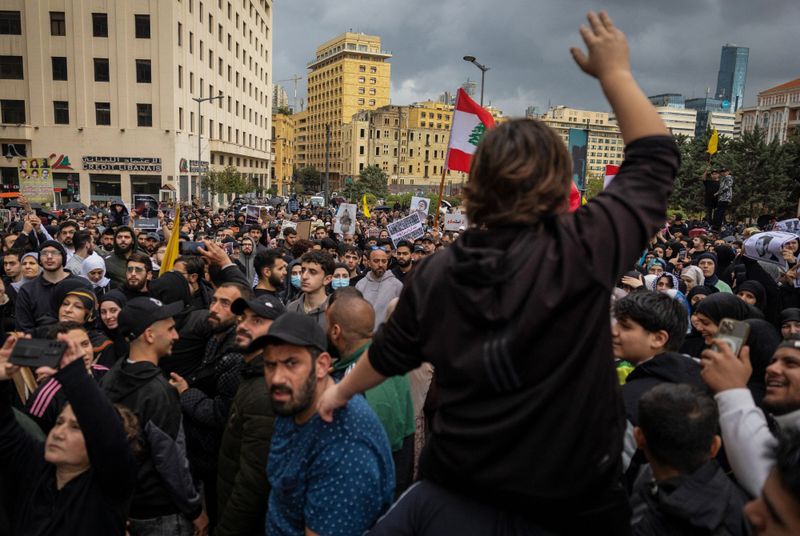

The night sky over Lebanon turned into a theatre of fire once again on April 8, just hours after a ceasefire between the United States and Iran was announced.Israeli warplanes pounded cities without warning, sending missiles arcing across the horizon as buildings crumbled into dust and panic spread through the streets. The echoes of those explosions travelled far beyond the battlefield. At least 254 lives perished and hundreds were left injured.But Tel Aviv’s renewed strikes on Lebanese territory were not an isolated military operation—rather they are the latest flare-up in one of West Asia’s most enduring and combustible rivalries.To understand why Israel is attacking Lebanon even after a ceasefire, one must look beyond the immediacy of rockets and retaliation, and into the deeper architecture of a conflict shaped by history, ideology, and regional power struggles.The ceasefire that never heldThe idea of a ceasefire suggests calm, but along the Israel-Lebanon border, calm has always been fragile—almost illusory. Even after the ceasefire, understandings linked to broader regional tensions, hostilities have continued in different forms.Israel maintains that its operations are defensive and pre-emptive, aimed at neutralising imminent threats rather than violating peace.At the centre of this justification lies Hezbollah. The Iran-backed militia continues to operate along southern Lebanon, launching rockets and drones into northern Israel.For Israeli planners, a ceasefire does not apply if threats persist. In their view, striking Hezbollah infrastructure is not escalation—it is containment. This is why the bombs continue to fall even in the shadow of diplomacy.Hezbollah: The state within a stateIsrael’s conflict is not with Lebanon in a conventional sense, but with Hezbollah, a force that blurs the line between militia and state authority.Deeply embedded within Lebanon’s political and military landscape, Hezbollah commands significant influence while maintaining an independent armed wing far stronger than the national army in certain regions.Backed by Iran, Hezbollah has evolved into one of the most sophisticated non-state actors in the world. Its arsenal, believed to include tens of thousands of rockets and increasingly precise missiles, poses a direct threat to Israeli cities.For Israel, this transforms Lebanon into a strategic frontline. For Lebanon, it creates a painful paradox—a sovereign nation repeatedly drawn into war by a force it does not fully control.1982: The invasion that changed everythingThe origins of this rivalry lie in the seismic events of 1982, when Israel invaded Lebanon to expel Palestinian fighters operating from its territory. The invasion achieved its immediate objective, but it also unleashed forces that would reshape the region for decades.From the wreckage emerged Hezbollah, forged in resistance and fuelled by ideology. Supported by Iran, it positioned itself as the defender of Lebanese territory against Israeli occupation. What began as a guerrilla movement quickly matured into a disciplined and deeply entrenched organisation.Israel’s prolonged presence in southern Lebanon, which lasted until 2000, only hardened this dynamic. Hezbollah’s campaign of attrition turned into a defining narrative of resistance, culminating in Israel’s eventual withdrawal—a moment the group still celebrates as a historic victory.2006: War without resolutionIf the rivalry needed a defining moment, it came in the form of the 2006 Lebanon War. Triggered by a cross-border raid and the capture of Israeli soldiers, the conflict escalated rapidly into a full-scale war.For over a month, Lebanon endured relentless airstrikes while Hezbollah fired rockets deep into Israeli territory. Entire neighbourhoods were flattened, infrastructure collapsed, and civilian suffering reached staggering levels.Yet, when the guns fell silent, there was no decisive end. Hezbollah remained intact. Israel had demonstrated its military superiority, but not achieved a strategic knockout. The war ended not with resolution, but with unresolved tension—setting the stage for future confrontations.Shadow warIn the years after 2006, the conflict receded from headlines but never disappeared. It transformed into a shadow war—fought through intelligence operations, targeted strikes, and constant military preparedness.Israel sought to prevent Hezbollah from acquiring advanced weaponry, particularly precision-guided missiles that could alter the strategic balance.Hezbollah, in turn, expanded its arsenal and battlefield experience, especially through its involvement in regional conflicts alongside Iranian forces.This period deepened the conflict’s complexity. It was no longer just Israel versus Hezbollah—it was increasingly Israel versus Iran, with Lebanon serving as the battleground.The post-2023 spiralThe latest escalation is inseparable from the wider turmoil that has engulfed West Asia since 2023. The outbreak of war in Gaza reignited tensions across multiple fronts, and Hezbollah soon entered the fray, launching attacks in solidarity.What followed was a steady intensification. Cross-border exchanges became routine, and the risk of a broader war loomed constantly. By 2026, the situation had escalated dramatically, with Israel launching extensive airstrikes across Lebanon in response to renewed Hezbollah attacks.Even ceasefire efforts linked to larger geopolitical negotiations failed to fully contain the violence. The conflict had acquired a momentum of its own—one that could not be easily paused by diplomatic declarations.A conflict without closureThe persistence of this conflict lies in its structure. Geography keeps the adversaries locked in proximity. Ideology ensures that neither side is willing to concede. Geopolitics, particularly the involvement of Iran, sustains the confrontation with resources and strategic intent.Lebanon remains caught in the middle, its sovereignty strained by forces both within and beyond its borders. Israel continues to act on a doctrine of deterrence, unwilling to allow threats to gather strength at its doorstep. Hezbollah continues to define itself through resistance, drawing legitimacy from confrontation.And so, the ceasefire becomes a word without weight.