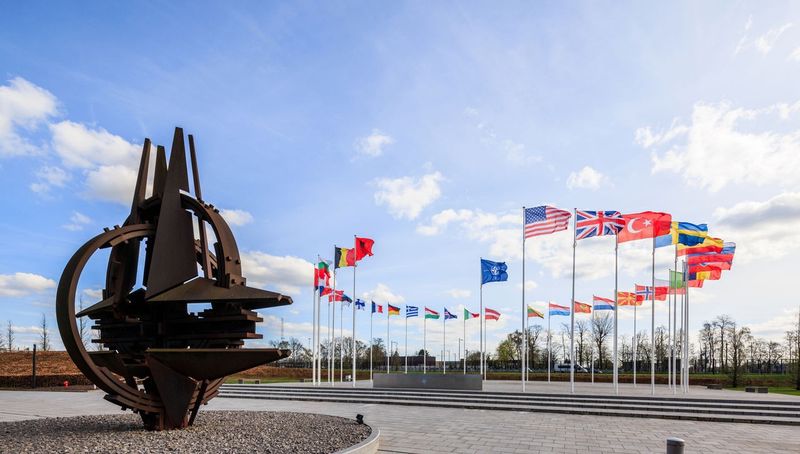

Speaking to a British newspaper, US President Donald Trump dropped a bombshell when he said that he was strongly considering pulling out of the North Atlantic Treaty Organisation (NATO), the world’s most prominent political and military alliance that was formed in 1949 by Western nations on either side of the Atlantic Ocean against perceived threats from the Soviet Union and its allies in the aftermath of World War II.NATO’s purpose, according to its website, is to guarantee the freedom and security of its members through political and military means. At its core lies the commitment of ‘collective defence’ which implies that an attack against one of its members is considered an attack against all and NATO allies will come to each other’s assistance when needed. So far this provision has been invoked only once in response to the 9/11 terrorist attacks in the United States in 2001.Starting off with 12 nations in western Europe and North America, NATO, headquartered at Brussels in Belgium, has 32 members at present. In addition, there are eight countries that cannot become regular members but have the status of being global partners for being closely aligned with the Western bloc.Its counterpart was the Warsaw Pact, headed by the Soviet Union, which dissolved following the collapse of the Soviet Union. Several countries that were earlier members of the Warsaw Pact or constituent republics of the Soviet Union joined NATO.The United States has been central to the existence and functioning of NATO, being the top provider of finance, manpower, troops, weapons, equipment and intelligence. Its withdrawal would have huge ramifications on the global security architecture and trigger a massive geopolitical rejig.India and NATOHistorically, India has had cordial relations with most NATO members as well as with global partners, which following the collapse of the Soviet Union and the emerging global power shifts, have evolved and strengthened across economic, military and diplomatic domains.Turkey, which joined NATO in 1952, and Pakistan, designated a major non-NATO ally by the US in 2004, are two prominent countries in this bloc that are hostile to India. Both countries are close allies and Turkey, along with China, had openly supported Pakistan during Operation Sindoor, the intense five-day military engagement between India and Pakistan in May 2025, supplying drones, weapons and other equipment.Among major NATO members, India’s relations with France, Germany, the United Kingdom and Italy have fared well, with a lot of military equipment such as fighter aircraft, warships, submarines, transport planes, surveillance devices and weapons being sourced from them since Independence.Ties with Canada, though focused on trade, technology and energy rather than military-to-military cooperation, are now in a ‘reset’ phase following a two-year long crisis over India’s alleged involvement in the killing of a Canadian Sikh. Counter-terrorism and cybercrime are key areas of cooperation in the security arena.In the eastern hemisphere, India has excellent bilateral relations with Australia, Japan, South Korea, Mongolia and New Zealand, all of which are among NATO’s global partners, marked by partnerships in multilateral alliances, joint military exercises and high-level exchanges.In the 1990s Indo-US ties began warming up and have developed into a ‘Comprehensive Global Strategic Partnership’ where India has also been designated as a ‘Major Defence Partner’, given the two countries’ strategic interests in the Indo-Pacific region. Despite the recent trade downturn over tariffs, cooperation in the defence field, which involves procurement of weapons and equipment and joint exercises, continues.Over the past two decades, a significant amount of equipment including strategic airlifters, special mission aircraft, heavy lift helicopters, attack helicopters, anti-submarine helicopters, naval ships, jet engines, drones, sniper rifles and sensors have been procured from the US. High-level exchanges, as well as numerous joint exercises and training activities are held regularly. The US is the third largest arms supplier to India after Russia and France.Impact on IndiaA US withdrawal from NATO will no doubt have serious implications for European Security, and in turn have heavy economic consequences as the affected countries will have to fill in the security void that will crop up. With the US defensive field gone, European countries will have to spike spending to build up their individual or collective military capability.India, on the other hand, had little to do directly with NATO as an entity, and has been engaging its member states individually and at the same time balancing its long standing ties with Russia, a country which Europe views as its major threat.A US withdrawal, strategic experts feel, is unlikely to have any significantly adverse impact on India’s bilateral relations with NATO members though Europe’s own political, diplomatic and economic cauldron that subsequently emerges may keep its leaders embroiled in their own affairs and for some time shift attention away from far-off regions.Experts are also of the view that if NATO fragments, India’s existing bilateral relations with some members may further strengthen while new alliances may evolve on the basis of economic, military and diplomatic requirements of some countries.With India laying a great deal of emphasis on indigenisation of military equipment making forays into the global arms market, it could also offer export opportunities to the Indian defence industry. India already exports defence equipment to about 90 countries and there is ample space for further growth. Joint ventures in research and development and production with European countries that have a strong industrial and scientific base, also have good scope and can also have spin-offs for the civilian sector.