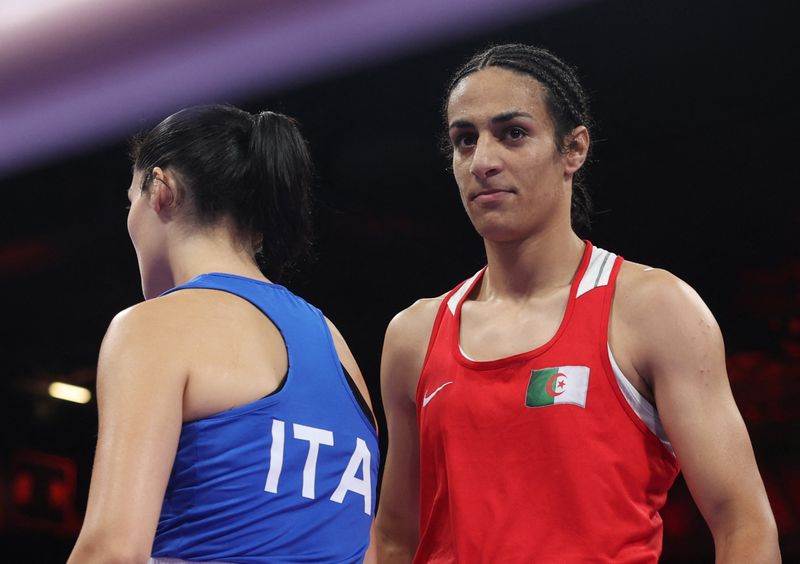

IT has been a week since the first female president of the International Olympic Committee (IOC), Kirsty Coventry, announced that all female athletes have to undergo SRY (Sex-determining Region Y) gene screening to be eligible to take part in the Olympic Games. The next Summer Olympics are scheduled in Los Angeles, USA, in 2028.Titled ‘Policy on the Protection of the Female (Women’s) Category in Olympic Sport and Guiding Considerations for International Federations and Sports Governing Bodies’, Coventry said it was being done because it is “clear that it would not be fair for biological males to compete in the female category. In addition, in some sports, it would simply not be safe”.Governing body changes tackIt is a complete U-turn by the IOC, which under former president Thomas Bach had announced the Framework on Fairness, Inclusion and Non-discrimination on the Basis of Gender Identity and Sex Variations. The framework, released in 2021, said it recognised “the need to ensure that everyone, irrespective of their gender identity or sex variations, can practise sport in a safe, harassment-free environment that recognises and respects their needs and identities”. So what changed after all these years?For starters, the optics of boxer Imane Khelif’s round of 16 bout against Italy’s Angela Carini during the 2024 Paris Olympics hurt the IOC’s stocks after the Italian abandoned the tie citing pain and safety issues, as she lost her chin straps because of the Algerian’s punches. Khelif then went on to win the gold in the welterweight category. This irked a lot of fans as Khelif and Chinese Taipei’s Lin Yun-Ting, who won the featherweight gold medal, were previously barred from the International Boxing Association (IBA) during the 2023 world championships after they had failed eligibility tests.The IOC overruled IBA and allowed both to participate at the Summer Games. Then came US President Donald Trump’s executive order early last year that first banned transgender female athletes from competing in public schools and universities. Further, it signalled a crackdown in international competition.Violation of rightsCoventry’s announcement has opened an old debate by sports watchers, especially from human rights organisations, including Humans of Sport, who have criticised genetic testing in sport as it violates human rights, privacy, dignity and non-discrimination.IOC insists that the SRY gene screening is non-invasive screening, where a saliva/cheek swab detects the presence of the Y chromosome, an indicator of male sex development. A positive test will lead to disqualification. There are exceptions. As per the IOC, athletes with complete androgen insensitivity syndrome (CAIS) and disorders in sex development (DSDs) will not be affected by the regulations at all.The Humans of Sports has called on the IOC to share the names of the experts who were part of the IOC Working Group and also research based on which they have drafted the new policy. Dr Payoshni Mitra, executive director of Humans of Sports and one of the leading athlete rights advocates, called the new regulations as being against basic human rights.“Firstly, the science is not clear; there has been no such new research finding, and the IOC has not shared any research paper that they relied on. Also, their own policy contradicts their own Framework on Fairness, Inclusion and Non-discrimination on the Basis of Gender Identity and Sex Variations,” Dr Mitra told The Tribune. “Importantly, say an athlete tests positive and stops competing locally or internationally. The people who are regular on the circuit, even journalists, will start asking questions about his or her whereabouts. Sooner or later, they will know. What happens to the athletes’ right to privacy then?” she added.Before the IOC diktat, World Athletics had already adapted SRY gene testing. Now all the international federations and even national federations, including the Athletics Federation of India (AFI), have adapted the roles.For Caster Semenya and other women athletes with sex variations, the new regulations have opened old wounds and they intend to fight. “The IOC policy will surely be challenged in the court of law but it is too premature to comment on that. Going to the Court of Arbitration for Sport, like we did in the case of Dutee Chand or Caster Semenya, is an expensive exercise. We need resources to help athletes access justice,” Dr Mitra said.Whatever is the outcome, it sure looks like a long fight.