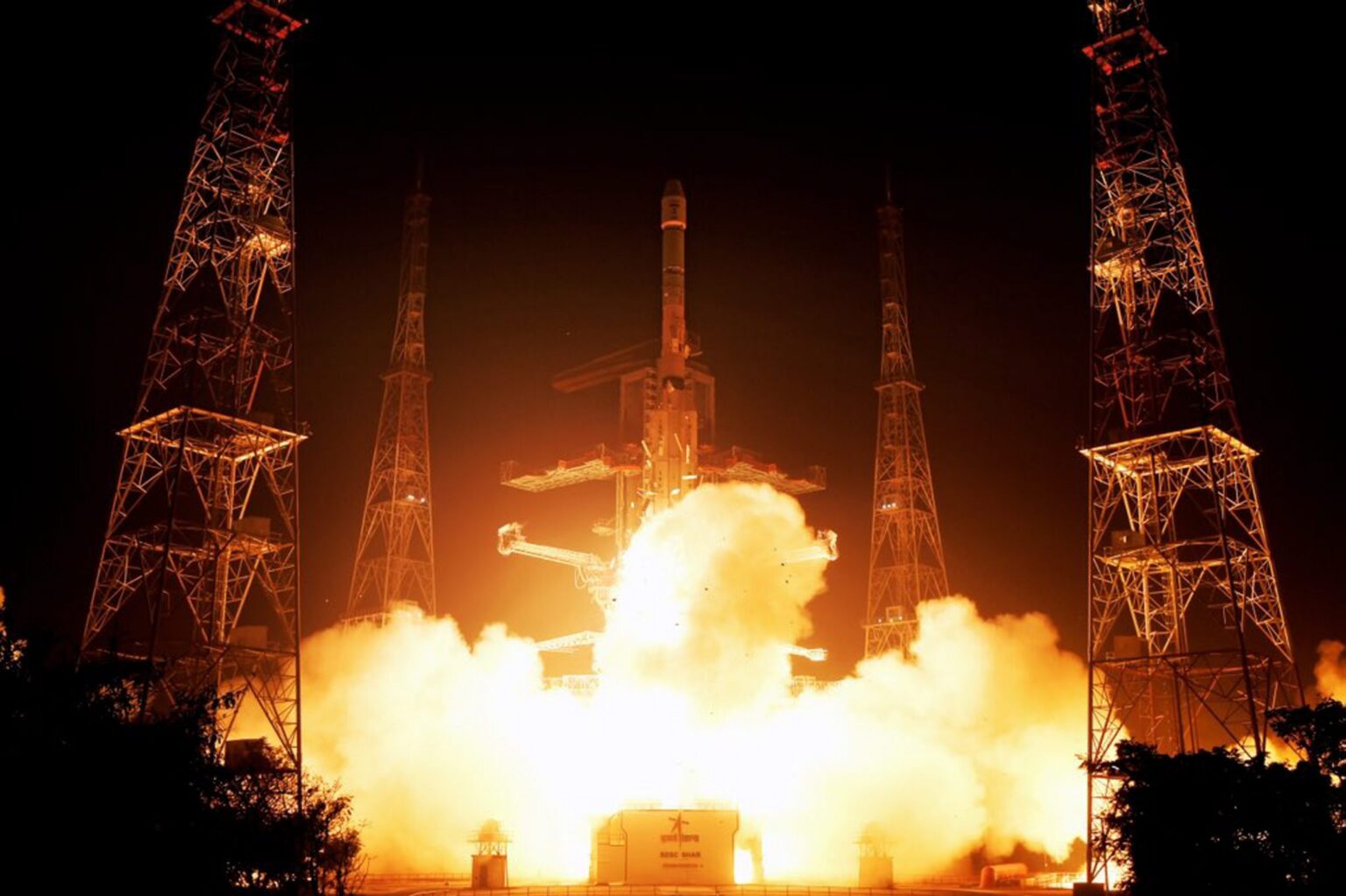

Ten years after it was placed in orbit as part of the four-spacecraft Indian Regional Navigation Satellite System, the IRNSS-1F’s onboard imported atomic clock, a critical component for providing navigation service, went out of action.The IRNSS-1F satellite, launched in March 2016, has completed its design mission life of 10 years on 10th March 2026. On 13th March 2026, the onboard atomic clock stopped functioning. However, the satellite will continue to function in-orbit for various societal applications to provide one-way broadcast messaging services,” the Indian Space Research Organisation (ISRO) said.Launched aboard the PSLV–C32, ISRO’s workhorse, and successfully placed into geosynchronous orbit on March 10, 2016, it was the sixth satellite in the IRNSS series. At least four satellites are required to provide accurate navigation services. The earlier generation of satellites carried Swiss atomic clocks.Why atomic clocks are crucialAn atomic clock in a satellite, according to available literature on the subject, is an ultra-precise, space-hardened timekeeping device that measures time by monitoring the resonant frequency of atomic transitions in elements such as cesium, rubidium, or hydrogen. Without them, satellites cannot transmit accurate timing signals, and consequently, the entire navigation system collapses.Invented in the 1950s, these are the most precise timekeeping devices that have ever been developed. They are said to gain or lose only one second every 100 million years, as compared to one second in a few days for conventional clocks like those that are based on quartz. Rubidium is the most common element used in such clocks for space applications.Extreme precision in time calculation is required for space-based systems, given their distance from Earth, orbiting speed, and relative motion. Even a minuscule difference of just one nanosecond can change the GPS position on Earth by 30 cm, which is equal to 3,00,000 km in a second.Atomic clocks for satellites are highly specialized and designed to survive the harsh conditions of space that include vibrations during launch, radiation, extreme temperature swings, and vacuum. They have a lifespan of 10—15 years, roughly commensurate with the average operational life of a satellite.Physically, they look like sealed metal boxes, the size of a small microwave oven, weighing 3-5 kgs, containing complex circuitry and processors. Unlike normal clocks, they do not actually display the time but send the required inputs to the spacecraft’s onboard control systems.Problem faced by Swiss clocksEarlier ISRO navigation satellites launched between 2013 and 2018 used the Rubidium Atomic Frequency Standards (RAFS) made by SpectraTime, a Swiss company. Each of these satellites carried three imported clocks for redundancy.In 2008, ISRO had signed a contract worth 4 million Euros with the Swiss firm for these gadgets, which are the only foreign atomic clocks used by the space agency. Other ISRO satellites launched for communications, remote sensing, earth observation, and interplanetary missions do not require the same nanosecond-level precision and hence do not require atomic clocks.According to reports, a large number of these clocks failed prematurely, affecting not only Indian satellites but also the Galileo, the European Space Agency’s (ESA) own global navigation satellite system that is based on 28 satellites.In 2017, after nine atomic clocks failed on Galileo satellites, ESA investigations pointed to probable short circuits that were possibly triggered by a specific ground-testing procedure before launch. The same RAFS model was flying on ISRO’s satellites, where problems began in 2016-17.India’s own atomic clocksFollowing issues with the Swiss equipment, India developed its own indigenous atomic clocks called the Indian Rubidium Atomic Frequency Standard (iRAFS), which took up the project in the mid-2010s, and by 2022—23, full qualification was achieved.These were first employed onboard the NVS-01, also called IRNSS-1J, which was launched in May 2023 by the GSLV-F12. The indigenous clocks have been working flawlessly since July 2023, according to ISRO.All subsequent NVS-series satellites use iRAFS as standard, and ISRO no longer depends on any imported clocks. It is integrated inside the satellite’s navigation payload and is a compact, radiation-hardened metal pack similar in size to the Swiss RAFS.Apart from this, the Council for Scientific and Industrial Research’s National Physical Laboratory (CSIR-NPL) had developed India’s first indigenous atomic clocks, including Cesium fountain clocks and Rubidium clocks, between 2008 and 2011 to maintain the Indian Standard Time (IST). These clocks are highly precise, achieving an accuracy within 2.8 nanoseconds, enabling India to maintain its own timekeeping standard independently.