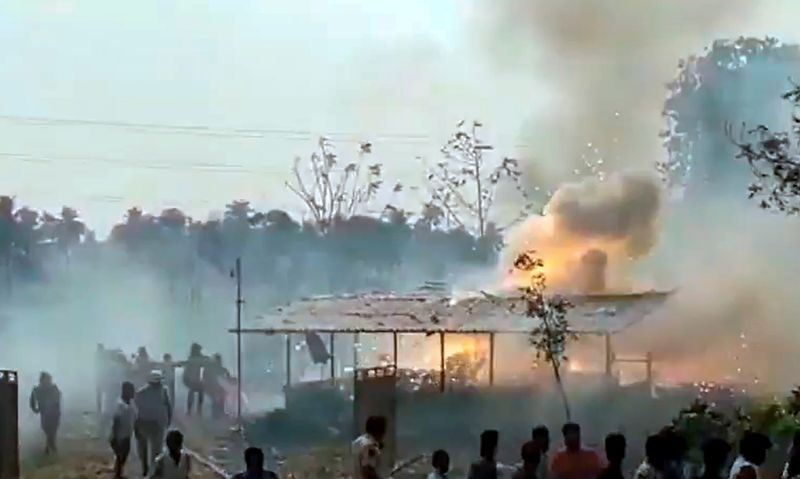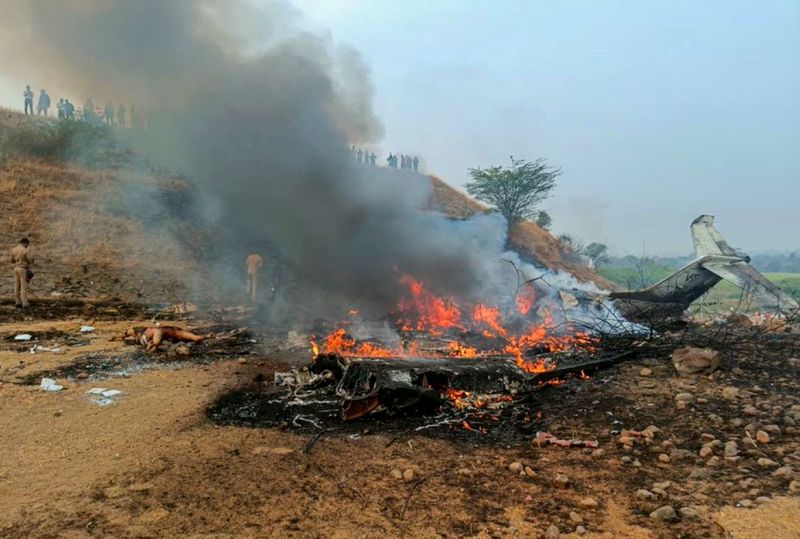

The preliminary report into the Baramati plane crash that killed senior NCP leader and former Maharashtra Deputy CM Ajit Pawar and four others, including the crew, has highlighted a series of serious safety lapses. Investigators found that the aircraft was allowed to land at an airfield lacking basic infrastructure and under weather conditions that did not meet minimum safety requirements.The findings show that the flight was cleared to land even though visibility was significantly below prescribed limits, at an uncontrolled airfield with no proper navigation or meteorological systems, raising concerns about how routine VIP operations were being carried out in such conditions.According to the report released by the AAIB on Saturday, the crew was informed that visibility was 3,000 m at the time of landing. This was well below the 5,000 m required for operations under visual flight rules. “Hence, the visibility reported at Baramati at the time of landing of aircraft was well below the minima required for VFR flight which is 5,000 m (5 km),” the report said.The aircraft was attempting to land on runway 11 when it crashed. The report stated that it “crash landed on the left of the runway abeam threshold of runway 11.” CCTV footage showed the aircraft banking to the right before impact. It first struck trees before hitting the ground, which was at a lower elevation than the runway surface, about 50 m from its edge. The aircraft caught fire, during which the entire cockpit and cabin section were burnt, and it was destroyed in the accident.The findings also revealed that the Baramati airfield lacked basic infrastructure required for safe operations. The report noted that the airport was an uncontrolled airfield and did not have any navigational aids other than wind socks. Even these were not properly placed, as “no wind sock was available towards runway 11 side,” it said.There was also no proper weather reporting system at the airfield. “There is no MET facility available at Baramati Airfield. The weather information such as winds, temperature and QNH is generally passed on to the aircraft with the help of a weather instrument installed in the temporary tower of Carver Aviation. The visibility information is issued to the aircraft based on the visibility chart prepared by the flying training organisations having identified different visibility markers,” it said.On the day of the crash, the tower was not manned by a trained air traffic controller. Instead, a ground instructor from one of the FTOs was communicating with the aircraft to assist in the landing. “The crew of VT-SSK asked for visibility while approaching Baramati for which the tower replied as 3,000 m by looking at the visibility markers,” the report said.The condition of the runway has also come under scrutiny. The last resurfacing was done in March 2016, and no re-carpeting has been carried out since. This has led to “fading of all the runway markings and presence of loose gravels on the runway surface.” Other safety gaps were identified as well. The report noted there was no boundary wall around the aerodrome. “The available fencing is not adequate and does not cover the entire aerodrome. Baramati airport does not have an in-house ARFF (Aircraft Rescue & Fire Fighting) unit,” it said.Despite these shortcomings, the airfield continued to handle flying training and non-scheduled operations, including VIP flights. The report noted that both pilots had flown to Baramati earlier. They were aware of the topography and had prior experience operating VIP and non-scheduled flights to uncontrolled airfields. It also recorded that the aircraft’s technical logbook was carried on board on the day of departure.The investigation was still underway. Data from the flight recorder had been downloaded and is being analysed. The cockpit voice recorder would be examined with help from the National Transportation Safety Board, as per ICAO norms.In its interim recommendations, the report has asked the Directorate General of Civil Aviation (DGCA) to ensure stricter compliance with rules for flights operating to uncontrolled airfields. It recommended that operations be allowed only when weather conditions meet prescribed standards and called for improved landing aids and basic meteorological facilities.