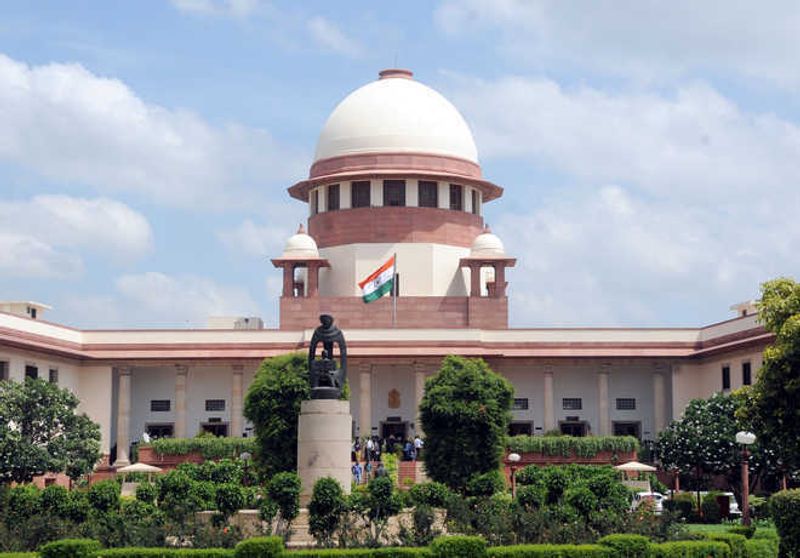
Emphasising that granting admission to poor children in educational institutions “must be a national mission”, the Supreme Court has directed government authorities to frame rules to ensure effective implementation of the 25 per cent reservation for children from economically and socially weaker sections (EWS) in private unaided non-minority schools under the Right to Education (RTE) Act.“…we direct the appropriate authorities to prepare and issue, in consultation with the NCPCR (National Commission for Protection of Child Rights) and SCPCRs (State Commissions), as the case may be, as well as the national and state advisory councils, necessary rules and regulations under Section 38 of the RTE Act for implementing the mandate of Section 12(1)(c) of the Act,” a Bench of Justice P S Narasimha and Justice Atul S Chandurkar said.The order came on a petition filed by a man whose children were denied admission in 2016 to a neighbourhood school for free and compulsory elementary education despite the availability of seats. The Bombay High Court had rejected his plea on the ground that he had failed to apply in accordance with the prescribed online procedure for filling the reserved seats.The apex court said the grant of admission to children from the EWS category under the RTE Act was “an obligation of the appropriate government and the local authority”. “Equally, courts, be it constitutional or civil, must walk that extra mile to provide easy access and efficient relief to parents who complain of denial of the right,” it said.Noting that, “unfortunately”, the petition against the high court’s order had remained pending for a long period, the Bench said that to ensure such a situation did not recur, it had chosen to treat the case as precedent-setting. It examined the efficiency and effectiveness of existing procedures for complying with Section 12 of the RTE Act, which defines the extent of a school’s responsibility for free and compulsory education.“We are of the opinion that it is necessary and compelling to formulate subordinate legislation by issuing necessary rules and regulations, prescribing the method and manner by which children of weaker and disadvantaged sections are to be admitted in neighbourhood schools,” the Bench said.It underlined that in the absence of enforceable rules and regulations, the constitutional mandate under Article 21A (right to education) and the statutory policy under Section 12(1)(c) of the RTE Act would be rendered “a dead letter”.The amicus curiae pointed out several reasons for the inaccessibility of reserved seats to weaker and disadvantaged groups, including digital illiteracy, language barriers, lack of facilitation help desks, inadequate information on seat availability, absence of transparency in admissions and uncertainty over grievance redressal mechanisms.