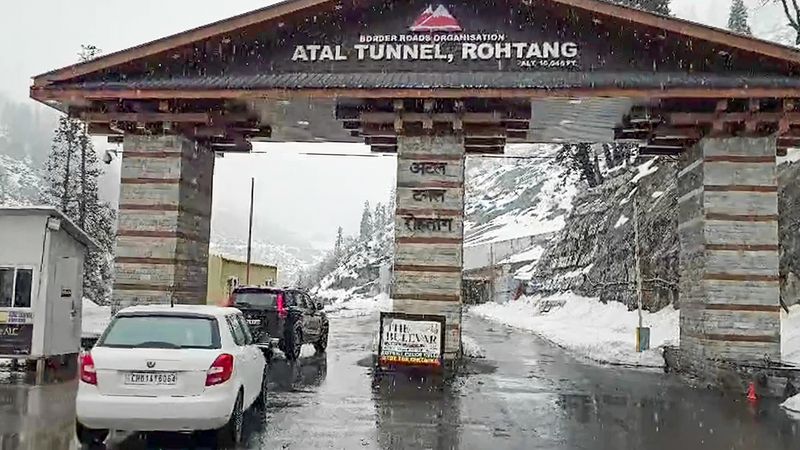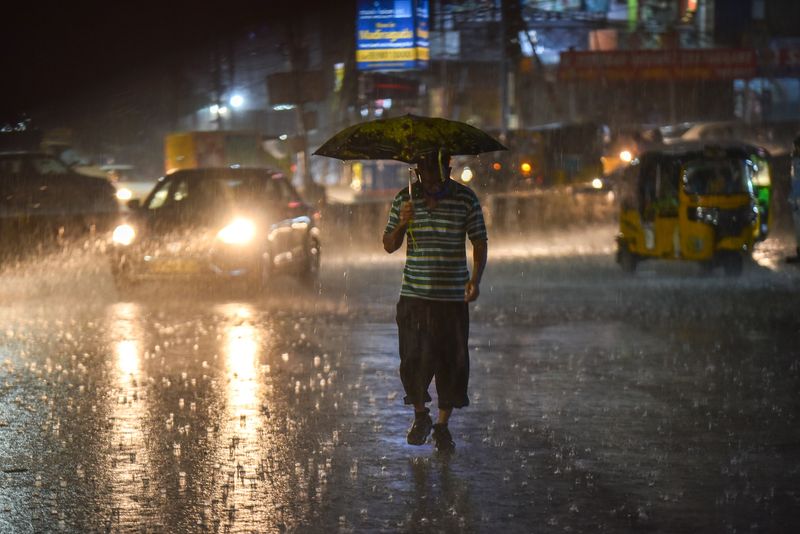

The wet spell is likely to continue over northwest India during the week with predictions of heavy rainfall and snowfall over Kashmir valley on March 30.The India Meteorological Department (IMD) has predicted that the northwest will receive hailstorms during March 29-30 and Central India during March 30 and 31.A fresh Western Disturbance is likely to affect Northwest India from April 2 which will result in snowfall in Jammu and Kashmir, Himachal Pradesh and Uttarakhand.“Scattered to fairly widespread rainfall along with thunderstorm, lightning and gusty winds likely to affect Northeast and adjoining east India during the week with possibility of isolated heavy falls over Northeast India during March 30- April 1,” the IMD said.In the last 24 hours, the highest maximum temperature of 41.2 degrees Celsius was reported at Akola in Maharashtra and the lowest minimum temperature of 15.6 degree Celsius was observed at Najibabad in West Uttar Pradesh.In the national capital, there has been a rise in minimum temperatures up to 1 to 2 degree Celsius and rise in maximum temperatures up to 1 to 2 degree Celsius during the past 24 hours over Delhi. The maximum temperatures were in the range of 32 to 34 degree Celsius and the minimum temperatures were in the range 19 to 21 degree Celsius, respectively during the past 24 hours over Delhi.As an advisory to the crops, the met department has suggested use of hail nets or hail caps to protect fruits and vegetables from mechanical damage in Jammu & Kashmir, Himachal Pradesh, Punjab, Haryana, Rajasthan, Sub Himalayan West Bengal, West Madhya Pradesh, Madhya Maharashtra, Marathwada Vidarbha and Chhattisgarh. It has also advised undertaking harvesting of mature crops immediately and shifting them to safer places.“In Madhya Maharashtra, Marathwada and Vidarbha, harvest mature wheat, sorghum, safflower, chickpea, maize, linseed, fruits and vegetables and keep the harvested produce in safe places. In Uttarakhand, harvest matured mustard, rapeseed, lentil & pea and keep the harvested produce to safe places,” IMD said.