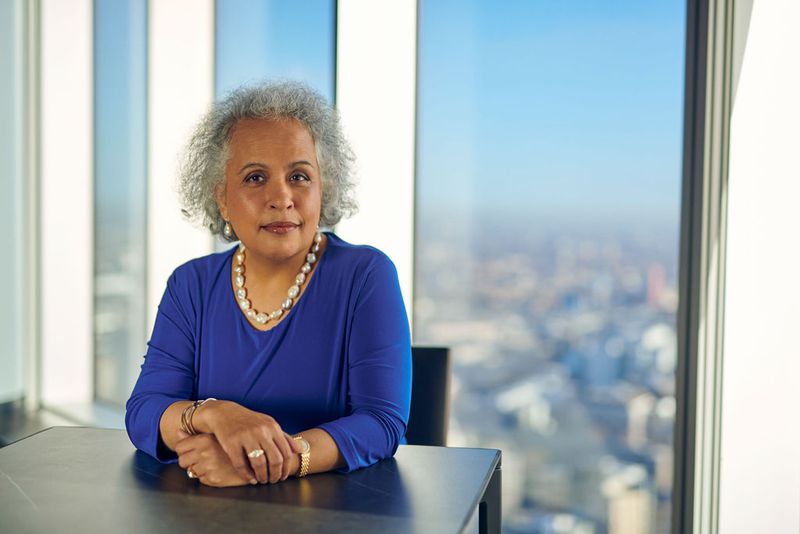

From the classrooms of Carmel Convent School and Panjab University to the boardroom of one of the world’s largest banks, Pam Kaur’s journey is one of quiet determination, global experience, and grounded leadership. In October 2024, she created history by becoming the first woman Group Chief Financial Officer of HSBC in its 160-year history.Deeply connected to her Chandigarh roots, shaped by decades of global banking experience, and guided by discipline and purpose, Kaur today steers the financial strategy of a global institution operating across continents.In an exclusive interview with The Tribune—her first media interaction with an Indian newspaper after taking over the coveted role in January last—she speaks about her journey, leadership philosophy, HSBC’s global and India strategy, the importance of digital transformation, and her advice to young professionals, especially women. Excerpts:Q: Can you share your journey from Chandigarh to becoming HSBC’s first female Group CFO, and how your background has shaped your leadership?A: I grew up in Chandigarh and completed my schooling at Carmel Convent School. I later pursued my BCom (Hons) and MBA in Finance from Panjab University. A defining early moment came during a summer placement with IBM in the UK, where I worked on a credit control project and interacted with PwC as a client. That experience made me choose finance as a long-term career and motivated me to qualify as a chartered accountant.I joined Ernst & Young in London in 1986 and have been in banking since 1990. Those were very different times, with very few women in senior leadership roles. Moving from India to the UK required intent, resilience, and confidence. Many of my most formative experiences came during periods of economic or institutional stress, which shaped my judgement and leadership.Becoming HSBC’s first woman Group CFO is deeply humbling. When I started my career, this role felt unimaginable. As opportunities emerged, I embraced them with a strong sense of responsibility — to perform at the highest standards and to inspire others to persist and progress.Q: What inspired you to pursue a career in finance, and what were the defining moments that led you to HSBC?A: I was always drawn to mathematics and was actively involved in debates, quizzes, theatre, and leadership roles during my student years. I don’t see my career as a series of isolated milestones. Each role added to my experience and eventually led me to HSBC.Two moments stand out. One was moving from the US to the UK in 2005 to achieve a better work-life balance with my husband. The second was navigating the 2008 global financial crisis, where managing relationships with regulators and stakeholders strengthened my resilience and adaptability as a leader.Q: How do you stay connected to your Indian roots while leading on a global stage?A: India shaped my formative years, and that influence remains strong. Its energy, ambition, hard work and sense of possibility continue to guide how I think and lead. Whenever I return, I’m reminded of the scale of opportunity and rapid progress taking place.Having lived and worked across many geographies and led teams in over 100 countries, I value cultural understanding and diverse economic perspectives. India’s growing global influence reinforces the need for institutions like HSBC to combine deep local insight with global connectivity, and I’m proud to be part of that journey.Q: Since joining HSBC as Group CFO, what have been your key priorities and achievements?A: Since stepping into the role in January 2025, my focus has been on discipline, performance and delivery. By executing our strategy across four core markets, we have delivered strong returns and increased market capitalisation despite external volatility.HSBC’s strength lies in its robust capital and liquidity position. We continue to invest selectively to support long-term growth while balancing resilience and performance, which is central to my role.Q: How do you steer HSBC’s financial strategy in today’s complex global environment?A: As the world’s leading trade bank, HSBC draws on its global presence and 160 years of experience. Our strategy is built on careful assessment of macroeconomic conditions, disciplined capital allocation, and strong risk management.The key challenge is balancing growth with resilience across diverse markets while maintaining robust governance. Staying focused on these priorities helps us deliver sustainable results and support clients in an increasingly complex global environment.Q: What differentiates HSBC from other global banks and what are your ambitions going forward?A: HSBC’s global connectivity and long-standing client relationships set us apart. Our wholesale network, strong UK presence, and leading wealth business in Asia reflect our customer-centric approach. We serve both multinationals and local corporates across markets.Over the past year, we have simplified and realigned the organisation to become more agile and focused. Digital innovation and AI are central to our strategy, helping us enhance customer experience while maintaining the discipline and reliability HSBC is known for.Q: How important is India to HSBC’s global strategy, especially Northern India?A: India is a strategic growth market for HSBC. We introduced India’s first ATM in 1987 and today have our largest global workforce here, with over 44,000 employees. As the fastest-growing major economy, India offers immense opportunities.We are expanding with 20 new branches, including in North Indian cities such as Jalandhar, Kanpur, and Ludhiana. We aim to serve affluent and globally mobile clients and become the leading international bank for India’s wealth segment. We are also investing in GIFT City to strengthen India’s link with global markets.Q: What role does digital transformation play in HSBC’s India strategy?A: Digital transformation is central to our approach. India leads the world in real-time digital payments, making it a vibrant innovation ecosystem. We are investing heavily in technology, fintech partnerships, and cybersecurity.We have launched Innovation Banking in India with a $1 billion commitment to support tech startups. Our digital initiatives improve customer experience, enhance financial inclusion, and ensure secure banking solutions.Q: What is your leadership style and how do you balance a demanding global role with personal life?A: My leadership is anchored in courage, humility, and integrity. Building strong teams and bringing out the best in people drives high performance. As Group CFO, I work around three pillars — Discipline, Performance, and Delivery — supported by our ‘How We Lead’ framework.Personally, balance comes from spending time with my husband, daily walks, and exercise. These help me reflect, stay focused, and energised.Q: What advice do you have for young talent, especially women, aspiring to leadership roles? What legacy do you hope to leave behind?A: Be comfortable with who you are and bring your whole self to every role. Embrace challenges as opportunities to learn and grow. Resilience and adaptability are essential. Leadership is increasingly merit-based, but organisations must actively create inclusive environments.I hope my legacy is one of support, inspiration, and inclusion — helping others aim high, thrive, and build a better, more equitable workplace. Leadership is not about position; it is about what you bring to whatever role you hold.